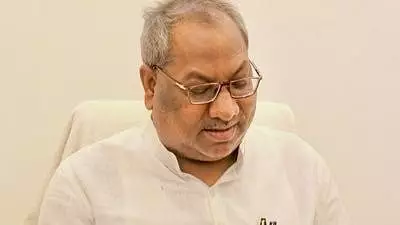
Prominent social activist Aruna Roy has launched a strong critique against the newly introduced VB-G Ram G Bill, which replaces the landmark Mahatma Gandhi National Rural Employment Guarantee Act (MGNREGA). Roy declared the move an effective end to the "universal right to work" guaranteed by the previous law.
Nationwide Protest and 'No Vote' Slogan
At a press conference in Jaipur, Roy outlined a plan for nationwide action. She announced that February 2 and 5 will be observed as days of "mourning" across the country to demand the restoration of MGNREGA and the withdrawal of the new bill.
She urged citizens to immediately start reaching out to their public representatives, including local ward members, village heads (pradhans), panchayat samiti members, zila pramukhs, MLAs, and MPs, with their concerns, continuing this outreach until January 30.

"Along with this, we will write letters to PM Narendra Modi demanding the withdrawal of this bill and the restoration of MGNREGA," Roy stated. She warned that the new legislation would lead to increased corruption, a lack of accountability, and arbitrary implementation. To amplify their demand, the activist collective will propagate a new slogan: ‘No MGNREGA, No Vote'.
Concerns Over Limited Work and State Burden
Roy challenged the central government's claim of providing 125 days of employment under the new law, calling it misleading. "The Centre will only provide as much work as the funds allocated to the states," she claimed. This, she argued, would result in severely limited employment opportunities, potentially triggering increased migration from several areas in Rajasthan and other states.
Her concerns were echoed by fellow activist Nikhil Dey, who asserted that the VB-G Ram G Bill fails to guarantee even a single day of work. Dey explained that employment will only be provided in rural areas specifically notified by the central government, stripping many regions of their legal right to work.
"This effectively reduces the employment guarantee to a discretionary scheme determined by the will of the Centre," Dey said. He also highlighted a critical shift in power, noting that the authority to determine projects has moved from the Gram Sabha to the central government, undermining local governance.
Financial Strain and Migration Fears
The bill's financial clause has also drawn sharp criticism. A provision stating that any expenditure beyond the Centre's 'normative allocation' must be borne by state governments is seen as placing an undue financial burden on states.
Activists fear this combination of factors—limited, centrally-notified work areas and the potential for states to bear extra costs—will cripple the rural employment safety net. The primary consequence, they warn, will be increased migration from rural areas, as people are forced to move in search of livelihoods no longer guaranteed in their home regions.
The opposition to the VB-G Ram G Bill sets the stage for a significant public debate on the future of social security and the right to work in India's rural heartland.