

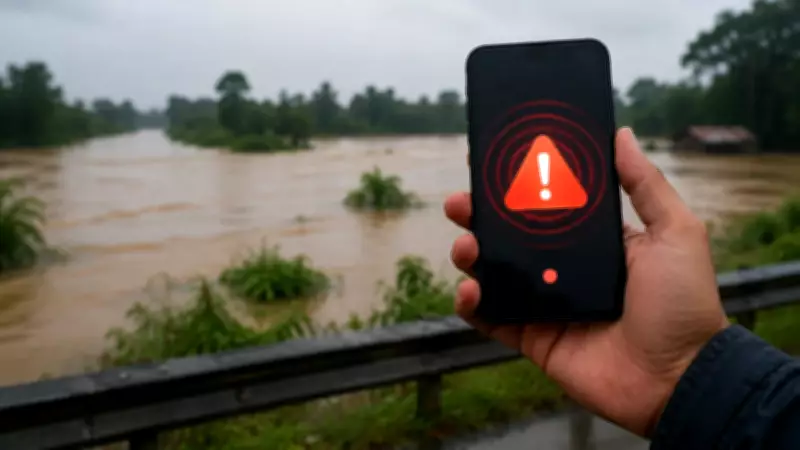
The Assam State Disaster Management Authority (ASDMA) is preparing to roll out the Cell Broadcast System (CBS), a public warning system developed by the central government, across the northeastern state in the near future. This initiative aims to minimize damage from natural and man-made calamities by delivering instant, geo-targeted emergency alerts directly to mobile phones.
How the Cell Broadcast System Works
The CBS, developed by the Centre for Development of Telematics (C-DOT) under the Department of Telecommunications, in collaboration with the National Disaster Management Authority (NDMA) and the Ministry of Home Affairs, enables authorities to send timely alerts to all mobile devices within a specific area. These alerts work regardless of whether recipients are residents or visitors, and they function even during network congestion.
During emergencies, a pop-up message will appear on mobile phones, accompanied by a distinctive loud tone and vibration lasting approximately 30 seconds. On supported devices, the message will also be read aloud. The system supports multiple languages and is compatible with 2G, 3G, 4G, and 5G networks, making it more reliable than traditional SMS alerts.

Implementation in Assam
The CBS was successfully tested nationwide in May, but Assam was excluded due to the enforcement of the Model Code of Conduct. Now, following instructions from the Government of India, the Assam government plans to implement the system across the state. ASDMA stated that citizens may receive emergency alerts related to extreme weather conditions such as storms, heavy rain, lightning, cyclones, floods, and flash floods, as well as other disasters like gas leaks.
Key Features of CBS:
- Geo-targeted alerts to all mobile users in a specific area
- Works during network congestion and reaches roaming users
- Supports multiple languages
- Functional across 2G, 3G, 4G, and 5G networks
- Triggers a loud audio alarm and vibration for 30 seconds
The ASDMA emphasized that the CBS is far more dependable than conventional SMS-based warning systems, as it ensures that critical information reaches everyone in the targeted zone promptly. This technology is expected to significantly enhance disaster preparedness and response in Assam, reducing the potential impact of emergencies on life and property.






