Baramati Airstrip Operates Without Basic Aviation Infrastructure Despite Government Transfer
The Baramati airstrip, featuring a distinctive tabletop runway, continues to function without essential aviation facilities such as the Instrument Landing System (ILS), even after its recent transfer to the Maharashtra Airport Development Company Limited (MADC). Pilots operating at this facility are compelled to depend entirely on visual flight rules (VFR) for both landing and takeoff procedures, raising significant concerns about operational safety and efficiency.
Uncontrolled Airfield Status and Training Operations
According to the Directorate General of Civil Aviation (DGCA), Baramati is classified as an uncontrolled airfield. Traffic information and coordination are managed by instructors and pilots from two prominent flying training organizations: the Academy of Carver Aviation Private Limited and Redbird Flight Training Academy. This arrangement places considerable responsibility on individual pilots, as there is no centralized air traffic control system to oversee movements.
The late deputy chief minister, Ajit Pawar, who tragically perished in a crash near the Baramati airstrip on Wednesday, had consistently advocated for enhanced facilities at what he referred to as his "home airport." His vision included modernizing the infrastructure to meet contemporary aviation standards, but progress has been notably slow.

Transfer to MADC and Implementation Delays
The facility was officially transferred to the MADC last year following explicit instructions from Ajit Pawar. However, the tangible impact of this administrative change remains minimal on the ground. A government resolution formalizing the transfer was only published in December, and detailed plans for upgrades have yet to be clearly articulated by the MADC.
Repeated attempts by TOI to contact Swati Pandey, the vice-chairman-cum-managing director of MADC, via phone calls and WhatsApp messages, yielded no response. Another official, speaking on condition of anonymity, acknowledged the transfer but could not provide specifics regarding the MADC's strategic plans for the airstrip's development.
Prior to the transfer, the Maharashtra Industrial Development Corporation (MIDC) managed the airstrip. In October of the previous year, Ajit Pawar had directed the MIDC to hand over the detailed project report for the Baramati facility to the MADC, emphasizing the need for priority completion. His broader agenda included initiating night landing facilities at several locations, such as Yavatmal, Dharashiv, Latur, and Nanded.
Limited Flight Operations and Safety Incidents
Sources indicate that Baramati does not host any scheduled commercial flights. Its operations are predominantly non-scheduled, largely due to its proximity to the Pawar family's hometown. The tabletop runway also serves as a training ground for aspiring pilots from the two academies based there.
However, the facility has witnessed several safety incidents in recent years. In September 2021, an aircraft belonging to Redbird Flight Training Academy was involved in an accident during a solo circuit exercise. Subsequently, in August of the following year, a trainee pilot had a narrow escape when another Redbird aircraft crashed at the airport. These events underscore the potential risks associated with operating at an airstrip lacking advanced navigational aids.
Expert Insights on Navigational Deficiencies
Sanjay Lazar, an aviation expert and CEO of Avialaz Consultants, highlighted the critical gaps in Baramati's infrastructure. He noted that while not all Indian airports are equipped with ILS, Baramati's role as a hub for two flying academies—one operational for nearly three decades—necessitates at least basic navigational aids like ILS or area navigation (ARNAV).
Lazar described the 1,770-meter tabletop runway as not inherently risky but pointed out the optical illusions such runways can create, making them challenging for pilots. He referenced past accidents on similar runways, such as in Mangaluru, to illustrate the importance of adequate safety measures.

Post-Crash Security Measures and Local Impact
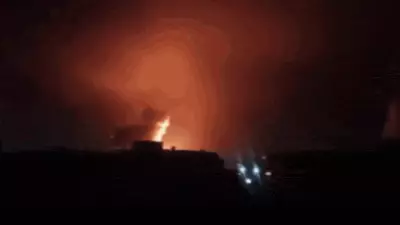
In the aftermath of the crash that claimed Ajit Pawar's life, authorities implemented stringent security protocols around the site at Gojubavi village, adjacent to the airstrip. CID officials, assisted by Pune Rural police, established a checkpoint approximately one kilometer from the village, and police presence was heightened at the airstrip itself, which is situated on slightly elevated ground near the crash location.
These restrictions significantly disrupted the lives of residents in nearby areas. Rahul Atole, a 41-year-old eyewitness to the crash, reported that his family of sixteen felt confined by the pervasive police presence. He described the area as having transformed into a fortress, with strict controls on movement. The lockdown prevented them from attending Ajit Pawar's funeral, and they feared that leaving their compound might result in being barred from re-entry. Atole and other family members who witnessed the plane crash were subsequently questioned by CID officials as part of the investigation.
The ongoing situation at Baramati airstrip highlights a pressing need for infrastructural improvements to align with safety standards and fulfill the late deputy chief minister's aspirations for his home airport.