

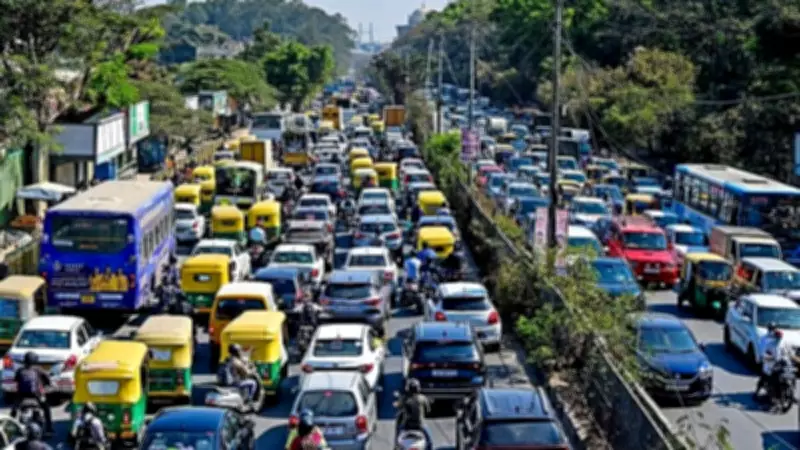
Bengaluru Traffic Police Challenge TomTom Survey with Revised Speed Data
The Bengaluru Traffic Police (BTP) have publicly countered the findings of the TomTom Traffic Index, presenting their own data that shows a significant discrepancy in average rush hour speeds within the city. According to the police department's latest measurements, the average speed during peak traffic hours stands at 18.2 kilometers per hour (kmph). This figure directly challenges the TomTom index, which had recorded a lower average speed of 15.8 kmph for the same period.
Data Discrepancy Highlights Urban Mobility Challenges
The disagreement between the two sets of numbers underscores the ongoing complexities in assessing traffic conditions in one of India's most congested metropolitan areas. The TomTom Traffic Index, a widely referenced global survey, uses GPS data from various sources to compile its rankings, often citing Bengaluru as having some of the slowest traffic speeds worldwide. However, the BTP's counter-claim suggests that local measurements may paint a slightly more optimistic picture, though both figures indicate severe congestion issues.
Officials from the traffic police department emphasized that their data is collected through real-time monitoring systems and on-ground observations, which they argue provide a more accurate reflection of daily commuting conditions. "Our figures are based on comprehensive analysis of traffic flow across key corridors during peak hours," a senior BTP representative stated. "While we acknowledge the traffic challenges, we believe the TomTom index may not fully capture the nuances of Bengaluru's road network."

Implications for Traffic Management and Policy
This data dispute has broader implications for urban planning and traffic management strategies in Bengaluru. Key points include:
- Policy Adjustments: Accurate speed data is crucial for implementing effective traffic control measures, such as signal timing optimizations and lane management.
- Infrastructure Development: Discrepancies in traffic assessments could impact decisions on road expansions, public transport enhancements, and smart city initiatives.
- Public Perception: The variance in reported speeds may influence how residents and commuters perceive the city's traffic woes, potentially affecting travel behavior and congestion patterns.
Despite the higher speed figure from the BTP, both datasets confirm that Bengaluru continues to face significant traffic congestion, with average speeds well below optimal levels for efficient urban mobility. The city's rapid population growth and increasing vehicle ownership have exacerbated these issues, making traffic management a top priority for local authorities.
Comparative Analysis and Future Outlook
A closer look at the numbers reveals that the BTP's 18.2 kmph is approximately 15% higher than TomTom's 15.8 kmph. While this difference might seem modest, it represents a notable variance in traffic performance metrics that could alter rankings in global congestion studies. Experts suggest that such discrepancies often arise from differences in:
- Methodology: TomTom relies heavily on GPS data, whereas the BTP incorporates additional local inputs.
- Sampling Areas: The geographic coverage and specific routes monitored may vary between the two sources.
- Time Frames: Slight variations in the periods of data collection can lead to different average speed calculations.
Moving forward, the Bengaluru Traffic Police have indicated plans to enhance their data collection systems and engage in further dialogue with organizations like TomTom to align methodologies. "Our goal is to provide the most accurate picture possible to aid in traffic solutions," the BTP representative added. "We welcome collaborative efforts to refine these assessments for the benefit of all commuters."

As the debate continues, residents of Bengaluru remain caught in the daily grind of slow-moving traffic, with both sets of data highlighting the urgent need for sustainable urban transport solutions. The city's ability to address these challenges will be critical in shaping its future as a livable and efficient metropolis.





