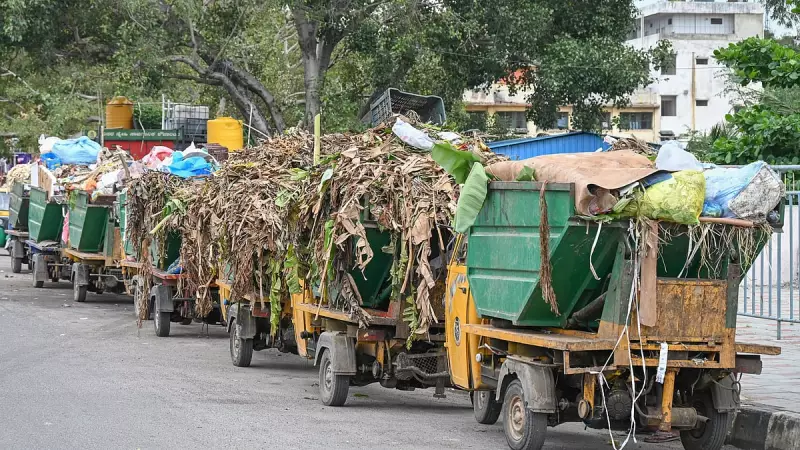
The Bruhat Bengaluru Mahanagara Palike (BBMP) has taken a decisive step to tackle the city's persistent waste management woes. The civic body has unveiled a new tender for solid waste collection and transportation, embedding stringent financial penalties for contractors who fail to perform their duties effectively.
Key Provisions of the New Tender
The freshly floated tender outlines a rigorous penalty structure aimed at ensuring accountability. A core stipulation mandates that contractors must collect garbage from all households, commercial establishments, and bulk waste generators within their assigned zones. Failure to do so will result in significant monetary fines.
The penalty for missing garbage collection from a single point is set at Rs 1,000 per instance. This measure is designed to address one of the most common public complaints: unattended waste piles on streets and in neighborhoods. The BBMP hopes this direct financial disincentive will compel contractors to adhere strictly to their collection schedules and routes.
Contract Duration and Financial Implications
The new contract is slated for a period of three years, providing a medium-term framework for waste management operations. The financial scale of the tender is substantial, with an estimated total value running into hundreds of crores of rupees. This underscores the significant investment and priority being placed on cleaning up India's tech capital.
Beyond just collection, the tender also covers the critical task of transporting the amassed waste to designated processing plants or landfills. This end-to-end responsibility places the onus squarely on the contractors to manage the entire chain from doorstep to disposal site efficiently.
Addressing Bengaluru's Chronic Waste Crisis
This move by the BBMP comes against a backdrop of long-standing challenges in Bengaluru's solid waste management system. The city has frequently grappled with issues like overflowing bins, irregular collection services, and illegal dumping, leading to public health concerns and environmental degradation.
The introduction of heavy fines represents a shift towards a more performance-based and enforceable contract model. Previously, lapses in service often went unpunished, leading to a lack of accountability. The new penalty clause is a clear attempt to rectify this by creating a direct financial consequence for non-performance.
The success of this initiative hinges on robust monitoring and enforcement by BBMP officials. The civic body will need to establish effective mechanisms to track collection services and impartially levy fines where breaches occur. Public grievance systems may also play a role in identifying and reporting missed collections.
Expected Outcomes and Public Impact
If implemented effectively, the new tender system promises several benefits for Bengaluru's residents. Citizens can expect more reliable and consistent garbage collection from their homes and businesses. Cleaner streets and public spaces are a direct anticipated outcome, potentially improving the city's overall livability and hygiene.
For the contractors, the system creates a clear, if challenging, operational mandate. While the fines are stiff, a well-executed service could lead to steady, long-term revenue under the three-year contract. The model incentivizes efficiency and thoroughness in daily operations.
The BBMP's latest tender marks a proactive attempt to inject discipline and accountability into Bengaluru's waste management ecosystem. By wielding the stick of substantial fines, the civic administration aims to ensure that contractors deliver the essential service that the city desperately needs. The coming months will reveal whether this financial enforcement mechanism can truly translate into a cleaner, greener Bengaluru.