

The Bihar government has taken a significant leap towards responsive governance with the launch of a state-of-the-art public grievance system. This new initiative, designed to eliminate bureaucratic delays, promises citizens a streamlined process to get their complaints addressed with unprecedented speed and transparency.
A Direct Line to the Top: How the New System Works
For the first time, residents of Bihar have a direct channel to the state's highest administrative officer. The Chief Secretary Public Grievance Redressal System (CSPGRS) is built on the promise of strict timelines. Under this framework, any complaint received will be officially registered within one hour of submission. Authorities must then prepare a preliminary report on the action taken within 24 hours. The system mandates a final resolution within 72 hours, barring exceptionally complex cases or those already sub-judice in courts.
Citizens can now lodge their grievances through two simple digital channels: by sending a WhatsApp message to 9241871658 or by emailing info.cspgrs@bihar.gov.in. A dedicated cell, located in the old secretariat building adjacent to the Chief Secretary's office, has been established to monitor this process in real-time. The cell is equipped with multiple computer systems and a large display screen where every incoming complaint is projected as soon as it is logged.

Real-Time Monitoring and Top-Level Oversight
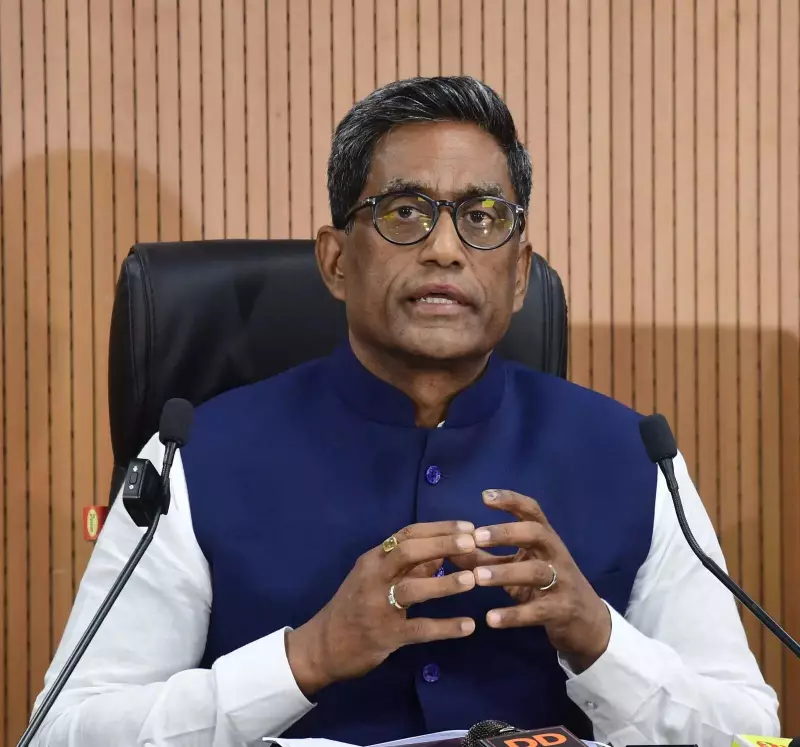
Chief Secretary Pratyaya Amrit emphasized that the core design principle of the system is acceleration. "When it comes to solving an issue, fixing time is an important element. It is a big factor," Amrit stated. He explained that the dedicated cell allows for continuous, real-time monitoring of each complaint's progress. "I also sit there with my team. I can talk to any official, be it the secretary of any department or a district magistrate via a video call, who is needed as per the grievance. Any delay will be monitored at my level," he added.
Amrit outlined key priority areas for the new system, which include:
- Complaints from ex-servicemen and their families.
- Land-related disputes and matters.
- Grievances raised by women.
- Issues connected to the home department and police.
He cited a recent example where a CRPF personnel posted in a border area called him late at night regarding a protracted land dispute. "A man serving our country was facing harassment. His complaint was registered and was solved," Amrit said, underscoring that "addressing complaints with speed is essential for good governance."
The Grievance Journey: From Registration to Resolution
The operational workflow of the new cell is meticulously structured. A specialized team has been assigned specific responsibilities, starting with the online registration of each grievance. Officials record the complainant's contact number and the concerned public authority, attaching all relevant documents. "This has to be done within an hour. If anything is missing, then we call the complainant and complete the work," explained an official associated with the cell.
Once registered, the complaint is electronically forwarded to the relevant authority—such as a District Magistrate for district-level issues or a Department Secretary for state-level matters. These officials may further delegate it down the administrative chain. The mandate for the first preliminary report within 24 hours keeps the process on track, leading to the final 72-hour disposal deadline.
Since its launch, the system has already registered 24 complaints, with 17 successfully resolved and closed. An initial breakdown shows the Revenue Department received the highest number of grievances (10), followed by the Home Department (8) and the Education Department (3). Chief Secretary Amrit noted that while the initiative is in its early stages, more features will be integrated as the system evolves and matures based on user feedback and operational experience.
This tech-driven grievance redressal mechanism marks a pivotal shift in Bihar's administrative approach, aiming to restore public trust by ensuring that citizen concerns are not just heard but acted upon with definitive urgency.






