

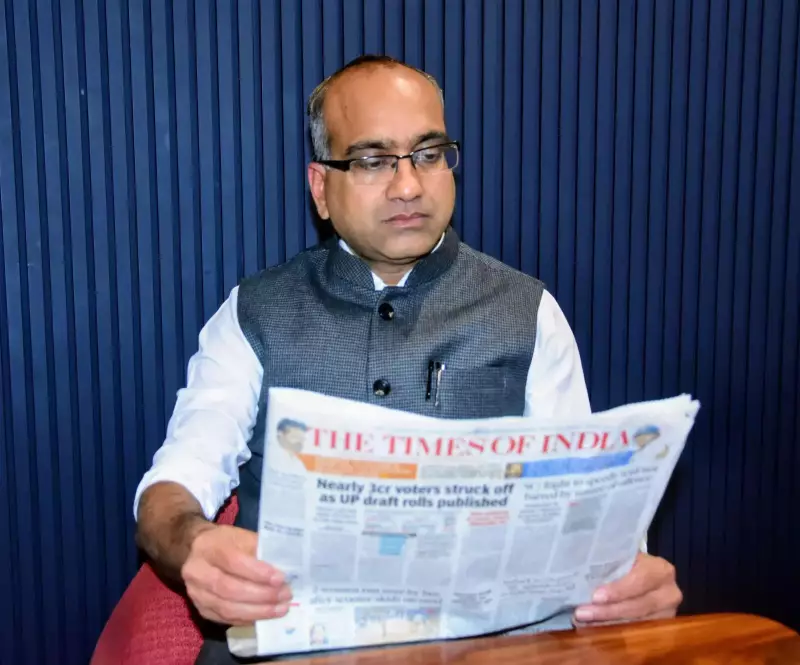
In an exclusive conversation, a Bharatiya Janata Party (BJP) Rajya Sabha Member of Parliament, renowned for his technology-focused initiatives and grassroots engagement, provided a comprehensive overview of the transformative journey of his native Kalahandi, the integration of cutting-edge tech in education, and the future of artificial intelligence in Indian governance.
From Distress to Development: The Kalahandi Story
The MP recounted that the undivided regions of Kalahandi and Nuapada were once synonymous with severe hardship, primarily due to recurrent failures of the monsoon. Over 90% of the population relied solely on rain-fed agriculture, with no alternative sources of income. The turning point began in the mid-1990s. He credited late Chief Minister Janaki Ballav Patnaik for initiating crucial irrigation projects like the Indravati dam in the late 1980s, which started reducing the area's crippling dependence on erratic rains. "I believe Janaki babu did not receive the credit he deserved for his work in Kalahandi," the parliamentarian noted.
He stated that development accelerated further under the leadership of former CM Naveen Patnaik, with significant expansions in connectivity and irrigation infrastructure. Today, Kalahandi boasts one of the finest canal networks in Odisha and is a top contributor to the state's Public Distribution System (PDS). The MP highlighted key drivers of this change, including multiple visits by former Prime Minister Rajiv Gandhi, especially after the tragic 1985 Punji incident. In 1993, Prime Minister P.V. Narasimha Rao launched the KBK (Kalahandi-Balangir-Koraput) scheme from the Red Fort, which brought focused central funding and convergence of various welfare programs to the region.

Grassroots Tech: Drones, AI, and Model Panchayats
Discussing his own contributions, the MP explained that under Prime Minister Narendra Modi's Sansad Adarsh Gram Yojana, he adopted two predominantly Scheduled Caste and Scheduled Tribe panchayats in 2020. The team mapped every household, converged government schemes, and worked to develop them into model villages. A flagship initiative was the establishment of India's first drone laboratories in government schools, in partnership with IG Drones and the National Skill Development Corporation (NSDC).
"Girls receive free training and can qualify for DGCA-certified drone pilot licenses after six months," he said. This skill opens up earning potential of Rs. 12,000 to Rs. 15,000 per month for girls from disadvantaged backgrounds, an initiative that has been documented by the Prime Minister's Office (PMO).
On the broader role of technology, he emphasized that AI is transformative and can tackle challenges in healthcare, education, and climate change. In the adopted schools, AI is used to generate and translate global educational content into local languages to improve learning. He also revealed plans to use AI for scouting rural sporting talent by analyzing performance data and providing targeted training. However, he expressed concern over the risks, citing the widespread use of deepfakes in recent elections.
Healthcare, Education, and India's Tech Diplomacy
Identifying primary healthcare and education as areas needing urgent attention, the MP provided stark numbers. Odisha has approximately 6,800 panchayats but only about 1,200 Primary Health Centres (PHCs), leaving over 5,000 without proper facilities. The core issue was a chronic shortage of doctors, with the state producing only 300-350 annually from three medical colleges for decades. He acknowledged that the previous government's announcement of 9-10 new medical colleges and the current government's plan to ensure one PHC and one high school in every panchayat are significant steps forward.
As part of the Parliamentarians’ Forum for Tech Diplomacy, the MP said the forum aims to bring Global South nations together to leverage technology for common challenges. India's Unified Payments Interface (UPI) success can be a model for Africa, while India can learn from East Africa's use of payment gateways for women's empowerment. A key priority is "tech sovereignty"—developing indigenous standards to reduce dependence on foreign technologies.

On India's global AI standing, he asserted that while the country started late, it is catching up rapidly due to its vast IT talent pool and strong government push. He mentioned that India will host the world's largest AI Impact Summit in February, with over 20 heads of state attending. He projected that technology will be pivotal in achieving the goal of a developed India by 2047, with the digital economy expected to contribute 20% to the country's target of becoming a $5 trillion economy next year.
Concluding on education in Odisha, he commended the new Mohan Majhi government's focus on initiatives like Godabarisha Mishra Adarsha Vidyalayas and modern residential schools in tribal blocks, stating that providing quality education in every panchayat would have a transformative impact on the state's future.





