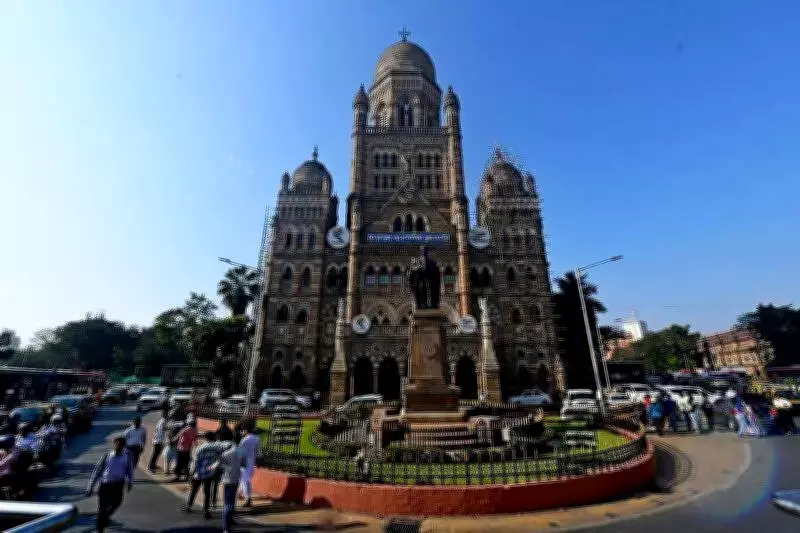
The Brihanmumbai Municipal Corporation (BMC) has initiated the integration of its three-dimensional digital model of Mumbai with key civic systems. The digital twin of the city will initially be linked to the systems and applications of various departments, including building proposals, estates, and property tax, and later to other departments.
Enhancing Transparency and Efficiency
The integration is expected to enhance transparency, improve efficiency, and generate additional revenue for the civic body. The system will enable precise assessment of development charges, property tax, and regularisation fees. A notable increase in municipal revenue is anticipated by minimising leakages and improving the accuracy of property records.
Detailed Representation of Urban Landscape
The 3D model provides a detailed, layered representation of Mumbai's urban landscape, covering buildings, roads, bridges, flyovers, underpasses, underground utilities, water bodies, open spaces, and even slum settlements. With this, the BMC will be able to detect unauthorised constructions and encroachments with greater accuracy, cross-verify approved building plans against on-ground developments, identify discrepancies in property tax assessments, prevent revenue pilferage, and streamline approval processes through better visualisation and data integration.

Supporting Infrastructure Planning and Disaster Management
The integration will also support simulation-based decision-making for infrastructure planning as well as disaster management preparedness. The digital model offers a 3D walkthrough of city streets, providing a 360-degree panoramic view.
"In areas such as Bora Bazaar and other parts of Fort, buildings are in close proximity, with narrow gullies in between, many of which have been encroached upon over the years. Similarly, there are properties leased by the civic body where structural changes have been made. The integration of the digital model will provide both macro and micro views, enabling officials from various departments to identify changes even from their office," said a civic official.
Sector-wise Analysis and Accurate Assessments
"We can carry out a sector-wise analysis of the development in the city with the integration," the official added. "For instance, if a building has undergone extensions or additions beyond the approved plan, or if there are any variations, officials will be able to assess the height, floor plates, and dimensions of the building on the ground and impose penal charges accordingly. Before granting permissions, civic staff will also be able to check aspects such as the width of a road and the presence of nearby structures or utilities."
Civic officials pointed out that the BMC will be able to make accurate assessments of property tax and development charges at the initial stages itself, leaving little scope for revenue loss due to subsequent changes made to properties after approvals are granted. Additionally, before granting development permissions, civic officials will be able to verify whether a location has underground utilities, structures at a location, and visualise the development and grant permissions accordingly.