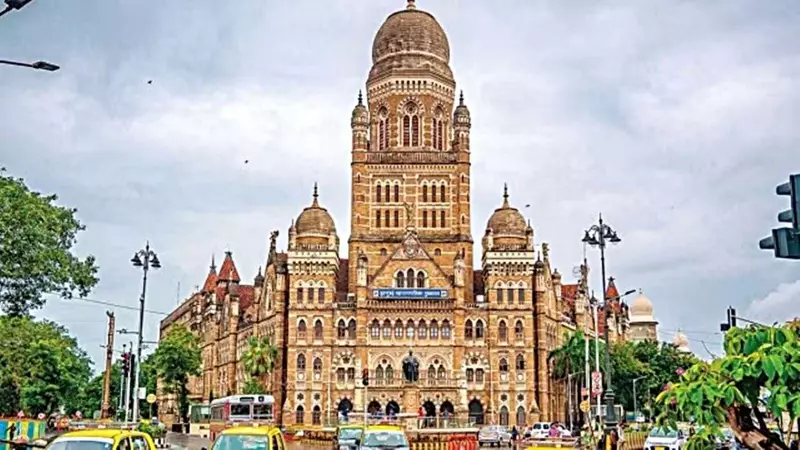
The Bombay High Court has taken a stern stance against the perceived inaction of civic and pollution control authorities in combating Mumbai's deteriorating air quality. On Monday, the court summoned the Brihanmumbai Municipal Corporation (BMC) Commissioner, Bhushan Gagrani, and the Member-Secretary of the Maharashtra Pollution Control Board (MPCB) to appear personally before it on Tuesday, December 23.
Court's Prima Facie Finding of Inaction
A bench comprising Chief Justice Shree Chandrashekhar and Justice Gautam A Ankhad was hearing a suo motu Public Interest Litigation (PIL) initiated after reviewing news reports, including The Indian Express's 'Death by Breath' series. The series had highlighted an alarming rise in air pollution since November 2023.
The bench reviewed a report submitted by a four-member committee it had appointed to inspect construction and industrial sites across Mumbai and Navi Mumbai. After examining the findings, the judges stated they had formed a prima facie opinion that there was "inaction" on the part of the BMC in mitigating the city's poor air. They directed the top officials to explain this inaction in court.
Damning Findings from the Inspection Panel
The court-appointed committee, which included three lawyers and Anita Patil, Conservator of Forests at Sanjay Gandhi National Park, inspected 36 sites between December 6 and 13. The sites ranged from ready-mix concrete (RMC) plants and under-construction buildings to major infrastructure projects.
The panel's report painted a grim picture of widespread negligence. It concluded that "most constructions, demolition, industrial, and roadwork sites in Mumbai and Navi Mumbai continue to show absolute non-compliance with existing pollution-control guidelines."
Senior advocate Darius Khambata, acting as amicus curiae, informed the court that compliance with earlier orders had become "reactive" rather than "proactive." He and other petitioners' counsels argued the findings demonstrated a "complete lack of monitoring of the air quality."
Specific Violations at Major Project Sites
The committee's inspection revealed serious lapses at high-profile locations:
- Bandra Kurla Complex (BKC): At three major sites, including the Bullet Train project and Metro Line 2B, the panel observed a "recurring pattern of incomplete or inconsistent compliance" with pollution norms set by BMC and MPCB.
- Government Colony, Bandra (East): The proposed site for the new Bombay High Court building was found conducting demolition in an "extremely negligent" and "dangerously unregulated" manner. The panel reported large-scale dust and debris generation with no barricades, wet coverings, or dust-suppression mechanisms like sprinklers or smog guns. Uncovered vehicles transported waste, dispersing dust into public areas.
- Mahape Monitoring Station: An MPCB air quality monitoring station in Navi Mumbai was found to be "poorly maintained," with a non-functional display and unmanned operations. Real-time AQI data was unavailable to the panel.
Discrepancies in Data and Cosmetic Measures
The report also flagged significant issues with pollution data and mitigation efforts. It noted that the government's Sameer App showed substantially lower AQI readings compared to third-party applications, raising questions about monitoring accuracy. While BMC officials attributed this to higher-quality sensors, the panel found the differences "substantial."
Furthermore, existing mitigation measures like water sprinklers, fogging machines, and smog guns were found to be deployed in a "limited, ad-hoc or cosmetic manner," rendering them largely ineffective. The panel also highlighted the absence of guidelines for installing CCTV cameras at worksites to monitor cleanliness and prevent overloading.
Urgent Call for Action
The committee's report ended with a stark warning, stressing the need for "urgent action" to ensure complete guideline implementation and real-time monitoring. It cautioned that without immediate and effective intervention, "air quality will continue to deteriorate and public health risks will persist unabated." The Bombay High Court's summons to the heads of the city's key regulatory bodies underscores the judicial system's growing impatience with the administrative handling of Mumbai's air pollution crisis.