Union Budget 2026 Boosts Astronomy with Major Telescope Projects in Ladakh
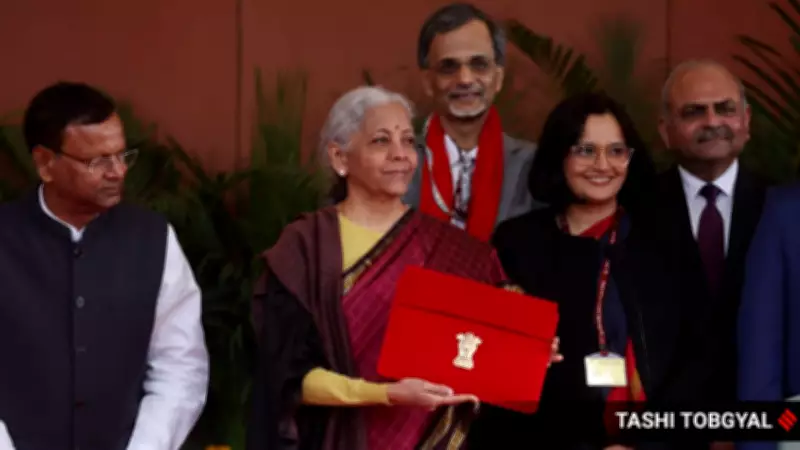
In a significant move to advance India's astronomical capabilities, the Union Budget 2026 has announced substantial funding for the establishment of two new large telescopes and the upgradation of an existing facility in Ladakh. This initiative, highlighted by Union Finance Minister Nirmala Sitharaman during her budget speech, aims to position India as a global leader in observational astronomy and space research.
New Telescopes to Enhance Research Capabilities
The government has approved the installation of the National Large Solar Telescope (NLST) and the National Large Optical-infrared Telescope (NLOT), both slated to be constructed in Ladakh. These facilities will be operated by the Bengaluru-based Indian Institute of Astrophysics (IIA), which manages the Indian Astronomical Observatory in the Hanle valley of Ladakh. The NLOT will be located in Hanle, while the NLST will be set up in Ladakh's Merak region, near the banks of Pangong Tso Lake.
Dibyendu Nandi, a solar physicist at IISER Kolkata, emphasized the importance of this decision, stating, "Getting observation time on international telescopes is extremely challenging because of the number of requests from groups all over the world. India's decision to build these large telescope facilities will be a big benefit for Indian researchers."

Ladakh: An Ideal Hub for Astronomy
Ladakh, particularly the Hanle region, is already renowned as one of India's premier centers for astronomy research. Its high-altitude location, over 4,000 meters above sea level, offers exceptionally dark skies with minimal light pollution, creating near-ideal conditions for astronomical observations. The region hosts the Hanle Dark Sky Reserve, a protected area designed to preserve natural darkness, and enforces strict regulations on outdoor lighting.
Annapurni Subramaniam, director of IIA, expressed delight at the budget announcement, noting, "Ladakh is one of the world's best locations for observational astronomy. This site, being high-altitude and cold desert, allows telescope operations round-the-year unlike many other locations in India where telescope operations are temporarily shut during the monsoon." She added that having astronomy infrastructure in Ladakh is strategic and vital for maximizing scientific output.
Details of the New Telescopes
The National Large Solar Telescope (NLST) is proposed to be a 2-metre class telescope, making it one of the largest solar telescopes in Asia. With a spatial resolution of 50 km and a time resolution of 1 millisecond, it will enable detailed study of the Sun, including finer events and turbulent occurrences. Dipankar Banerjee, a solar physicist, called it a game-changer, saying, "There are solar observatories in Hawaii and Europe but a large observatory was missing in this part of the world. NLST will fill that gap and offer solar observations which have never been taken before." The NLST is expected to complement India's space-based solar observatory, Aditya L1, launched in 2023, and will take about 5 to 6 years to install.
The National Large Optical-infrared Telescope (NLOT) will be a unique 10-metre class facility based on segmented mirror technology, similar to the proposed Thirty Metre Telescope (TMT), an international project with Indian collaboration. It will facilitate studies of the early universe, planetary systems, exoplanets, and more. Senior astrophysicist GC Anupama noted, "When ready, NLOT will fill the existing longitudinal gap. Our efforts in developing TMT will come handy for NLOT." The NLOT is expected to be built over the next decade.
Upgradation of Himalayan Chandra Telescope
In addition to the new telescopes, the budget includes plans for a major upgrade of the Himalayan Chandra Telescope (HCT), which has been operational in Hanle since 2001. This facility, remotely operated by IIA's center in Hoskote near Bengaluru, has three onboard instruments and has been providing crucial astronomical data continuously. The upgrade will enhance its infrastructure and operational capabilities over the next few years, ensuring it remains a key asset for Indian astronomy.

Expanding Astronomy Education and Outreach
The budget also mentions the establishment of a second Cosmology Education and Research Training Center (COSMOS) planetarium in Amravati, Andhra Pradesh. This next-generation planetarium, similar to one recently built in Mysuru and spearheaded by IIA, aims to promote astronomy education and public outreach, fostering greater interest and understanding of space science among the general population.
This comprehensive budget initiative underscores the government's commitment to strengthening India's position in astronomy and space research, leveraging Ladakh's unique advantages to drive scientific innovation and discovery.