

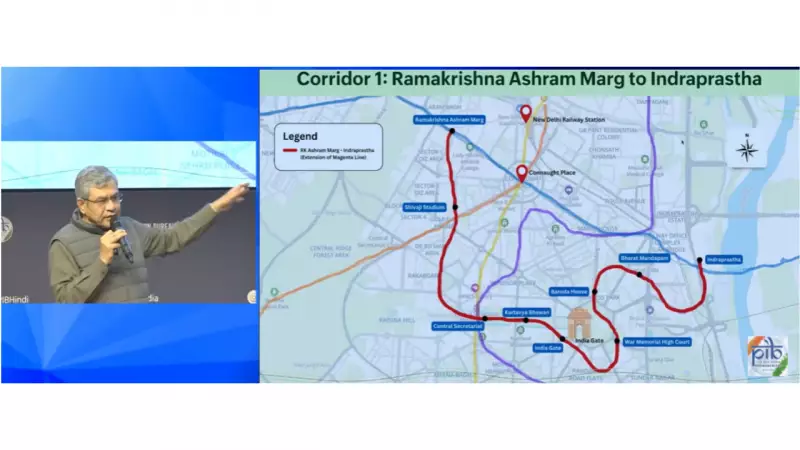
In a major boost to the capital's public transport infrastructure, the Union Cabinet has given its official nod to the Delhi Metro Rail Project Phase-VA. This approval sets the stage for a significant expansion of the metro network, which will cross the landmark 400-kilometer operational length upon completion. The announcement was made by Union Minister Ashwini Vaishnaw.
Project Blueprint: Three New Corridors, 13 Stations
The newly approved phase is a compact yet crucial addition, focusing on enhancing connectivity to key areas. The project entails the construction of 16 kilometers of new lines and a total of 13 new stations. Out of these, 10 stations will be built underground, while the remaining three will be elevated. The government has set an ambitious timeline, aiming to complete the entire Phase-VA within a span of three years.
The financial outlay for this expansion is substantial, with the total estimated cost pegged at a whopping Rs 12,015 crore. This investment underscores the commitment to decongesting Delhi's roads and providing a modern, efficient transit alternative to millions of commuters.

Detailed Breakdown of the Three Corridors
The Phase-VA expansion is not a single line but comprises three distinct corridors, each targeting specific connectivity gaps:
1. Ramakrishna Ashram Marg to Indraprastha Corridor: This will be the longest stretch under Phase-VA, spanning 9.9 kilometers. It is also the most expensive segment, with an estimated cost of Rs 9,570.4 crore. This corridor is expected to significantly improve east-west connectivity in the heart of the city.
2. Aerocity to Airport Terminal-1 Corridor: Aimed at streamlining airport access, this corridor will cover 2.3 kilometers. Its projected cost is Rs 1,419.6 crore. This link will provide a seamless metro ride for air travelers heading to Terminal 1 (T1), integrating it better with the city's metro grid.
3. Tughlakabad to Kalindi Kunj Corridor: This 3.9-kilometer section is estimated to cost Rs 1,024.8 crore. It will enhance connectivity in South Delhi, linking important areas and potentially easing traffic on associated roads.
Crossing the 400-Km Milestone and Future Impact
The completion of Phase-VA is not just about adding new lines; it represents a symbolic and functional leap for the Delhi Metro. Once operational, it will propel the total network length beyond the 400-kilometer mark, cementing its status as one of the largest and most comprehensive metro systems in the world.
This expansion is strategically designed to fill existing network gaps, improve last-mile connectivity to transit hubs like the airport, and reduce travel time for thousands of daily passengers. The focus on underground construction for most stations also indicates a planning priority for densely built-up urban areas where elevated corridors may not be feasible.
The swift three-year deadline, if met, promises to bring these benefits to the public in a relatively short timeframe, offering a tangible upgrade to Delhi's urban mobility landscape. The project is now set to move from the planning board to the ground, marking the next chapter in the Delhi Metro's remarkable journey.






