

CAG Performance Audit Uncovers Major Deficiencies in Uttarakhand's Namami Gange Programme
A recent performance audit conducted by the Comptroller and Auditor General of India (CAG) has identified several critical shortcomings in the implementation of the Namami Gange Programme in Uttarakhand between 2018 and 2023. The report, titled 'Performance Audit of Implementation of the Namami Gange Programme by Uttarakhand', highlights failures in planning and executing sewage treatment infrastructure, with significant implications for river health.
Inadequate Sewage Treatment Infrastructure and Funding Issues
The audit found that the State Ganga Committee and the State Mission for Clean Ganga did not effectively plan and implement sewage treatment infrastructure in collaboration with local communities. Moreover, the state government failed to contribute funds from its own resources to improve sewerage infrastructure in Ganga-front towns. This has resulted in many sewage treatment plants (STPs) remaining either unconnected to household sewer networks or only partially connected, severely limiting their effectiveness.
Additionally, several existing STPs lack sufficient treatment capacity, leading to the discharge of significant quantities of untreated sewage directly into the Ganga River. The Uttarakhand Jal Sansthan declined to take over 18 STPs due to deficiencies in their construction and operation, further exacerbating management challenges. Proper handling of sewage sludge was also neglected, compounding environmental risks.

Safety Audits and Symbolic STPs: A Pattern of Neglect
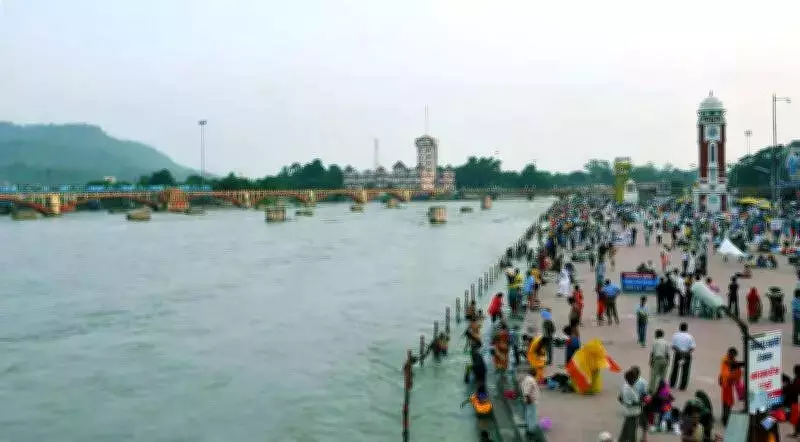
The report observed that the State Ganga Committee did not conduct timely safety audits of STPs, which resulted in avoidable loss of human lives and damage to assets created under the programme. Despite these shortcomings, water quality at Haridwar remained consistently in the 'B' category during the audit period, indicating it is suitable for outdoor bathing but still requires improved pollution control measures.
In a concerning finding, the audit revealed that 21 STPs constructed in seven towns—Nandprayag, Karnaprayag, Rudraprayag, Kirtinagar, Chamoli, Srinagar, and Srikot—were not connected to any households, rendering them symbolic in nature. This highlights a disconnect between infrastructure development and practical utility.
Deviations in Tender Processes and Solid Waste Management Concerns
Auditors flagged deviations during the tendering process, noting that the implementing agency relaxed stringent tertiary treatment standards established by the Indian Institute of Technology Roorkee. Specifically, the faecal coliform limit was relaxed from 0 MPN per 100 ml to 100 MPN per 100 ml, the desirable limit as per National Green Tribunal norms. However, the administrative approval and expenditure sanction issued by the National Mission for Clean Ganga required strict adherence to all conditions recommended by IIT Roorkee.
Solid waste management in Ganga-front towns was also identified as a major concern. During joint inspections of facilities and dumping grounds in 10 hill towns, auditors found waste being indiscriminately dumped on river slopes or disposed of by burning. This practice risks solid waste either ending up as ashes or being washed into the river during rainfall, further polluting the waterway.
Geographical Context and Programme Scope
The report provides important geographical context, noting that the Ganga originates as the Bhagirathi River from the Gangotri Glacier at Gomukh in Uttarakhand and becomes the Ganga after meeting the Alaknanda River at Devprayag. Sixteen major towns in the Garhwal region, known as Ganga-front towns, are located along the river or its tributaries. While the river flows for only about 294 km in Uttarakhand, from Gomukh to Haridwar, its total length exceeds 2,525 km, underscoring the national significance of effective pollution control measures in this region.






