CAG Performance Audit Uncovers Major Irregularities in Polavaram Irrigation Project
A comprehensive performance audit conducted by the Comptroller and Auditor General (CAG) has identified numerous and significant discrepancies across financial, procedural, and implementation aspects within the massive Polavaram irrigation project located in Andhra Pradesh. The detailed report, which scrutinizes the project's operations, flags poor budget utilization, serious environmental violations, and extensive delays in critical land acquisition and rehabilitation processes.
Financial Mismanagement and Expenditure Discrepancies
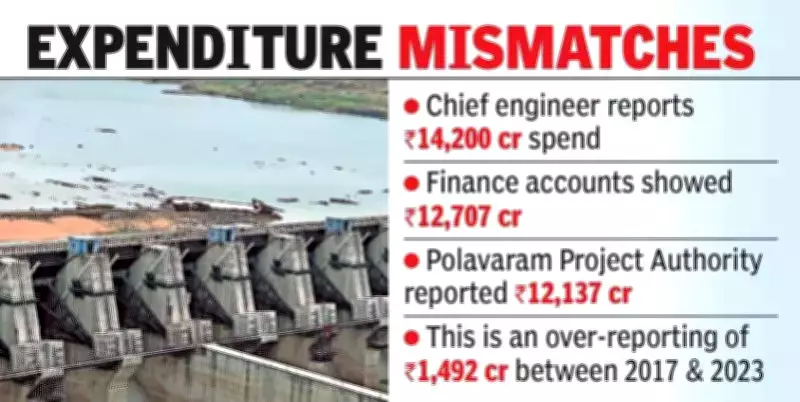
The audit revealed alarming mismatches in expenditure reporting, totaling a staggering Rs 1,492 crore. Specifically, the chief engineer reported an expenditure of Rs 14,200 crore, whereas the expenditure officially booked in the finance accounts was only Rs 12,707 crore. Furthermore, the Polavaram Project Authority (PPA) reported spending Rs 12,137 crore, which did not align with either the chief engineer's figures or the finance accounts. This over-reporting by the chief engineer occurred between 2017 and 2023, indicating systemic financial control failures.
Additional financial lapses documented include consistently low budget utilization rates ranging from a mere 21% to 66%, pending bills worth Rs 2,097 crore despite available allocations, and the non-approval of a second revised cost estimate of Rs 55,548 crore. This estimate remains unapproved due to incomplete socio-economic surveys and pending designs for the distributary network.

Severe Project Delays and Planning Failures
The Polavaram project, a critical irrigation initiative, remains far behind schedule even after 17 years of development. As of March 2023, headworks were only 67% complete, while the hydropower component registered a minimal 12% physical progress. Land acquisition has reached just 67%, and a mere 11% of the 1.06 lakh project-displaced families have been resettled, highlighting profound humanitarian and logistical shortcomings.
The CAG report flagged major planning failures, including the non-use of essential project monitoring tools like PRIMAVERA and deviations from the approved construction schedule. These deviations directly contributed to the catastrophic collapse of a diaphragm wall, constructed at a cost of Rs 399.77 crore. The damage resulted from non-adherence to the Detailed Project Report (DPR) schedule and the absence of a contracted agency to manage flood mitigation.
Contract Management and Environmental Violations
Contract management issues were rampant, with works awarded on a nomination basis, restrictive tender conditions leading to single-bidder outcomes, and interest-free advances provided to contractors in clear violation of established rules. The audit found that bank guarantees worth Rs 321 crore had expired without encashment, and special imprest and revolving funds caused unrecovered interest losses exceeding Rs 33 crore.
On canal construction, the CAG pointed to wasteful expenditure due to alignment changes, increased unit rates, and delays in allotting National Highway crossings, which collectively increased costs by over Rs 113 crore. Additionally, spoil earth valued at an estimated Rs 1,660 crore lay unaccounted for at work sites, with theft reported in several project packages.
Environmental non-compliance was severe, including the failure to construct mandatory protective embankments in Odisha and Chhattisgarh, inadequate plantation efforts, and the execution of two lift irrigation schemes without obtaining statutory approvals. These violations have led to penalties from the National Green Tribunal.
Land Acquisition and Rehabilitation Shortfalls
The audit detailed serious deficiencies in land acquisition and rehabilitation and resettlement (R&R) efforts. Issues included discrepancies in land records, payments made to ineligible beneficiaries, excess land-to-land allotments, and delayed awards resulting in higher compensation payouts. Furthermore, R&R colonies remain incomplete, lacking basic amenities such as reliable water supply, proper drainage systems, schools, health centers, and fair price shops.

In beneficiary surveys conducted, 40% of respondents reported not receiving their land awards, and 24% stated they did not receive the promised R&R compensation, underscoring the human cost of these administrative failures.
The CAG performance audit presents a stark picture of a flagship project plagued by financial irregularities, procedural lapses, and implementation delays, raising serious questions about governance, accountability, and the effective utilization of public funds for critical infrastructure development in Andhra Pradesh.