

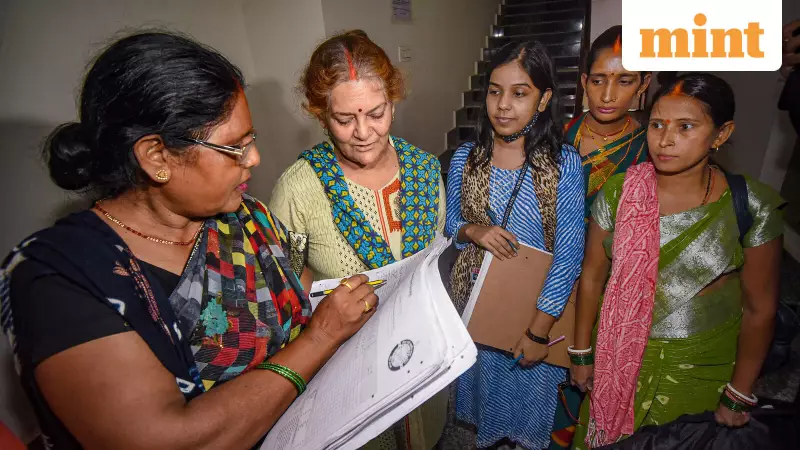
The Government of India has officially announced the schedule for the crucial first phase of the decennial Census 2027. The Ministry of Home Affairs, in a notification issued on Wednesday, 7 January, declared that the houselisting operations will be conducted across all States and Union Territories from 1 April 2026 to 30 September 2026. Marking a significant shift, this census will introduce a self-enumeration option for citizens, allowing them to submit their data online before the physical survey begins.
Key Dates and the Self-Enumeration Revolution
The central government's notification specifies that the thirty-day houselisting period will be determined individually by each State and Union Territory within the six-month window from April to September 2026. Pioneering a new approach, the government has introduced a 15-day self-enumeration window that will open just before the physical house-to-house survey commences in each region. This digital option empowers households to proactively submit their information, streamlining the process for the world's largest administrative exercise.
The announcement follows last month's Union Cabinet approval of a massive ₹11,718.24 crore budget for Census 2027, as confirmed by Union Minister Ashwini Vaishnaw. The census will be executed in two distinct phases: the Houselisting and Housing Census in 2026, followed by the Population Enumeration in February 2027. Notably, population enumeration for Ladakh and the snow-bound regions of Jammu & Kashmir, Himachal Pradesh, and Uttarakhand is scheduled for September 2026.

What is Houselisting and Why It Matters?
Houselisting is the foundational step of the census, creating a systematic record of every building and household in the country. It gathers essential data on the type and condition of dwellings, construction materials, and access to basic amenities. This includes detailed information on kitchen facilities, types of drainage and bathing facilities, modes of communication, transportation, and household assets like televisions and internet connectivity.
The data from the last houselisting in 2011 revealed critical insights into India's development trajectory. It showed that only 58% of households had a bathing facility within their premises. About half had drainage connectivity, with two-thirds of those being open drains. In terms of cooking fuel, a staggering two-thirds of households relied on firewood, crop residue, cow dung cakes, or coal.
The communication landscape from 2011 highlights how far India has come: less than 10% of households owned a computer or laptop, and only 3% had internet access. The urban-rural digital divide was stark, with an 8% internet penetration in cities compared to less than 1% in villages. However, 63% of households had access to a telephone or mobile facility, signaling the beginning of a connectivity revolution.
India's First Fully Digital Census
Census 2027 is poised to make history as India's first digital census. The government has confirmed that data collection will be primarily conducted through dedicated mobile applications, available on both Android and iOS platforms. This technological leap aims to enhance accuracy, speed up data processing, and provide real-time demographic insights. The introduction of self-enumeration is a cornerstone of this digital push, potentially increasing citizen participation and reducing the workload on enumerators.
This comprehensive exercise will provide an updated snapshot of India's population, housing, and socio-economic conditions, forming the bedrock for policy planning and resource allocation for the next decade. The upcoming data will be crucial for measuring progress since 2011 and shaping future national and state-level development initiatives.






