US-Iran War Duration Remains Uncertain Amid Escalating Middle East Conflict
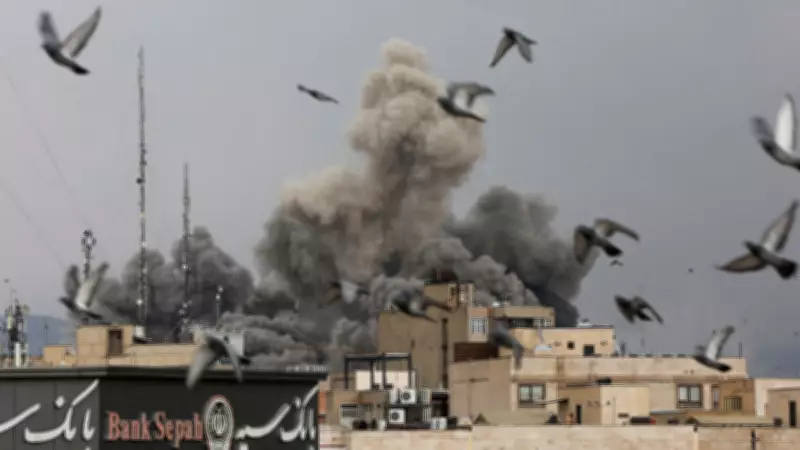
The United States has delivered contradictory messages regarding the potential duration of its ongoing war with Iran, even as the conflict rapidly expands across the Middle East with fresh airstrikes, missile launches, and drone attacks. This uncertainty unfolds against a backdrop of intensified military operations, with Israeli and US forces striking inside Iran while Tehran and its allies retaliate against Israel and target US-linked sites in Gulf nations.
Mixed Signals from US Leadership on War Timeline
President Donald Trump has firmly rejected the notion of a fixed timeline for the conflict, stating at the White House, "Whatever the time is, it's okay — whatever it takes." While initially projecting a four to five-week campaign, Trump emphasized that the United States possesses the capability to continue "far longer than that." He described the operation as proceeding "substantially" ahead of schedule but signaled readiness for a prolonged conflict if necessary. Trump explicitly ruled out nothing, including American boots on the ground, asserting, "I don't have the yips with respect to boots on the ground," in comments to the New York Post.
In contrast, US Defense Secretary Pete Hegseth attempted to alleviate fears of another endless war, declaring, "This is not Iraq. This is not endless." However, he simultaneously warned that more American casualties are likely in the coming weeks, highlighting the ongoing risks despite efforts to frame the conflict as limited.

Israeli Prime Minister's Perspective on Campaign Duration
Israeli Prime Minister Benjamin Netanyahu has echoed the message that the campaign will not become a forever war but refrained from providing a specific timeline. In an interview with Fox News, Netanyahu described the conflict as a "quick and decisive action" that "may take some time, but it's not going to take years." This statement indicates Israel anticipates a finite yet potentially extended military engagement, aligning with the broader uncertainty surrounding the war's conclusion.
Trump's Four Core Objectives in Striking Iran
In his first detailed remarks since launching the operation, President Trump outlined four fundamental objectives behind the decision to strike Iran:
- Destroy Iran's missile capabilities
- Annihilate Iran's naval capacity
- Ensure Iran can never obtain a nuclear weapon
- Prevent the Iranian regime from arming, funding, and directing militant groups beyond its borders
These goals underscore the strategic rationale driving US military actions, framing the conflict as a pre-emptive measure against perceived threats from Tehran.
Secretary of State Rubio's Framing of the Conflict
US Secretary of State Marco Rubio presented a distinct narrative regarding the conflict's origins, stating that the US intervened after learning Israel was preparing to strike Iran and assessing that Tehran was readying attacks on American forces in the region. Rubio described Trump's decision as a "pre-emptive" intervention alongside Israel to blunt this threat. He further noted that the US military build-up in the region had reached levels not seen since the 2003 Iraq invasion, emphasizing the extensive preparation underlying the operation.
Escalating Regional Violence and Casualty Reports
The conflict has triggered significant violence across multiple nations. According to the Iranian Red Crescent Society, at least 555 people have been killed in Iran during the US-Israeli campaign, with more than 130 cities reportedly struck. In Israel, authorities report 11 deaths, while 31 people have been killed in Lebanon. These figures highlight the human cost of the escalating hostilities, with no immediate signs of de-escalation.

US Issues Stark Travel Advisory for Middle East
As the war spreads to various parts of the region, Washington has issued a severe advisory to its citizens. The US State Department urged Americans to "depart now" from much of the Middle East using commercial transport due to "serious safety risks." The advisory covers 14 countries: Bahrain, Egypt, Iran, Iraq, Israel and the Palestinian territories, Jordan, Kuwait, Lebanon, Oman, Qatar, Saudi Arabia, Syria, the United Arab Emirates, and Yemen. This warning reflects the broadening geographic scope of the conflict and the heightened dangers for civilians in the region.
The ongoing uncertainty over the war's duration, coupled with the escalating violence and mixed messages from US and Israeli leaders, suggests a complex and potentially protracted conflict with significant implications for regional stability and global security.