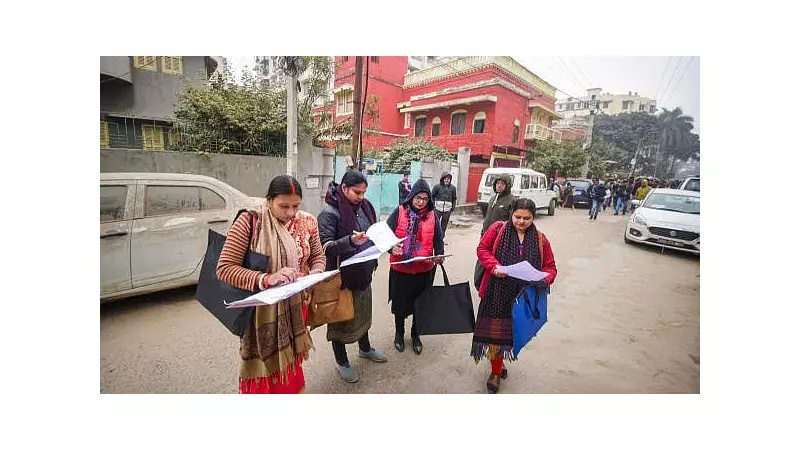
The Government of India has officially announced the schedule for the initial phase of the decennial population count, setting the stage for Census 2027. The Ministry of Home Affairs (MHA) has declared that the crucial houselisting and housing census operations will be conducted over a six-month window, spanning from April to September 2026.
New Self-Enumeration Feature Introduced
In a significant update to the process, the government notification revealed a modern, citizen-centric initiative. For the first time, there will be an option for self-enumeration. This facility will be made available to the public for a period of 15 days, just before the commencement of the main 30-day houselisting drive. This move is expected to empower households, increase efficiency, and potentially improve data accuracy by allowing people to submit their details digitally at their convenience.
Phased Approach and Operational Details
The census, one of the largest administrative exercises in the world, follows a meticulously planned, phased approach. The houselisting phase, also known as the House-listing and Housing Census, is the foundational first step. It involves creating a complete list of all residential and non-residential structures in the country. Enumerators will visit every building to collect data on building characteristics, amenities, and assets, which helps in framing the subsequent population enumeration phase.
The notification from the MHA, dated January 7, 2026, provides the administrative framework for states and union territories to begin their preparations. The traditional door-to-door enumeration by government-appointed officials will proceed for 30 days following the self-enumeration window.
Significance and Broader Context
This announcement sets the official machinery in motion for Census 2027, which will provide a vital snapshot of India's demographic, social, and economic status. The data collected is critical for policy formulation, planning, and allocation of resources for central and state schemes. The introduction of the self-enumeration option aligns with the government's push towards digital governance and increased public participation in official processes.
The successful execution of the houselisting phase is paramount for the accuracy of the final census count. It comes amid ongoing discussions and demands from various quarters regarding the inclusion of a detailed caste census, although the current notification pertains specifically to the houselisting and housing schedule. The massive operation will involve the training and deployment of millions of enumerators across the nation's urban and rural landscapes.