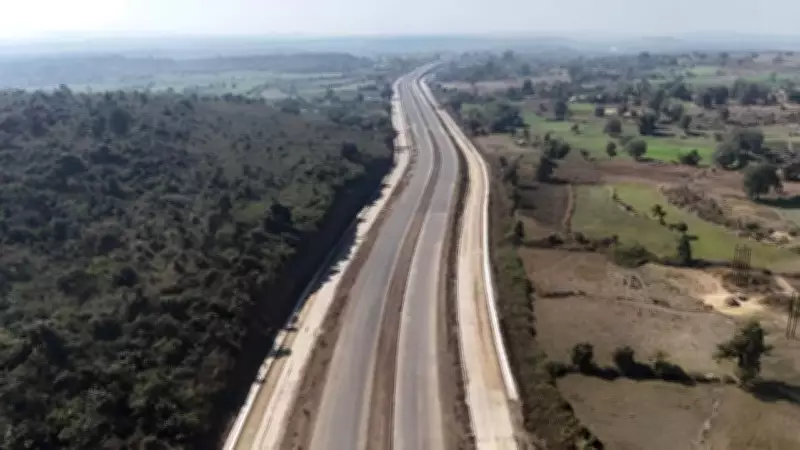
NEW DELHI: Amid growing demands from states for construction of ring roads and bypasses to decongest national highways in urban areas, the Centre will take up such projects only if state governments contribute a share of the cost, as per the Urban Congestion Policy of the road transport and highways ministry.
Key Features of the Policy
In a communication to all states, the ministry said that all projects for urban decongestion of National Highways will be fully access-controlled corridors of minimum 4-lane configuration with closed tolling facilities. This would enable a design speed of 100-120 kmph for both freight and passenger vehicles.
To avoid ribbon development (construction along the corridors), a 15-meter stretch along these roads will be notified as a “green zone” where construction will be prohibited unless it is required for public transport, public utility infrastructure such as electricity, water or sewerage pipelines, or green zone infrastructure.

Right of Way Requirements
A minimum of 60/75 meter Right of Way (RoW) will be acquired for these projects in cities with a population of more than five lakh and state capitals. For cities with a population between 1-5 lakh and district headquarters, a 45/60 meter RoW will be required.
Models for State Contribution
The ministry has listed four models for state governments’ contribution to developing such projects:
- Model 1: Willingness to share 50% of land acquisition cost.
- Model 2: A mix of 25% share of land acquisition cost and reimbursement of state share of GST leviable on project and royalty.
- Model 3: Contribution of land through land pooling.
- Model 4: A mix of reimbursement of state share of GST and royalties on minerals and a share of value capture mechanism.
The policy stated that the share in value capture mechanism will be provided to the central government over 15 years and will be subject to a cap equal to 50% of the total project cost calculated on a Net Present Value basis.
Value Capture Mechanism Explained
“This mechanism shall operate similar to the value capture finance or transit oriented development charges for metro projects by levying charges for change in land use in the development controlled zone, additional stamp duty for transactions in property in the development controlled zone, infrastructure development charges on property development in the development controlled zone or betterment levy, as the case may be, on residential, commercial or industrial development for which permissions are granted by the state government within an influence belt of two km along either side of the NH bypass or ring road,” the policy said.