

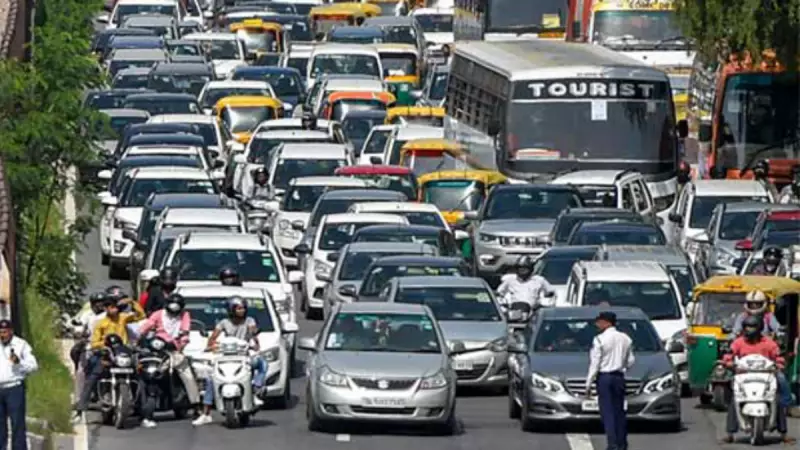
As Delhi-NCR continues to grapple with severe air pollution, authorities have re-imposed Stage IV of the Graded Response Action Plan (GRAP). A central pillar of these GRAP-4 restrictions is a ban on the entry of non-BS6 compliant diesel vehicles into the national capital. This has left many vehicle owners scrambling to confirm their vehicle's emission standard status to avoid penalties.
Understanding the GRAP-4 Ban on Non-BS6 Vehicles
The Commission for Air Quality Management (CAQM) has mandated strict measures under GRAP Stage IV to combat the toxic air enveloping the region. Among the most impactful rules is the prohibition on the entry of trucks, except those carrying essential commodities, and all medium and heavy goods vehicles that do not meet BS6 standards. Light commercial vehicles and private diesel vehicles are also under scrutiny. The restrictions are active and will remain so until air quality shows significant and sustained improvement.
This directive, effective from December 18, 2025, as per the official order, aims to drastically cut down vehicular emissions, a major contributor to Delhi's winter pollution. For vehicle owners, especially those commuting from neighboring states into Delhi, verifying compliance is now an urgent task.

How to Check Your Vehicle's BS6 Compliance Status
Confusion often arises about how to determine if a vehicle is BS4 or BS6. The simplest and most official method is to check the Registration Certificate (RC). The emission norm is clearly printed on the document. However, if you do not have the physical RC handy, the Indian government's digital platforms offer a quick and reliable solution.
Using DigiLocker to Access Your Digital RC
DigiLocker, the government's digital document wallet, is a powerful tool for this purpose. Follow these steps:
- Open the DigiLocker app or website and log in using your registered mobile number.
- Navigate to the 'Issued Documents' section.
- Look for your vehicle's Registration Certificate under the 'Transport' category.
- Download and open the digital RC. The 'Bharat Stage' or 'Norms' field will explicitly state 'BSVI' for compliant vehicles. Vehicles with 'BSIV' are not allowed under the current GRAP-4 rules for diesel models.
Verifying Details on the mParivahan Portal
Alternatively, the mParivahan website or app, maintained by the Ministry of Road Transport and Highways, provides the same information.
- Visit the mParivahan website or open the app.
- Enter your vehicle's registration number.
- The detailed vehicle information will be displayed, including the 'Fuel Type' and the all-important 'Norms Description' field, which will indicate the Bharat Stage.
Both platforms provide legally recognized documents, making them perfect for quick checks before planning a trip into Delhi during the pollution curbs.
Why This Check is Crucial for Delhi-NCR Residents
The enforcement of GRAP-4 rules is stringent. Traffic police and transport department officials are conducting checks at entry points and across the city. Violators found plying non-compliant diesel vehicles risk facing substantial fines and penalties. The rule is not just for commercial operators; private diesel car owners must also ensure their vehicles are BS6 to avoid being penalized.
This move is part of a broader set of emergency measures that also include a ban on construction work and the entry of polluting trucks. The focus on BS6 vehicles highlights the government's push towards cleaner fuel technology, as BS6 engines are designed to emit significantly lower levels of particulate matter and nitrogen oxides compared to older BS4 engines.
For residents of Delhi and the broader National Capital Region, staying informed and verifying your vehicle's status through DigiLocker or mParivahan is no longer just about convenience—it's a necessity to ensure uninterrupted travel and compliance with critical public health regulations during this period of severe air pollution.






