Chennai Metro to Enhance Commuter Access with New Feeder Bus Network
In a strategic move to address persistent ridership challenges, the Tamil Nadu government has granted in-principle approval for the rollout of first and last mile connectivity (FLMC) services around Chennai Metro's Phase-I stations. With daily passenger numbers stagnating at approximately 3 to 3.2 lakh, this initiative, dubbed 'Metro at the Doorstep', aims to bridge critical transportation gaps and encourage a shift from private vehicles to public transit.
Comprehensive Plan to Boost Metro Usage
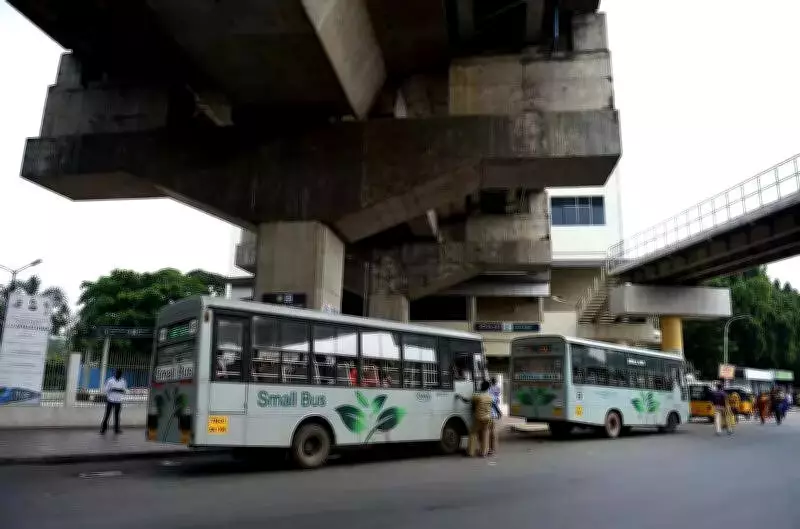
The planning, development and special initiatives department issued the official order on February 18, 2026, following detailed proposals from Chennai Metro Rail Limited (CMRL) and the Chennai Unified Metropolitan Transport Authority (CUMTA). According to a CMRL official, inadequate first and last mile connectivity has been a major deterrent preventing commuters from adopting the metro system. To combat this, a fleet of 220 vehicles has been proposed, comprising 70 small buses with a seating capacity of 19 passengers each and 150 micro buses or vans accommodating 12 passengers each, all primarily electric to promote sustainability.
Operational Framework and Key Stations
Due to regulatory constraints under the Motor Vehicles Act, which prevents CMRL from directly operating road-based public transport, the services will be managed by the Metropolitan Transport Corporation (MTC) under a gross cost contract model. CUMTA will oversee route planning, service integration, and coordination to ensure seamless connectivity. The initial phase will focus on 11 key metro stations: Thirumangalam, Vadapalani, Koyambedu, Guindy, Alandur, Meenambakkam, OTA Nanganallur, St Thomas Mount, Washermenpet, Wimco Nagar, and the airport. Currently, only 22 minibuses serve these areas with a frequency of one every 20 minutes; the new fleet is expected to operate every five minutes, significantly improving accessibility.

Expert Recommendations for Broader Impact
Transport experts and commuters have welcomed the initiative but stress the need for expansion across all metro, suburban, and MRTS stations, along with the development of charging infrastructure at CMRL and suburban locations. K P Subramanian, former professor of urban engineering at Anna University, emphasized that feeder services should also extend to suburban railway stations and routes not covered by regular MTC buses. He called for a review and rationalization of existing small bus routes to avoid duplication with MTC services, ensuring efficient and comprehensive coverage.
This FLMC plan represents a critical step in enhancing Chennai's public transport ecosystem, potentially driving higher metro ridership and reducing traffic congestion through integrated, eco-friendly solutions.