Chennai's Unified Transport Plan: A Blueprint for Solving India's Urban Mobility Crisis
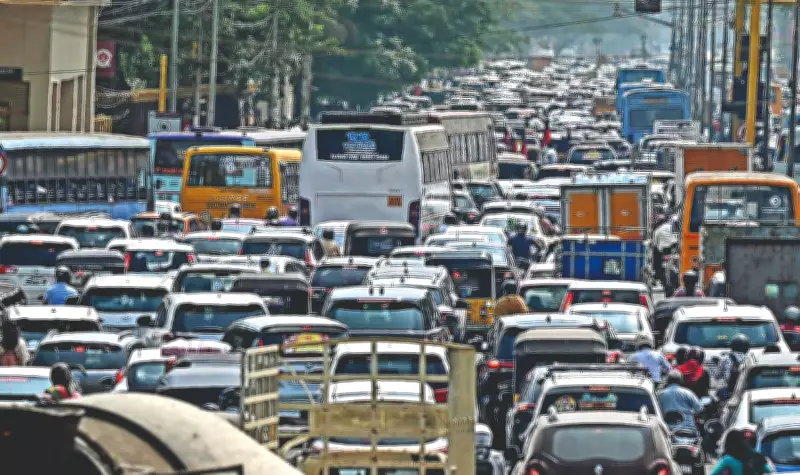
Indian cities are not short on transport plans; their real struggle lies in executing these plans through coordinated action on the ground. Over the past two decades, most major urban centers have outlined similar ambitious goals—prioritizing public transport, integrating land use with mobility, enhancing safety, and reducing reliance on private vehicles. Yet, despite these intentions, congestion has intensified, road fatalities remain alarmingly high, and private vehicle ownership continues to surge across urban India. The core issue is not a lack of vision but the immense difficulty in translating that vision into aligned implementation across multiple agencies.
Chennai's Mobility Planning Evolution: From Vision to Institutional Action
Chennai exemplifies this nationwide challenge. The city has a history of mobility planning, including a comprehensive traffic and transportation study in 2010 and a Comprehensive Mobility Plan (CMP) in 2019, both aligned with national policy priorities around public transport, non-motorized travel, and land-use integration. However, the outcomes consistently fell short. This pattern is all too familiar across urban India: mobility plans do not fail because their goals are flawed, but because the institutional frameworks needed to implement them are weak and fragmented.
Chennai's latest CMP for 2023–2048 may not be the city's first attempt at mobility planning, nor does it radically deviate from earlier objectives. The critical shift, however, is institutional. With the operationalization of the Chennai Unified Metropolitan Transport Authority (CUMTA) Act in 2022, Chennai now boasts a coordinating body for transport decisions across agencies and jurisdictions—a feature most Indian cities still lack in practice. Mandated under the CUMTA Act, the preparation of the CMP is a statutory requirement, marking a significant move away from ad-hoc planning toward a formally instituted, systematic process. This matters profoundly because fragmented decision-making, rather than a scarcity of projects, has fundamentally shaped the poor mobility outcomes plaguing Indian cities.

Expanded Scope and Evidence-Based Approach
The new CMP reflects the expanded scale of Chennai's mobility challenges. While earlier plans were anchored to a smaller planning area of 1,189 square kilometers, the current CMP adopts a broader metropolitan lens, covering 5,904 square kilometers. This expanded boundary incorporates rapidly urbanizing suburban regions into the mobility planning framework, acknowledging that travel patterns, commuting pressures, and infrastructure demands now extend far beyond the city core and municipal limits.
Planning at this enlarged scale necessitated robust evidence. The CMP draws on extensive large-scale household surveys covering more than 50,000 households and approximately 200,000 citizens, supplemented by 15 primary surveys on traffic, parking, road conditions, freight movement, and travel behavior. This evidence-based approach shifts planning away from assumptions and corridor-level fixes toward a clearer, data-driven understanding of how people travel across the entire metropolitan region.
Participatory Process and Governance Reforms
The planning process was participatory from the outset. Multiple government departments responsible for roads, public transport, planning, utilities, and finance, along with public stakeholders, were engaged throughout, contributing to both problem framing and solution design. By involving these agencies and the public early on, the CMP aims to build shared ownership—a crucial condition for implementation that earlier mobility plans often lacked.
If evidence and participation explain why this CMP is different in its preparation, governance will determine whether it actually changes outcomes. Across Indian cities, mobility failures frequently arise from projects implemented without alignment, often negating each other's benefits. Roads are widened while bus fleets stagnate for decades; metro and rail systems are constructed without reliable last-mile access; and parking supply continues to expand even as public transport struggles for priority. Each decision might seem defensible in isolation, but collectively, they undermine the city's overarching mobility goals.

Chennai's CMP is explicit about this systemic failure and outlines what must change. Central to this shift is the role envisaged for CUMTA. Unlike previous arrangements that relied on goodwill or ad-hoc coordination, CUMTA is positioned as a reviewing authority for transport and mobility proposals initiated by various departments. The intent is straightforward: major transport interventions should proceed only if they align with the metropolitan mobility vision set out in the CMP.
Learning from Global Models and Future Prospects
This represents more than a procedural adjustment; it signals a fundamental shift in how transport decisions are expected to be made. Cities that have developed high-performing urban mobility systems, such as London and Singapore, have achieved this by consolidating authority, standardizing data and design systems, and enforcing alignment across agencies through institutions like Transport for London and the Land Transport Authority. Chennai's CMP moves in this direction by proposing standardized right-of-way design, region-wide data systems, parking management as a demand-control tool, and the exploration of a dedicated urban transport fund.
This institutional experiment is already showing signs of traction. As the CMP integrates with Chennai's Third Master Plan, its priorities are beginning to acquire statutory force through land-use planning. This alignment has the potential to significantly strengthen implementation, anchoring mobility decisions within the city's formal planning framework and reducing the risk of fragmented or competing interventions. However, it would be premature to treat this as a settled outcome. The durability of this shift will depend on consistent enforcement of alignment, the ability to resolve inter-agency conflicts, and the extent to which CUMTA's coordinating role is sustained through administrative practice over time.
Potential Impacts on Commuters and Urban Life
If the CMP holds through implementation, its most visible impact will be a transformed everyday experience for commuters. Commutes could become more predictable, with public transport emerging as a reliable first choice rather than a reluctant compromise. Streets may acquire clearer priorities, reducing conflicts between buses, pedestrians, cyclists, and private vehicles. For residents in the metropolitan periphery, where growth has outpaced services, the plan's metropolitan lens is especially significant. Better alignment of suburban rail, bus services, and regional connectivity with where people live and work can reduce dependence on two-wheelers and long, expensive commutes. Safer, more legible transport systems would expand access for women, older adults, and children, while businesses could benefit from more reliable access to labor and logistics.
Chennai's CMP does not offer a shortcut, nor does it guarantee success. What it provides is a clearer diagnosis of why mobility planning has struggled in Indian cities and a credible attempt to address those weaknesses through governance reforms, coordination mechanisms, and evidence-led decision-making. The lesson here is not that cities need better plans—most already have them. The lesson is that without empowered institutions, shared ownership across departments, and mechanisms to enforce alignment, even the most technically sound plans will struggle to change outcomes. Chennai has begun to test that proposition, and other Indian cities would do well to pay close attention.