

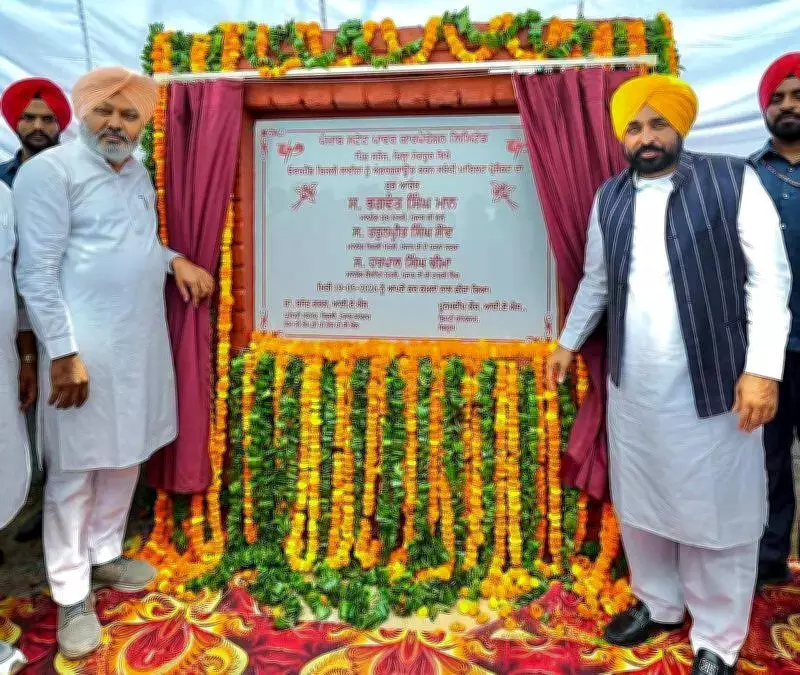
Punjab Chief Minister Bhagwant Singh Mann on Tuesday launched an underground electricity wiring project from his native village Satauj in Sangrur district, aiming to make Punjab the country's first state with pole-free villages. The initiative aimed to prevent crop fires, electrocution accidents, and power disruptions caused by overhead wires, while improving village infrastructure and aesthetics.
Project Details and Cost
Under the pilot project, overhead electricity lines in Satauj were to be shifted underground at a cost of around Rs 8 crore. Around 384 electricity poles were to be removed, and underground cables were to be laid without digging roads through trenchless drilling technology. Mann termed the "Satauj Model" a roadmap for the entire nation and said the AAP government had fulfilled its promise of creating wire-free villages for farmers.
Infrastructure Specifications
Addressing a gathering, the chief minister said the project included seven kilometers of high tension lines, 9.5 kilometers of low tension lines, and 41 kilometers of underground service cables connecting nearly 800 consumers. The underground network was to link the 66 KV Grid Satauj through three 11 KV feeders and 28 transformers, while all LT lines and household service connections were also to be shifted underground.

Safety and Benefits
Mann said the project would eliminate risks posed by overhead wires, including electrocution of humans and animals, accidents involving tractors and combine harvesters, and crop fires. He noted that storms and strong winds often damaged poles and wires, disrupting power supply and causing losses to the power corporation. Underground wiring, he said, would ensure uninterrupted electricity supply, reduce transmission losses, and improve the appearance of villages.
Emotional Tribute
Becoming emotional during his speech, the chief minister recalled that three young men from Satauj had earlier lost their lives due to electric shocks involving combine harvesters. He described the project as a tribute to them and said such tragedies should never occur again.
Vision and Reforms
Calling the initiative part of a larger "Roshan Punjab" vision, Mann said Punjab was moving towards modern and digital governance. He highlighted reforms, including digitized RTO services and the Easy Registry system, which now allowed people to get property registries done from any tehsil within their district in simplified language.
Anti-Sacrilege Law
Referring to the Jaagat Jot Sri Guru Granth Sahib Satkar Amendment Act 2026, Mann said the Punjab government enacted a strict anti-sacrilege law with punishment up to life imprisonment to ensure respect for Guru Granth Sahib. He accused previous governments of failing to act against sacrilege incidents and asserted that the present government remained committed to Sikh values and public sentiments. He said that those who were opposing the act were creating confusion among masses by making false claims.
Welfare Initiatives
The chief minister also highlighted welfare initiatives including the Mukh Mantri Sehat Yojna, under which free treatment up to Rs 10 lakh was being provided to every family in Punjab. He said over 30 lakh health cards were already issued and around 1.65 lakh people benefited from free treatment under the scheme.
Women Empowerment Scheme
Mann further announced the Mawan Dheeyan Satkar Yojna, under which women were to receive Rs 1,000 per month and Scheduled Caste women Rs 1,500 per month through direct bank transfers. He said nearly 97% of women in Punjab were expected to benefit and Rs 9,300 crore was allocated for the scheme in the state budget.
Cabinet ministers Harpal Singh Cheema and Tarunpreet Singh Sond were also present at the event.






