

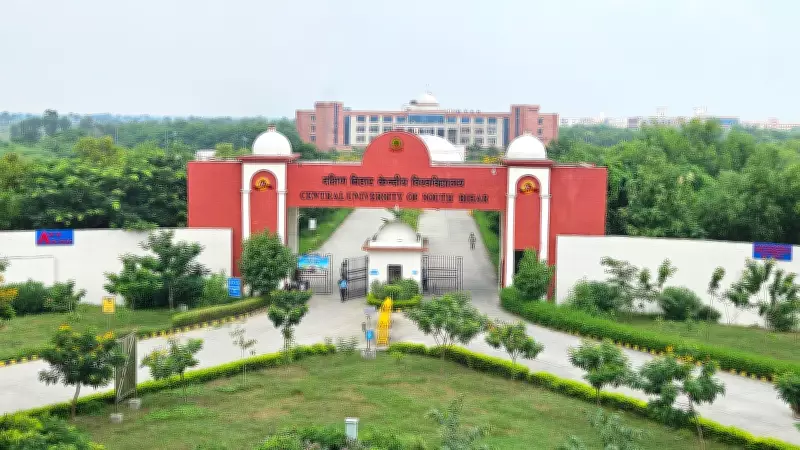
Taking a cue from the Prime Minister’s seven-point appeal to reduce fuel consumption amid the ongoing unrest in West Asia, the Central University of South Bihar (CUSB) on Thursday decided to adopt austerity measures on its campus.
Panel Discussion on PM's Appeal
Speaking at a panel discussion on the PM’s appeal—jointly organised by the department of commerce and business studies and the department of economics and policy studies—CUSB vice-chancellor K N Singh said, “At this critical hour, we must prioritise the nation over personal comfort.”
Measures to be Implemented
The VC said the university would implement a series of measures, including the use of electric vehicles, promotion of carpooling, expansion of organic and natural farming, introduction of drip irrigation systems, and conducting viva voce examinations online to minimise fuel consumption. He added that teachers and students would also launch mass awareness campaigns to encourage adoption of these measures in society.

Appeal for Cooperation
Appealing to faculty members and students for cooperation, Singh stressed the need for sincere efforts to effectively implement the PM’s appeal aimed at reducing fuel consumption and saving foreign exchange. He said that as the country moves towards its goal of ‘Viksit Bharat by 2047’, the challenges posed by the West Asia unrest must be handled with prudence.
Unanimous Support
The panel discussion concluded with unanimous support for the PM’s appeal, along with recommendations for its implementation at both micro and macro levels—from campus initiatives to broader community engagement.
The university's proactive stance underscores the role of educational institutions in national crises. By embracing sustainable practices, CUSB aims to set an example for other institutions and the wider community. The adoption of electric vehicles and carpooling will reduce the carbon footprint, while organic farming and drip irrigation promote environmental stewardship. Online viva voce examinations not only save fuel but also leverage technology for efficiency.
This initiative aligns with the broader national objective of reducing dependence on imported fuel and strengthening the economy. The vice-chancellor's call for collective action resonates with the spirit of self-reliance and responsible citizenship. As the situation in West Asia remains volatile, such measures become crucial for economic stability.
Faculty and students are expected to actively participate in awareness campaigns, spreading the message of conservation. The university plans to monitor the impact of these measures and may expand them based on results. This move reflects a growing trend among Indian universities to contribute to national priorities through institutional policies.






