

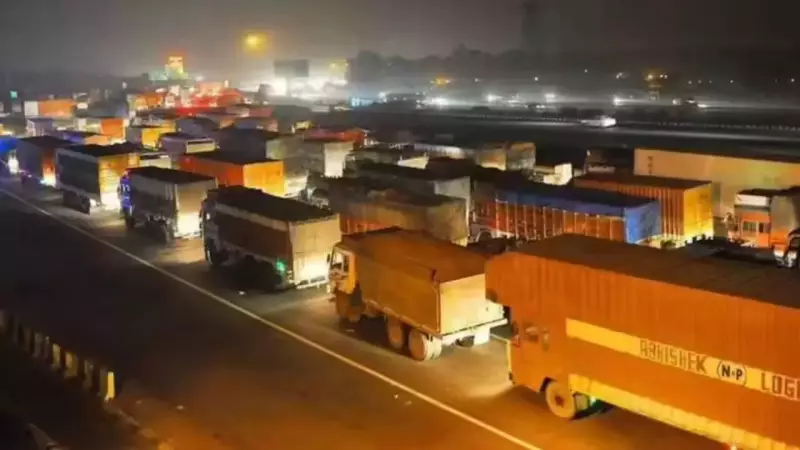
A sweeping decision by the Delhi government to prohibit the entry of vehicles not complying with BS-VI emission norms from Thursday has thrown daily life into disarray for hundreds of thousands of commuters across the National Capital Region (NCR). The overnight ban threatens to sideline a staggering collective of more than 11 lakh private and commercial vehicles registered in Gurgaon, Noida, and Ghaziabad alone, sparking widespread anxiety and frustration.
Sheer Scale of the Impact Across NCR Cities
The numbers paint a stark picture of the ban's immediate fallout. In Gurgaon, official records indicate nearly 2 lakh privately owned sub-BS-VI vehicles. This includes about 1.5 lakh BS-III petrol cars and over 36,000 BS-IV diesel vehicles. The commercial fleet is also heavily impacted, with more than 47,000 BS-IV diesel commercial vehicles, over 2,000 BS-III petrol vehicles, and around 2,200 buses of BS-III and IV categories. Additionally, some 92,000 diesel vehicles in the city have already exceeded the 10-year age limit.
The situation in Noida is equally severe, with the ban set to affect over 4 lakh vehicles. Out of the city's nearly 10 lakh registered vehicles, 1.4 lakh are BS-III models (96,210 petrol and 41,067 diesel), while 2.8 lakh are BS-IV, predominantly petrol. Only about 4.2 lakh vehicles in Noida meet the BS-VI standard and will be permitted to enter Delhi.

In Ghaziabad, while over 5.5 lakh vehicles are BS-VI compliant, a matching number—more than 5.5 lakh others—will be barred. This includes 1.7 lakh BS-III and 3.7 lakh BS-IV vehicles.
Public Outcry and Practical Hurdles
The move, aimed at tackling Delhi's toxic air under the Graded Response Action Plan (GRAP) Stage III, has been met with criticism from residents who depend on seamless cross-border travel for work and family. Noida's assistant regional transport officer, Nand Kumar, confirmed that traffic police teams are deployed at all borders and that violators will face fines and vehicle seizure.
However, residents label the ban as abrupt and poorly planned. Manoj Kumar, a resident of Gurgaon's Sector 50, called the order "absurd," emphasizing that Delhi and its neighboring cities function as a single integrated unit. "Lakhs of people from Gurgaon and Faridabad travel to Delhi daily. This order will obstruct the free movement of people," he said.
Subhangi Sharma from Sector 40 criticized the government for opting for "quick fixes" instead of addressing root causes of pollution. Echoing the sentiment, Alok Singh from Greater Noida's Alpha 1 highlighted the lack of alternatives. "What alternative modes of transport are available? Nearly half the population does not own BS-VI vehicles and will be badly affected. This will also overload the already strained metro services," he stated, questioning the efficacy of such bans alone.
Accusations of Scapegoating and Underlying Motives
Some residents have voiced deeper suspicions about the policy's intent. Rahul Saha from Noida's 7X sectors accused the government of using older vehicles as scapegoats to arm-twist people into buying new BS-VI cars. "This is done in parts to appease car manufacturers who are not getting good bookings even after GST cuts. A complete ban for private cars is uncalled for," he argued.
The ban underscores the severe challenge of managing air quality in a densely populated and interconnected region. While the environmental intent is clear, the sudden implementation without robust public transport alternatives has left lakhs of commuters facing uncertainty, financial strain, and significant disruption to their daily routines.






