

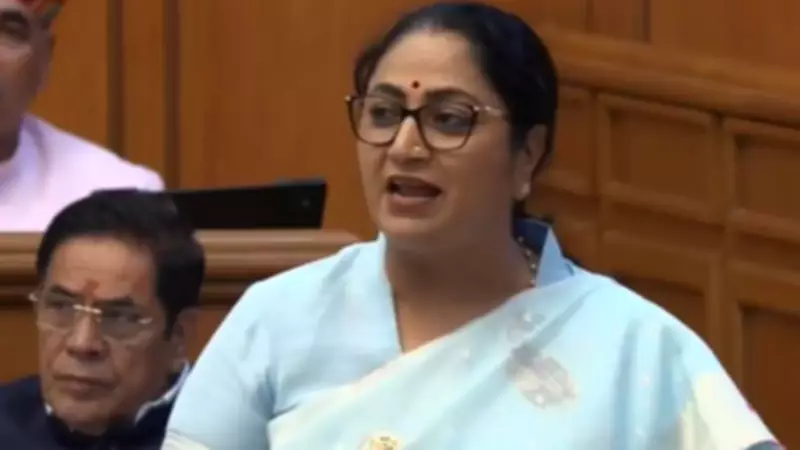
Delhi Government Unveils Comprehensive Budget for 2026-27 with Focus on Infrastructure and Welfare
The Delhi government has presented its detailed budget for the fiscal year 2026-27, outlining significant financial allocations across critical sectors including water management, power infrastructure, social welfare programs, environmental initiatives, fire services, and municipal development. The budget maintains a strong emphasis on enhancing infrastructure, promoting sustainability, and expanding welfare measures for residents.
Water Infrastructure and Management
The water sector receives a substantial allocation of Rs 9,000 crore for 2026-27, matching the previous year's budget. Key initiatives include:
- Rs 1,500 crore dedicated to Sewage Treatment Plants (STPs) aimed at cleaning Yamuna drains and improving water quality.
- Rs 475 crore allocated to boost the capacity of the Chandrawal water treatment plant.
- An additional Rs 475 crore to enhance water supply systems and reduce dependence on water tankers.
- A target to reduce non-revenue water from 45% to 15% through improved infrastructure and management.
- Approval of three decentralized STPs with more planned for future implementation.
- A comprehensive drainage master plan to tackle persistent waterlogging issues, backed by Rs 610 crore for new drains and restoration projects.
Power Sector and Energy Initiatives
The power sector is allocated Rs 3,983 crore for 2026-27, up from Rs 3,843 crore in the previous year. Major components include:

- Rs 3,942 crore specifically earmarked for power sector development and modernization.
- Continuation of electricity subsidies to support residential consumers.
- A strong push for solar energy adoption under the PM Surya Ghar Muft Bijli Yojana to promote energy self-reliance.
- Rs 160 crore allocated to underground 52.5 km of power lines in the historic Chandni Chowk area.
- A proposed Rs 2,000 crore for citywide undergrounding of High Tension (HT) and Low Tension (LT) power lines to enhance safety and aesthetics by removing hanging wires.
Social Welfare and Security Programs
Social welfare and security receive a significant boost with Rs 10,979 crore allocated for 2026-27, compared to Rs 9,337 crore in the previous year. Key allocations include:
- Rs 2,392 crore for general social welfare programs.
- Rs 7,406 crore dedicated to women and child development initiatives.
- The Mahila Samriddhi Yojana offering Rs 75,100 per month to eligible beneficiaries.
- Rs 12,483 crore for the Delhi Lalitakrit Bima Yojana insurance scheme.
- Rs 110 crore for the Rajni Shah loan scheme to support entrepreneurship.
- Rs 25 crore for the Savera Yojana aimed at uplifting marginalized communities.
- Rs 40 crore to continue free bus travel for women, now extended to include transgender persons.
- Construction of a new hostel for visually impaired individuals and provision of restroom facilities for gig workers.
Environmental and Cleanliness Initiatives
The environment sector sees increased funding with Rs 822 crore allocated for 2026-27, up from Rs 505 crore previously. Major projects include:

- Rs 3,000 crore earmarked for pollution control measures and emergency response systems.
- A massive tree plantation drive targeting 35 lakh trees to enhance green cover.
- Rs 20 crore in support to the Delhi Pollution Control Committee (DPCC) for advanced monitoring systems.
- Rs 1,500 crore allocated to process cow dung into renewable energy, promoting sustainable waste management.
Fire Services and Municipal Corporation of Delhi (MCD)
Fire services receive Rs 674 crore for 2026-27, up from Rs 530 crore, with Rs 508 crore dedicated to constructing new fire stations, acquiring 26 quick response vehicles, and modernizing equipment. The MCD is allocated Rs 11,266 crore, increased from Rs 10,357 crore, focusing on:
- Rs 1,000 crore for improving internal roads across the city.
- Rs 204 crore for pollution control measures within municipal areas.
- A 16% reduction in legacy waste achieved at Ghazipur, Bhalswa, and Okhla landfill sites.
- Waste processing capacity increased to 8,500 Tons Per Day (TPD) with expansions at Okhla, Tehkhand, Ghazipur, and Narela plants.
- Establishment of homes for stray dogs with feeding facilities and revitalization of the 100-year-old Town Hall into a global market.
This comprehensive budget reflects the Delhi government's commitment to addressing urban challenges through strategic investments in infrastructure, environmental sustainability, and inclusive social welfare programs for the 2026-27 fiscal year.





