

Gujarat Assembly Passes Historic Uniform Civil Code Legislation
The Gujarat Legislative Assembly made a landmark decision on Wednesday by approving the Uniform Civil Code (UCC) Bill, 2026. This significant legislative action positions Gujarat as the second Indian state, following Uttarakhand, to implement a comprehensive uniform legal framework governing personal laws for all citizens.
A Historic Step Towards Legal Equality
With the passage of this legislation, Gujarat now joins Uttarakhand in adopting a standardized set of laws that apply uniformly across different communities. These laws specifically address critical personal matters including marriage regulations, divorce procedures, inheritance rights, and adoption protocols.
Union Home Minister Amit Shah enthusiastically welcomed this development, describing it as a "historic step" toward ensuring genuine equality for all Indian citizens. In a detailed social media post, Shah emphasized that the Bharatiya Janata Party (BJP) has maintained a consistent commitment to establishing uniform laws since the party's founding.

"It has been the BJP's fundamental resolve since its inception that there should be a uniform law for every citizen in the country," Shah stated. "Under the exemplary leadership of Prime Minister Modi, BJP state governments are progressively advancing in this direction. I am particularly delighted that after Uttarakhand's pioneering effort, Gujarat has now successfully accomplished the historic task of passing the Uniform Civil Code Bill."
Leadership Appreciation and Implementation Details
The Union Home Minister extended his congratulations to Gujarat Chief Minister Bhupendra Patel and all legislators who supported the bill's passage. Shah further articulated his vision that India should ultimately be governed through equal laws that apply uniformly to all citizens without discrimination.
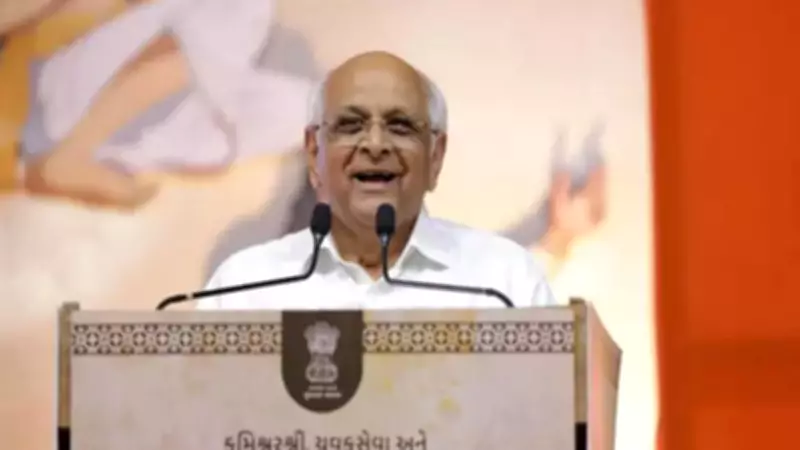
Chief Minister Bhupendra Patel, in his own statement, characterized this development as a "historic moment" with significance extending beyond Gujarat to the entire nation. Patel emphasized that the Uniform Civil Code would guarantee equal rights for women across all religious and caste backgrounds while simultaneously strengthening their dignity and security.
The Chief Minister provided important details about the implementation process, revealing that extensive public consultations formed the foundation of this legislative effort. The process was guided by a specialized committee chaired by retired Supreme Court Justice Ranjana Prakash Desai, which conducted thorough research and submitted a comprehensive report examining various aspects of implementing uniform civil laws.
Objectives and Expected Impact
According to Chief Minister Patel, the newly enacted law aims to establish a common legal framework while ensuring that no community experiences discrimination or disadvantage. He expressed strong confidence that the Uniform Civil Code would significantly strengthen Gujarat's social fabric and support more inclusive development across the state.
The legislation represents a substantial shift in India's legal landscape, moving toward greater standardization of personal laws that have traditionally varied significantly between different religious and cultural communities. This development is particularly noteworthy as it occurs in one of India's most populous and economically significant states.
Political observers note that Gujarat's adoption of the Uniform Civil Code may influence other states to consider similar legislation, potentially creating momentum toward more widespread implementation of uniform personal laws across India. The successful passage in Gujarat demonstrates how state governments can take initiative on this historically complex and sensitive issue.
As implementation proceeds, attention will focus on how the new legal framework functions in practice and what impact it has on different communities within Gujarat. The state's experience may provide valuable insights for other jurisdictions considering similar legal reforms in the future.






