

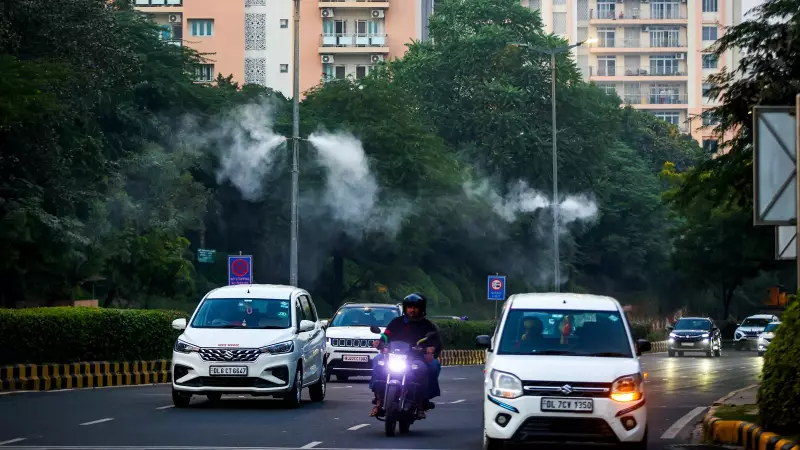
Delhi Implements Staggered Office Hours to Tackle Severe Air Pollution
In a decisive move to combat the capital's worsening air quality crisis, Chief Minister Rekha Gupta has announced a three-month experiment with staggered working hours for Delhi government and Municipal Corporation of Delhi (MCD) employees. The initiative, set to run from November 15 to February 15, comes as Delhi recorded the dubious distinction of having the worst air quality among all Indian cities.
New Office Timings and Their Rationale
According to an official statement from the Chief Minister's Office (CMO), the current overlapping office schedules are contributing significantly to traffic congestion and pollution. Delhi government offices will now operate from 10 am to 6:30 pm, a shift from their current 9:30 am to 6 pm schedule. Meanwhile, MCD offices will function from 8:30 am to 5 pm, instead of the existing 9 am to 5:30 pm timetable.
The CMO highlighted that the mere 30-minute gap between the previous schedules was causing intense traffic pressure during both morning and evening rush hours. This concentrated vehicular movement significantly aggravates the city's already dangerous pollution levels.

A Precautionary Measure Against Peak Pollution
"This decision has been taken as a precautionary measure to help curb pollution, ensuring that the pressure of vehicular traffic does not increase all at once on the roads, thereby distributing traffic more evenly and reducing pollution levels," explained a government official.
The policy was finalized during a recent meeting convened by CM Gupta with Environment department officials to review the city's rapidly deteriorating Air Quality Index (AQI). The urgency for action was underscored by data from the Central Pollution Control Board (CPCB), which recorded Delhi's AQI at 322 on Friday, officially making it the most polluted city in the country.
Historical Precedent and Future Implications
Officials noted that similar staggered timing measures have been implemented by previous administrations during periods of peak pollution. This three-month experiment represents the latest effort to break the cycle of traffic congestion and toxic air that plagues the national capital every winter.
The success of this initiative could set a precedent for other sectors and cities grappling with similar pollution challenges, making it a critical watch for urban planners and environmentalists across India.






