

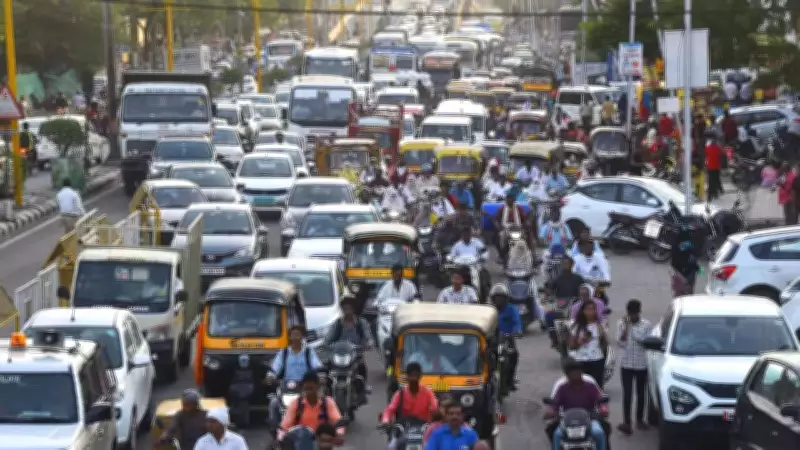
Delhi Government Deregisters Over 66 Lakh Old Vehicles by 2026 in Major Pollution Control Move
In a significant environmental initiative, the Delhi government has deregistered more than 66.2 lakh old vehicles in the city as of March 19, 2026. This action follows strict bans imposed on diesel vehicles older than 10 years and petrol vehicles older than 15 years, as detailed in the Economic Survey 2025-26. The move, aligned with directions from the National Green Tribunal (NGT), has profoundly reshaped the vehicle population in the national capital, according to senior officials.
Large-Scale Deregistration Targets Ageing Vehicles
The survey highlights that this large-scale deregistration was executed because these vehicles had exceeded their permissible age limits and were identified as major contributors to vehicular pollution. Despite the massive removal of old vehicles, the overall number of motor vehicles in Delhi continues to increase, reflecting ongoing challenges in curbing pollution and managing urban mobility.
Vehicle Population Growth Despite Deregistration Efforts
As of March 19, 2026, the total number of motor vehicles on Delhi’s roads reached 87.6 lakh, marking a growth of 7.9% compared to nearly 81.2 lakh in 2024-25. This indicates that while older vehicles are being phased out, new registrations continue to outpace removals, underscoring sustained demand for personal mobility in the city. An official noted that this trend points to the persistent reliance on private transport despite environmental regulations.

Two-Wheelers Dominate Delhi's Roads
A closer examination of vehicle composition reveals that two-wheelers overwhelmingly dominate Delhi’s transportation landscape. Motorcycles and scooters account for nearly 68% of the total registered vehicles, making them the most common mode of transport. In contrast, cars and jeeps constitute about 24% of the total vehicle population, representing a significant but smaller share compared to two-wheelers.
Fluctuations in Vehicle Growth Trends Over Recent Years
Survey data also outlines notable fluctuations in vehicle growth trends in recent years. After a steady rise from 2016-17 to 2020-21, total vehicle numbers experienced a sharp decline in 2021-22, primarily due to the impact of the Covid-19 pandemic and the deregistration of overage vehicles. The total vehicle count dropped to approximately 79.2 lakh that year, reflecting a negative growth rate.
However, the numbers gradually recovered in subsequent years, with moderate growth recorded in 2022-23 and 2023-24. This was followed by a slight decline in 2024-25, before rebounding strongly in 2025-26, indicating resilience in vehicle ownership patterns.
Rising Vehicle Density and Dependence on Private Transport
Another key indicator of increasing motorisation is the number of vehicles per 1,000 population, which has risen to 522 in 2025-26 from 484 in the previous year. This marks a significant increase in vehicle density, highlighting growing dependence on private transport in Delhi and raising concerns about traffic congestion and environmental sustainability.
Category-Wise Trends in Vehicle Segments
Category-wise trends show that while cars and two-wheelers continue to dominate, other segments such as goods vehicles and passenger vehicles have also demonstrated steady growth. Meanwhile, categories like buses and taxis have witnessed relatively lower numbers, suggesting limited expansion in public and shared transport segments compared to private vehicles. This imbalance underscores the need for enhanced public transportation infrastructure to complement pollution control measures.






