

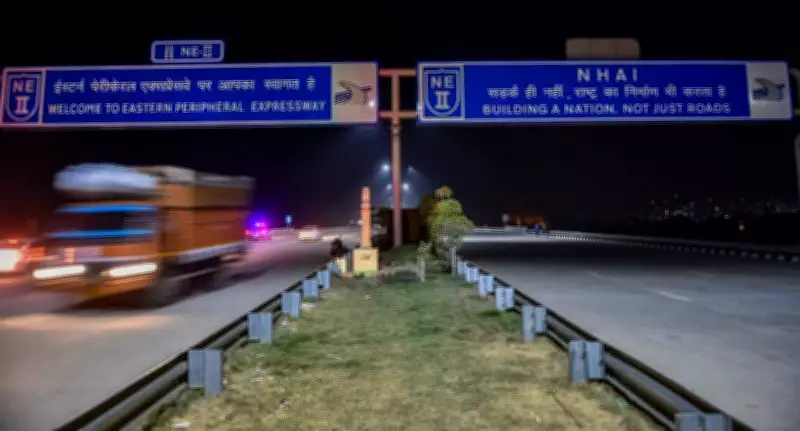
Delhi Government Sanctions Rs 3,700 Crore to Settle Expressway Land Dues
In a major move to address traffic congestion and air pollution in the national capital, the Delhi Government has approved the release of Rs 3,700 crore to clear long-standing dues for land acquisition related to the Eastern and Western Peripheral Expressways. This decision, cleared by the Cabinet, is expected to enhance the functionality of these critical expressways, which were designed to divert non-destined traffic, particularly heavy trucks, away from Delhi.
Boosting Infrastructure and Reducing Pollution
Chief Minister Rekha Gupta emphasized that this step will unlock stalled progress and ensure smoother execution of infrastructure projects. "Peripheral Expressway funds had been pending for years. Delhi projects will no longer face delays," she stated. The payment will be made in phases, with an initial Rs 500 crore to be released in the financial year 2025-26 from revised budget estimates to the Union Government or the National Highways Authority of India (NHAI). The remaining Rs 3,203.33 crore will be paid in installments over the coming years, based on budgetary provisions.
Impact on Traffic and Environment
The Eastern and Western Peripheral Expressways, operational since 2018, form a 270-km traffic ring around Delhi, passing through parts of Haryana and Uttar Pradesh. These corridors were specifically built to ensure that commercial and heavy vehicles not destined for Delhi bypass the city entirely. Over the years, they have significantly reduced congestion on key routes such as Ring Road, Outer Ring Road, NH-44, and NH-48, while also cutting travel time for long-distance traffic.

Gupta highlighted that clearing the dues will help resolve long-standing inter-state financial issues and improve coordination with the Centre for future infrastructure projects. She noted that the expressways have already played a crucial role in limiting the entry of diesel-run heavy vehicles into the Capital, positively impacting air quality.
Political Criticisms and Future Prospects
At the same time, the Chief Minister criticized the previous government, alleging that delays in releasing funds had slowed down the project. According to her, political differences with the Centre affected decision-making, ultimately hampering Delhi's development. With the dues now being cleared, the government anticipates better coordination and faster execution of infrastructure initiatives moving forward.
This move is also seen as an effort to reinforce Delhi's long-term transport planning by ensuring that critical projects are not held back due to financial bottlenecks. The two expressways remain vital for the region's logistics network, connecting key areas such as Kundli, Manesar, and Palwal in Haryana, and Ghaziabad, Gautam Buddh Nagar, and Baghpat in Uttar Pradesh.
Green Highways and Sustainable Development
Apart from easing traffic, these expressways are considered among India's early examples of "green" highways, featuring solar-powered systems and landscaped stretches aimed at reducing environmental impact. The government expressed confidence that this decision will support its broader goal of making Delhi a cleaner and more efficiently connected capital, while ensuring that infrastructure development keeps pace with the city's growing needs.






