

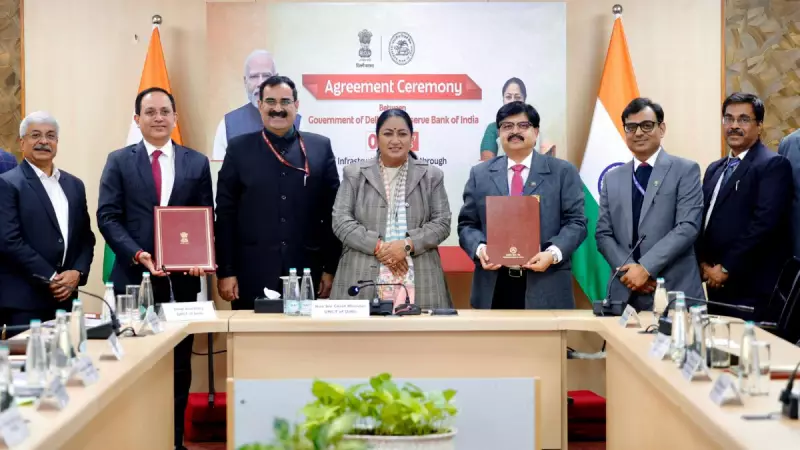
In a significant move aimed at tackling environmental and administrative challenges, the Delhi government has entered into a strategic partnership with the Reserve Bank of India (RBI). The two entities formally signed a Memorandum of Understanding (MoU) on Friday, January 5, 2026, marking a collaborative effort to address two critical areas: the ecological restoration of the Yamuna river and the enhancement of financial governance within the capital's administration.
A Dual-Focus Partnership for Delhi's Future
The MoU, signed at the Delhi Secretariat, outlines a framework for cooperation where the RBI will provide crucial technical expertise and guidance. The primary objective is to establish robust systems for improved fiscal management and governance across various departments of the Delhi government. This initiative is expected to bring in greater transparency, efficiency, and accountability in the utilization of public funds.
Parallel to this governance agenda lies the pact's ambitious environmental component. A central feature of the collaboration involves channeling funds towards the long-term project of rejuvenating the Yamuna river. The agreement specifies that the interest generated from the Rs 3,500 crore held in the Delhi Jal Board's (DJB) accounts will be strategically utilized for this purpose. This innovative funding mechanism ties financial prudence directly to ecological restoration.

Addressing the Yamuna River Crisis
The condition of the Yamuna has been a persistent concern for residents and authorities in the National Capital Region. The river, which holds immense cultural and environmental significance, has suffered from severe pollution due to industrial discharge, sewage inflow, and other factors. The new MoU formally recognizes the river's rejuvenation as a priority, creating a dedicated and sustainable financial stream for cleanup and conservation efforts.
By earmarking the interest from the DJB's substantial deposits, the government and the RBI have devised a model that ensures continuous funding without dipping into the principal amount. This approach is seen as a fiscally responsible way to support a large-scale, long-term environmental project.
Strengthening the Financial Backbone
On the governance front, the RBI's role will be that of a knowledge partner. The central bank will assist the Delhi government in strengthening its internal financial controls, budgeting processes, and audit mechanisms. This is anticipated to help in better planning and execution of various public welfare schemes and infrastructure projects.
The collaboration signifies a proactive step by the state government to institutionalize best practices in public financial management. With the RBI's expertise, the administration aims to build a more resilient and transparent economic framework, which could serve as a model for other states.
Implications and the Road Ahead
The signing of this MoU represents a confluence of environmental stewardship and administrative reform. It underscores a growing recognition that sustainable urban development requires both ecological care and sound financial health. The direct linking of funds from a utility board to a river cleanup project is a notable example of cross-departmental synergy.
For the citizens of Delhi, the successful implementation of this agreement promises a twofold benefit: a cleaner, healthier Yamuna river and a more efficiently run government apparatus that makes optimal use of resources. The coming years will be crucial in translating this formal agreement into tangible on-ground results for the river's ecology and the city's governance structure.
This partnership between the Delhi government and the Reserve Bank of India sets a precedent for how central financial institutions and state governments can collaborate on issues that are both ecologically vital and economically prudent.






