

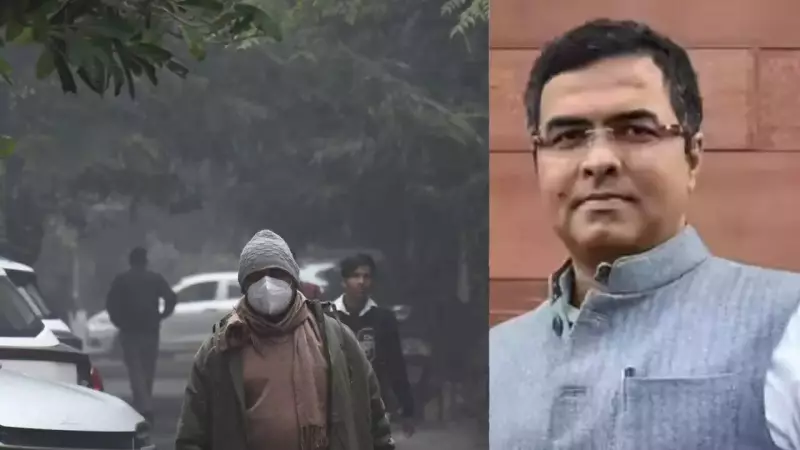
Delhi minister Parvesh Verma on Thursday conceded that toxic air poses a severe threat to the national capital, while placing the blame for the longstanding crisis squarely on former chief minister Arvind Kejriwal and his Aam Aadmi Party (AAP). Verma accused the previous AAP government of years of neglect and "administrative apathy" on pollution control, claiming the current administration is now taking decisive action.
Political Blame Game Intensifies Over Toxic Air
Parvesh Verma stated, "We accept that toxic air is a big menace," but quickly shifted focus to criticising the Kejriwal-led regime. He alleged that the AAP government failed to implement concrete measures to tackle pollution and is now merely engaged in political "drama" over the issue. According to Verma, Delhi's residents are suffering the consequences of what he termed as AAP's "wrongdoing."
Strict GRAP-IV Measures Enforced Across Delhi
Verma's comments coincided with the full implementation of stringent Stage-IV measures of the Graded Response Action Plan (GRAP) across Delhi. Effective from Thursday, a series of tough restrictions have been activated to combat the hazardous air quality.

The key measures include a ban on the entry of all non-Delhi registered private vehicles that do not comply with BS-VI emission standards. Additionally, the 'No PUC, No Fuel' rule is now being strictly enforced at all petrol pumps, meaning vehicles without a valid Pollution Under Control certificate will be denied fuel.
To ensure compliance, authorities are utilising a multi-pronged approach:
- Automatic Number Plate Recognition (ANPR) cameras at fuel stations.
- Voice alert systems to warn staff about vehicles without valid PUC.
- Deployment of approximately 580 police personnel at 126 checkpoints, including border points.
- Transport department teams stationed at petrol pumps and city entry points.
Certain exemptions are in place. The entry ban does not apply to CNG and electric vehicles, public transport, or vehicles carrying essential goods and providing essential services. However, vehicles transporting construction material are barred from entering the city under the GRAP-IV protocol.
On-Ground Implementation and Public Response
Veer Jain, a Delhi Transport Corporation (DTC) employee, explained the on-ground reality: "As per the orders received from the Delhi Govt, vehicles without PUC will not be given fuel. We have to check the documents for all vehicles and tell the petrol pump staff not to give fuel to the defaulters. The order will remain in effect till the next order."
Minister Verma contrasted the current enforcement drive with the past, asserting that the present government is taking "firm steps" to address pollution, unlike the previous administration which he accused of ignoring the problem until it escalated into a full-blown crisis. The political war of words over Delhi's annual pollution nightmare is set to continue even as residents grapple with the new restrictive measures aimed at clearing the smog.






