

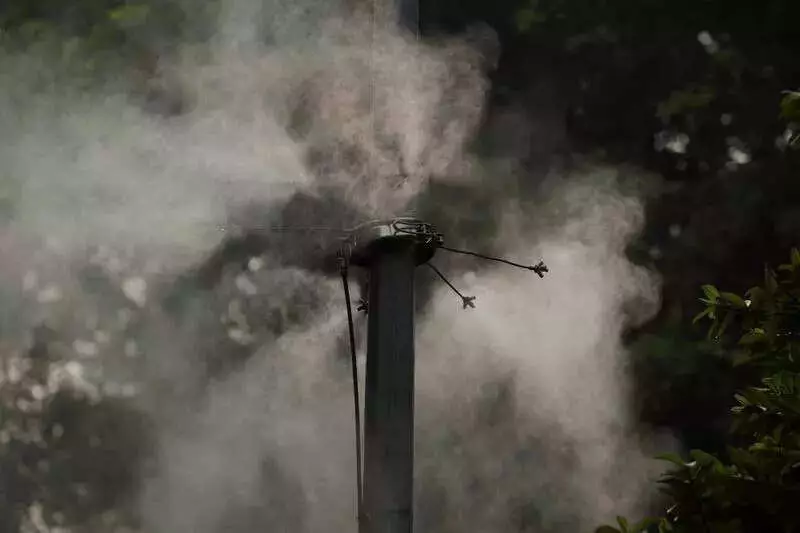
In a significant push to tackle the capital's persistent air quality crisis, the Delhi Metro Rail Corporation (DMRC) has rolled out an extensive array of anti-pollution measures across its network. Acting on directives from the Delhi government, the metro authority has intensified its fight against dust and airborne pollutants with a two-pronged strategy involving advanced misting technology and anti-smog guns.
Deploying Technology to Settle Dust
The cornerstone of this initiative is the installation of mist spray systems at 37 metro stations. These systems are engineered to combat pollution by releasing a fine mist of water particles into the air. The water droplets bind with dust and particulate matter (PM), causing them to become heavier and settle down, thereby improving air quality in high-traffic zones. These systems can operate continuously or at timed intervals, specifically targeting pollution hotspots.
Simultaneously, the DMRC has deployed 83 anti-smog guns at various locations, including key stations and construction sites. For areas where these guns are not yet installed, the mist spray systems serve as an effective alternative. A further plan to install 20 additional anti-smog guns is currently underway, with the goal of completing all installations by January 15.

Stations Leading the Green Charge
The anti-pollution devices have been strategically placed at major interchange and high-footfall stations across the network. Key locations include Kashmere Gate, Samaypur Badli, Dwarka Sector-21, Rajouri Garden, Anand Vihar, Peeragarhi, Ashok Vihar, and the Metro Bhawan. This widespread deployment ensures that the impact is felt across different parts of the city.
This technology is not entirely new to Delhi. Similar misting systems are already operational in several areas under the New Delhi Municipal Council (NDMC) and around the ITO intersection, known for its heavy traffic and construction dust. The Delhi cabinet had previously mandated in December that such systems be installed on high-rise commercial buildings as part of the city's graded response action plan.
Beautification with an Environmental Message
Going beyond mechanical interventions, the DMRC is also embracing an artistic approach to environmental messaging. The corporation has informed the government that approximately 200 metro pillars will be painted with nature-themed artwork. This project aims to seamlessly blend urban beautification with powerful reminders about the importance of conservation and clean air, making the public infrastructure itself a canvas for advocacy.
Appreciating the metro's multi-faceted efforts, Delhi Chief Minister Rekha Gupta stated, "The DMRC should work as a model agency in Delhi's fight against pollution, so other departments can draw inspiration." She emphasized that providing clean air to the citizens of the capital is among the government's highest priorities.
The combined use of anti-smog guns, mist sprayers, and dust-control measures at construction sites represents a comprehensive effort by one of the city's largest public transporters. By integrating technology, infrastructure, and art, the Delhi Metro is positioning itself as a frontline warrior in the battle for breathable air, setting a precedent for other civic agencies to follow.






