

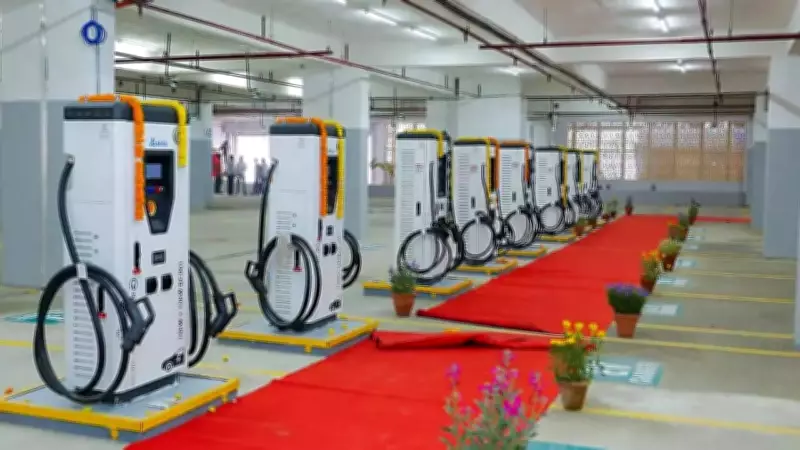
Delhi Government Opens Public Consultation for Draft EV Policy 2026
The Delhi government announced on Saturday that it is inviting stakeholders and the general public to submit feedback on the draft Delhi Electric Vehicle (EV) Policy 2026. The policy document has been uploaded to the official website of the Transport Department, Government of NCT of Delhi (GNCTD), for public access and review.
30-Day Feedback Period and Submission Guidelines
In an official circular, authorities stated that the draft policy will remain open for public consultation for a period of 30 days from the date of publication. After this period, the policy will be finalized and is proposed to remain in force until the year 2030. The government has provided specific modes for submitting feedback to ensure an organized process.
Feedback Submission Methods:

- By email: evpolicy2026@gmail.com
- By post: Joint Commissioner (EV), Transport Department, Govt. of NCT of Delhi, 5/9 Underhill Road, Delhi-110054
Officials have urged the public to avoid visiting government offices in person to submit responses, citing concerns about unnecessary crowding. The circular emphasized that no objections or suggestions received after the 30-day expiry will be considered, highlighting the importance of timely participation.
Policy Objectives and Legal Inspiration
According to the circular, the draft EV Policy 2026 aims to reduce air pollution and promote clean mobility in the national capital by accelerating the adoption of electric vehicles. It is inspired by the Right to Clean Air under Article 21 of the Constitution, underscoring the government's commitment to environmental health and public welfare.
Detailed Purchase Incentives Across Vehicle Categories
The draft policy outlines a comprehensive range of purchase incentives designed to make electric vehicles more affordable for consumers. These incentives vary by vehicle type and are structured to decrease over time to encourage early adoption.
Electric Two-Wheelers: For models priced up to Rs 2.25 lakh, incentives are linked to battery capacity. In the first year, buyers can receive Rs 10,000 per kWh, capped at Rs 30,000. This reduces to Rs 6,600 per kWh (up to Rs 20,000) in the second year and Rs 3,300 per kWh (up to Rs 10,000) in the third year.
Electric Three-Wheelers (e-autos): Incentives include Rs 50,000 in the first year, Rs 40,000 in the second year, and Rs 30,000 in the third year.
Electric Goods Vehicles (N1 category): Eligible for Rs 1 lakh in the first year, Rs 75,000 in the second year, and Rs 50,000 in the third year.
Scrapping Incentives and Tax Benefits
To encourage the phasing out of older, polluting vehicles, the policy proposes scrapping incentives. These include Rs 10,000 for two-wheelers, Rs 25,000 for three-wheelers, Rs 1 lakh for cars priced up to Rs 30 lakh, and Rs 50,000 for goods vehicles.
Additionally, the draft policy offers significant tax benefits. It proposes a 100% exemption on road tax and registration fees for electric vehicles. Full exemption is available for cars priced up to Rs 30 lakh, while vehicles above this threshold will not be eligible for these benefits.
Electrification Mandates for Future Transitions
The policy sets out ambitious electrification mandates to accelerate the shift towards electric mobility. From 2027, only electric three-wheelers will be allowed for new registrations. A similar requirement for two-wheelers will be implemented from 2028. Furthermore, the policy proposes that at least 30% of school buses be electric by 2030, along with a gradual transition of the government fleet towards electric vehicles.
Recent Government Efforts and Infrastructure Expansion
This announcement comes amid ongoing efforts by the Delhi government to expand electric mobility infrastructure. On March 20, Chief Minister Rekha Gupta flagged off 300 new electric buses in Delhi and announced the launch of interstate services to Ghaziabad in Uttar Pradesh. A foundation stone was also laid for a new Delhi Transport Corporation (DTC) office near the IP depot, signaling continued investment in public transport upgrades.

In a related development, Delhi Health Minister Pankaj Kumar Singh noted last year that more than one lakh electric vehicles had been registered since the BJP government assumed office. He attributed this progress to the provision of subsidies, contrasting it with the previous administration's lack of such support, and suggested that earlier incentives could have further boosted EV adoption in the city.
The draft Delhi EV Policy 2026 represents a significant step towards sustainable urban transport, with public feedback playing a crucial role in shaping its final version to meet the needs of residents and stakeholders alike.





