In a decisive move to tackle its notorious air pollution and crippling congestion, Delhi is poised for a comprehensive transportation overhaul in 2026. The Rekha Gupta-led BJP government has earmarked a significant budgetary boost to transform the capital's mobility landscape, focusing on electric public transport, metro rail expansion, and stringent new policies for vehicles.
Budgetary Surge Fuels Metro and Rail Expansion
The foundation of this transformation is a substantial increase in financial allocation. The Transport department's budget has been raised from Rs 5,700 crore in 2024-25 to over Rs 9,000 crore for the fiscal year 2025-26. A major portion of these funds is directed towards enhancing mass rapid transit systems.
The government has approved three non-priority corridors of Delhi Metro's Phase IV: Lajpat Nagar to Saket, Inderlok to Indraprastha, and Rithala to Kundli. Simultaneously, work on the three priority corridors—Majlis Park to Maujpur, Janakpuri West to RK Ashram Marg, and Delhi Aerocity to Tughlaqabad—is on track for completion next year. Furthermore, the administration claims to have begun clearing pending liabilities of up to Rs 2,700 crore owed to the Delhi Metro for earlier phases.

Adding to the regional connectivity, the Namo Bharat Delhi-Meerut Regional Rapid Transit System (RRTS) corridor is expected to become fully operational in 2026, offering a high-speed alternative for commuters.
Public Bus Fleet Gets an Electric Makeover and Operational Revamp
The city's public bus service is set for its most significant upgrade in years. Transport Minister Pankaj Singh has announced that Delhi's public bus fleet is expected to cross the 7,000-mark for electric buses by the end of 2026. This shift will phase out the aging low-floor CNG buses introduced before the 2010 Commonwealth Games, which have become increasingly unreliable.
In a major administrative change, the Delhi Transport Corporation (DTC) is set to take over operations from the cluster-bus operator Delhi Integrated Multi-Modal Transit System (DIMTS). The government asserts this consolidation will improve efficiency and accountability. Accompanying this is a long-pending exercise to rationalise bus routes based on current travel patterns, aiming to reduce overlaps, serve underserved areas, and better integrate with metro and rail stations.
Despite this expansion, the fleet will still fall short of earlier judicial mandates that called for 10,000 to 11,000 buses in the capital.
New EV Policy and Crackdown on Conventional Vehicles
A cornerstone of Delhi's 2026 green push will be a revamped Electric Vehicle (EV) policy, slated for implementation in April 2026. The current policy, introduced in 2020 by the previous AAP government, expired in 2023 and has seen multiple extensions. A Group of Ministers led by Power Minister Ashish Sood is drafting the new policy, which is expected to include purchase subsidies, a framework for expanding charging infrastructure, and systems for recycling EV batteries.
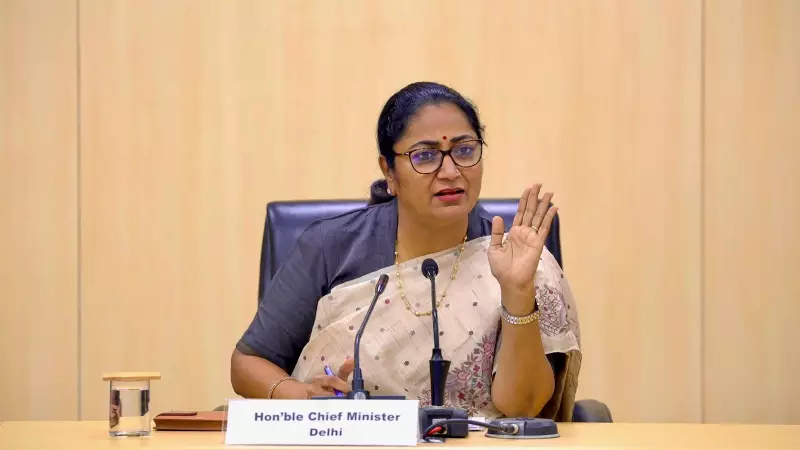
Chief Minister Rekha Gupta has signalled a tougher stance on internal combustion engine (ICE) vehicles, stating at a public event that "buying vehicles of other kinds will be made difficult," hinting at potential disincentives for petrol, diesel, and CNG vehicles. This urgency stems from a November meeting at the Prime Minister's Office, which flagged Delhi's disproportionate vehicle load—nearly 1.57 crore of the NCR's 2.97 crore registered vehicles are in Delhi, which occupies just 2.7% of the region's geographical area.
The government has also acknowledged the role of unregulated e-rickshaws in worsening congestion. While they serve as a vital last-mile connectivity option, CM Gupta said comprehensive new guidelines will soon be issued to regulate their operational areas and routes.
This multi-pronged strategy for 2026 represents Delhi's most ambitious attempt yet to decongest its roads, curb vehicular emissions, and build a sustainable public transport ecosystem for the future.