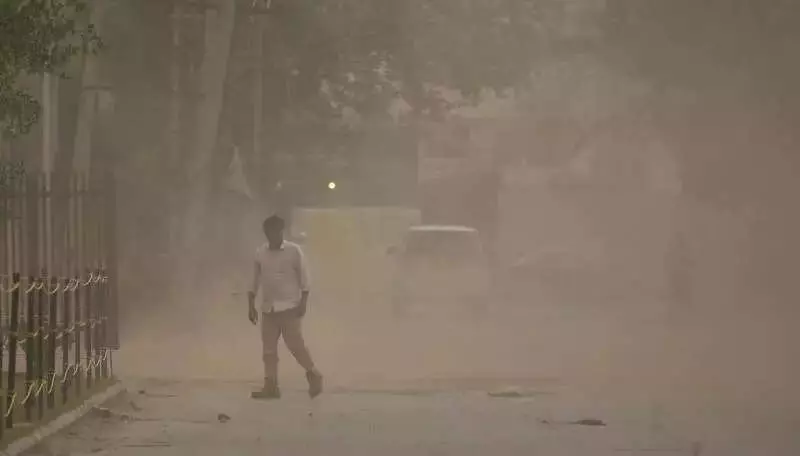
In a decisive move to tackle one of the persistent sources of air pollution, the Delhi government has framed a comprehensive Standard Operating Procedure (SOP) for road-cutting activities. The new protocol mandates strict dust mitigation measures and introduces a graded penalty structure, with fines reaching up to ₹5 lakh for violations. This initiative aims to plug accountability gaps and enforce better practices among the multiple agencies that frequently dig up the capital's roads.
Strict On-Ground Measures to Prevent Dust
Under the newly formulated SOP, contractors and agencies undertaking road-cutting work must adhere to a series of compulsory actions. For wide roads, the installation of two-metre-high dust barriers is now mandatory. All loose soil and construction debris must be properly covered, and regular water sprinkling is required to prevent dust from becoming airborne.
The rules explicitly state that dug-up material must be stored within the project site and cannot be dumped on public roads, pavements, or any other undesignated areas. Furthermore, vehicles transporting construction material or debris must be fully covered and carry valid Pollution Under Control (PUC) certificates.

Worker safety has also been addressed, with the provision of dust masks and safety gear made compulsory for all labourers. To enhance public transparency and traffic management, agencies must display boards indicating road restoration timelines and the responsible agency's name, along with proper signage for traffic diversion at every road-cutting stretch.
Tackling Overlapping Responsibilities and Poor Enforcement
The need for this stringent SOP stems from chronic implementation failures. Numerous agencies, including the Municipal Corporation of Delhi (MCD), Public Works Department (PWD), Delhi Jal Board, power distribution companies, telecom firms, and gas pipeline operators, frequently cut roads for laying or repairing underground infrastructure.
However, dust-mitigation measures during and after this work have historically been poorly executed. Agencies often failed to ensure timely road restoration, proper covering of loose soil, and regular water sprinkling. Overlapping responsibilities and weak on-ground enforcement have led to dug-up stretches remaining exposed for prolonged periods, allowing dust to resuspend into the air—a significant contributor to Delhi's toxic air quality.
A Graded Penalty Structure to Ensure Compliance
To enforce compliance, the SOP incorporates a graded penalty structure approved by the Delhi Pollution Control Committee (DPCC). This follows recommendations from a sub-committee constituted on November 15 to frame dust mitigation guidelines and prescribe a method for computing environmental compensation.
The revised penalty framework is as follows:
- Violations involving road cutting over an area of more than 100 sq metres and up to 500 sq metres will attract a fine of ₹50,000.
- For areas exceeding 500 sq metres and up to 1,000 sq metres, the penalty will be ₹1 lakh.
- Violations involving areas above 1,000 sq metres will draw the maximum fine of ₹5 lakh.
This structured approach to penalties is designed to create a strong deterrent and hold agencies accountable for their role in controlling dust pollution, marking a critical step in Delhi's ongoing battle for cleaner air.