

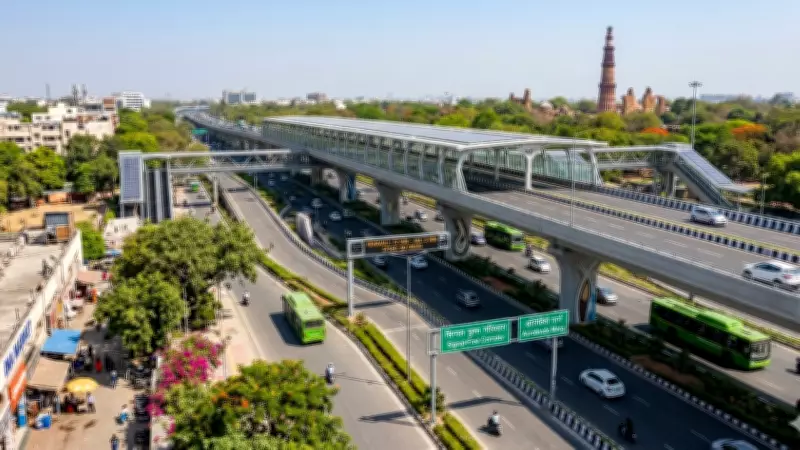
Delhi's Aurobindo Marg Set for Major Signal-Free Corridor Overhaul
The Public Works Department (PWD) has unveiled an ambitious plan to transform Delhi's heavily congested Aurobindo Marg into a 7-kilometer signal-free corridor. This critical infrastructure project aims to ensure uninterrupted traffic flow between INA and Mehrauli, significantly improving daily commuting across south Delhi and its connections to Gurgaon and Noida.
Project Details and Key Features
The proposed corridor will incorporate multiple engineering solutions to tackle persistent bottlenecks. These include the construction of flyovers and underpasses at key intersections, strategic U-turns to replace traditional traffic signals, and the development of parallel roads to divert and manage vehicle volume. The integrated design focuses on streamlining movement along one of the capital's busiest arterial roads, which currently handles over two lakh vehicles daily.
Addressing Critical Congestion Points
Traffic congestion on Aurobindo Marg intensifies at several notorious choke points. The area near INA Market is particularly problematic due to merging traffic from Ring Road and the terminus of the Barapullah Flyover. Other identified zones suffering frequent slowdowns include AIIMS Gate No. 2 and Yusuf Sarai, where signals, U-turns, and high pedestrian movement disrupt flow. Encroachments, on-street parking, and the dense commercial and residential nature of areas like Hauz Khas and Green Park further reduce effective road capacity.

Enhanced Connectivity and Timeline
The project also aims to boost last-mile connectivity by integrating nearby Metro stations, a crucial step given the rising commuter numbers from ongoing metro expansions. Authorities are considering a specific parallel road near the Mehrauli end, around Chhatarpur, to alleviate pressure on the main carriageway. The proposal will proceed for official approval following feasibility studies, with an expected construction timeline of approximately one and a half years once cleared.
This comprehensive initiative represents a significant effort by Delhi's infrastructure planners to modernize urban mobility, reduce travel delays, and enhance the commuting experience for lakhs of daily users on this vital south Delhi corridor.






