Delhi's E-Rickshaw Surge Highlights Critical Mobility Divide and Safety Failures
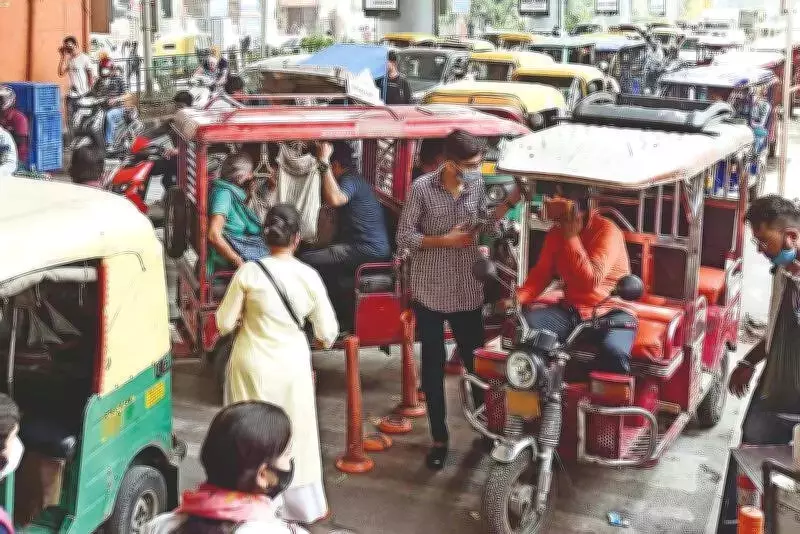
New Delhi: Recent data from the Delhi government on passenger e-rickshaws has unveiled a starkly uneven mobility landscape across the capital, underscoring how this often unsafe mode of transport is filling critical gaps left by inadequate regulated last-mile connectivity. The city now boasts more than double the number of active and registered e-rickshaws compared to autorickshaws, signaling a dramatic shift in urban transit patterns.
Safety and Regulatory Lapses Plague the Sector
Unlike their auto-rickshaw counterparts, a vast majority of e-rickshaw operators lack proper driving licenses and uniforms, frequently flouting basic traffic norms by driving on the wrong side of roads. This reckless behavior raises grave safety concerns for passengers and other commuters alike. Additionally, haphazard parking by these vehicles contributes significantly to road congestion, further straining Delhi's already burdened infrastructure.
Delhi currently has slightly over 2 lakh registered e-rickshaws, with an unknown number operating without registration. The distribution reveals a pronounced geographical imbalance: Rohini leads with 46,150 active e-rickshaws, followed by Wazirpur (30,252) and Loni Road (28,858). Together, these three areas account for more than half of the city's registered fleet, demonstrating heavy reliance on this informal transport mode in north and east Delhi.

Contrasting Mobility Patterns Across Delhi
In sharp contrast, upscale neighborhoods like Vasant Vihar have merely 234 e-rickshaws, while South Delhi records 7,806 and Mall Road 8,184. Other significant concentrations include Janakpuri (26,661), Dwarka (20,223), Rajouri Garden (10,327), Mayur Vihar (9,647), and Surajmal Vihar (8,499). These numbers illustrate how e-rickshaws have quietly evolved into indispensable last-mile connectors, particularly for women, elderly citizens, and students who depend on affordable transit options.
Resident Concerns and Government Inaction
Atul Goyal, president of the United Resident Joint Action Force, representing 2,500 Resident Welfare Associations across Delhi, expressed deep frustration. "Underage individuals driving e-rickshaws is a common sight. They treat our neighborhoods like playgrounds, making reckless, erratic U-turns in heavy traffic with zero regard for safety. Despite persistent demands from RWAs for maintaining order on roads, the government has yet to take concrete steps to curb this menace," Goyal stated.
Fire safety presents another major hazard. A former Delhi Fire Service chief revealed that numerous residential fires have been sparked by illegal e-rickshaw charging setups. "In June last year, two people died in east Delhi's Dilshad Garden when a massive fire resulted from such an illegal charging arrangement. With no proper charging stations available, drivers commonly draw power from informal sources, sometimes even from their own homes," he explained.
Infrastructure Deficiencies and Overloading Risks
A government official noted that in the absence of designated stands or lanes, e-rickshaws swarm the same transit points in neighborhoods and markets as other vehicles, creating severe traffic bottlenecks and leaving roads clogged. "An e-rickshaw is designed to carry four passengers besides the driver, but many, especially in north Delhi, are crammed with seven to eight people. The vehicle structure isn't strong enough for such loads, and the poor braking system makes them dangerously unstable," a transport department official disclosed.
These safety issues have been repeatedly flagged in past meetings, leading to impoundment of several vehicles. However, enforcement drives were discontinued due to lack of storage space for seized e-rickshaws, highlighting systemic failures in regulation.

Structural Drivers and Potential Solutions
Amit Bhatt, managing director (India) of the International Council on Clean Transportation, analyzed the underlying causes. "The sharp rise in e-rickshaws in Delhi is driven by two structural factors. First, a long-standing ban on registration of new auto-rickshaws has limited the supply of regulated last-mile services. Second, rapid growth in travel demand, coupled with gaps in bus and metro connectivity, has created space for informal solutions to step in. To address this, the government must improve last-mile links through formal transport options and consider lifting the ban on new auto-rickshaws," Bhatt concluded.
The e-rickshaw phenomenon in Delhi thus exposes a complex interplay of mobility needs, regulatory gaps, and safety challenges, demanding urgent policy intervention to balance accessibility with public safety.