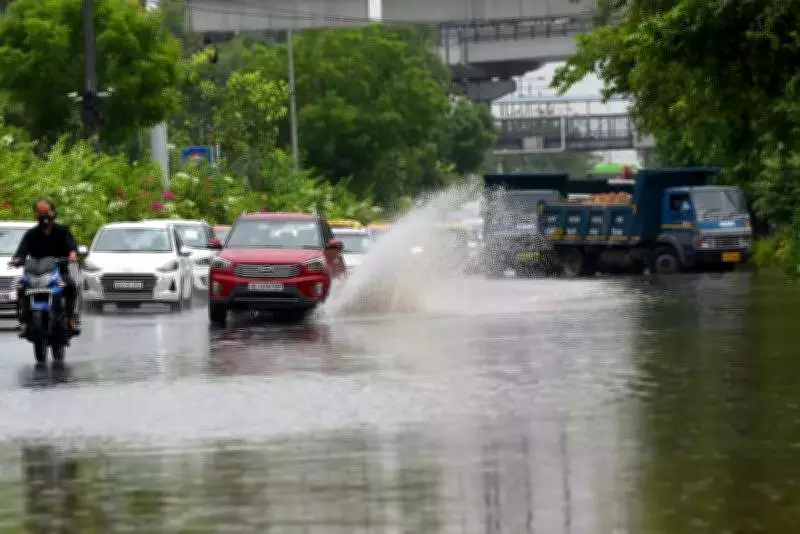
Delhi's Massive Road Redevelopment Plan: A Rs 7,207 Crore Overhaul
In a significant move to address deteriorating infrastructure, the Delhi government has received a comprehensive Road Redevelopment Action Plan that identifies a staggering 3,298 kilometers of roads requiring urgent repairs or resurfacing. This represents over 21% of the national capital's entire road network, with the ambitious project estimated to cost Rs 7,207 crore and scheduled for phased implementation.
Breaking Down the Road Network: Authorized vs. Unauthorized Colonies
Delhi's total road length spans 15,598 kilometers, with a detailed breakdown revealing critical areas of concern. In authorized colonies, which account for 10,099 kilometers of roads, approximately 2,298 kilometers have been marked for redevelopment. Meanwhile, in unauthorized colonies, the entire 1,000-kilometer network requires complete overhaul according to the proposal submitted to Chief Minister Rekha Gupta during a recent review meeting on air pollution.
Municipal Corporation of Delhi Bears the Largest Burden
In absolute terms, the Municipal Corporation of Delhi (MCD) faces the most extensive redevelopment requirements. Of its 6,127.8-kilometer network—the largest maintained by any single agency in Delhi—a substantial 1,202 kilometers, or 19.6%, has been proposed for redevelopment. Since MCD maintains most internal colony roads and market stretches, this wear and tear directly impacts residents' daily lives.

Damaged surfaces, persistent potholes, and uneven stretches frequently lead to multiple problems:
- Chronic traffic congestion throughout affected areas
- Increased vehicle breakdowns and maintenance costs
- Significantly extended commuting times for residents
- Compromised pedestrian safety in densely populated neighborhoods
- Impaired access for emergency vehicles during critical situations
Public Works Department: Over Half Its Network Needs Attention
The Public Works Department (PWD), responsible for maintaining many arterial and major roads, has an even more alarming situation. Out of its 1,404-kilometer network, a remarkable 788 kilometers—representing over 50%—has been marked for redevelopment. A senior government official acknowledged that some projects faced delays due to Graded Response Action Plan (GRAP) restrictions and extreme weather conditions, but emphasized that work has now gathered significant momentum.
"Construction activities were temporarily halted during severe pollution stages and peak temperature periods. However, most of the projects that were on hold have now resumed," the official stated, highlighting the renewed focus on infrastructure improvement.
PWD has already completed over 150 kilometers of road redevelopment this year, with work progressing on nearly 400 additional kilometers. Repairs on approximately 600 kilometers are expected to be completed by next year, according to official projections.
Other Departments and Their Road Redevelopment Requirements
The comprehensive plan extends beyond MCD and PWD to include several other agencies responsible for Delhi's road infrastructure:
- Delhi Development Authority (DDA): 111.7 kilometers requiring repair
- Delhi State Industrial and Infrastructure Development Corporation (DSIIDC): 63 kilometers marked for redevelopment
- Irrigation and Flood Control Department (IFCD): 27.4 kilometers in need of attention
- National Highways Authority of India (NHAI): 69 kilometers identified for improvement
Notably, no stretches under the New Delhi Municipal Council (NDMC), Delhi Cantonment Board, or Central Public Works Department (CPWD) have been proposed under this current redevelopment plan.
The Critical Connection Between Road Conditions and Air Pollution
Officials have emphasized a crucial environmental dimension to the road redevelopment initiative: deteriorating roads significantly contribute to Delhi's persistent air pollution problems. Cracked and broken surfaces generate substantial road dust, which represents a key contributor to pollution levels in the capital. Additionally, damaged stretches slow down traffic flow, increasing fuel consumption and consequently raising vehicular emissions.

"Redevelopment work itself can temporarily add to dust levels, which is why construction activities are restricted during severe pollution phases under GRAP. This has led to some delays," explained the government official, highlighting the delicate balance between infrastructure improvement and environmental protection.
The comprehensive Road Redevelopment Action Plan represents a massive infrastructure undertaking that addresses multiple interconnected challenges facing Delhi—from transportation efficiency and public safety to environmental sustainability and urban livability. As implementation progresses in phases, residents can expect gradual improvements to the city's road network, though the scale of the project suggests this will be a multi-year transformation of Delhi's transportation infrastructure.