

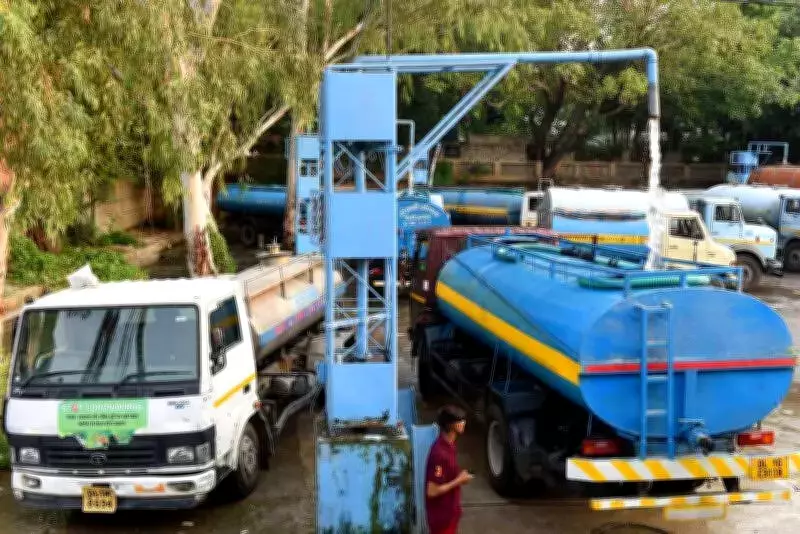
Delhi Government Launches Ambitious Water Master Plan to Revamp Distribution System
The Delhi government is actively preparing a comprehensive Water Master Plan designed to implement long-term and structural measures aimed at modernizing the city's aging drinking water distribution network. This initiative seeks to address persistent issues such as leakage, contamination, and uneven water supply that have plagued residents for decades.
Strategic Zoning and Command Centers for Enhanced Management
Under the proposed plan, the water distribution system will be organized into nine operational zones, each centered around a major water treatment plant (WTP) functioning as a command hub. These hubs will manage supply infrastructure, upgrade water treatment capabilities, and oversee pipeline repairs or replacements on a need-to-need basis. Water Minister Parvesh Sahib Singh Verma emphasized the significance of this approach, stating, "For the first time, we are preparing a Water Master Plan of Delhi as we want to make long-term and future-ready plans to fix the structural legacy problems that the water production and supply system of Delhi currently faces."
Verma added that an agency has been engaged to study all major aspects of water supply and production, including sources of water, future requirements, and pipeline maintenance. "In the next one year, we will engage major private players with relevant experience through open tenders for the management of Command Centres. In future, these companies will be given each of the zones, and they will be responsible for managing all the major operations in those areas," he explained.

Addressing Aging Infrastructure and Water Losses
A large portion of Delhi's water network was laid over four decades ago, with more than half of the city's pipelines being 20 years old or older. These pipelines have deteriorated due to corrosion, repeated repairs, and increasing load from a growing population, leading to leakages, contamination, and significant water losses before supply reaches households. Verma highlighted, "The move is aimed at fixing challenges such as leakages, contamination and low water pressure that many neighbourhoods continue to face, which affects the quality of water as well as the supply system."
Under the new framework, supply operations and household connections will be integrated with command centers, enabling real-time monitoring of the distribution network. Consultants will be appointed for each zone to assess existing infrastructure, identify pipelines needing replacement, and determine areas requiring new connections. Each command center will oversee water infrastructure across clusters of 10-15 assembly constituencies, coordinating distribution, monitoring supply levels, and tracking leakages.
Ongoing Projects and Future Upgrades
Work has already commenced in the area supplied by the Chandrawal WTP, involving the replacement of nearly 1,044 kilometers of aging pipelines, construction of 12 underground reservoirs, and refurbishment of nine storage facilities. The plan also includes creating 147 district metered areas to improve monitoring of water flow and detect leakages, with the redesigned network expected to maintain a water pressure of around 22 meters even at the farthest points of the supply line.
Similar upgrades are planned for the command areas of eight other major treatment plants: Wazirabad, Haiderpur, Nangloi, Okhla, Dwarka, Bawana, Bhagirathi, and Sonia Vihar. Officials report that preliminary project reports for some zones, including the area served by the Wazirabad WTP, have been prepared, while detailed project reports are being developed for west and southwest regions.
Meeting Future Water Demands and Digital Integration
Currently, Delhi produces 900-1,000 million gallons per day (MGD) of water, while its requirement is estimated at nearly 1,200 MGD, with demand typically rising during summer months. The long-term objective of the master plan is to digitally map and monitor the entire water network zone by zone, reducing losses, improving supply reliability, and ensuring consistent pressure across the city. This holistic approach aims to create a resilient and efficient water distribution system capable of meeting the needs of Delhi's growing population.






