Former Infosys Chief Financial Officer Mohandas Pai has ignited a fresh wave of debate over urban infrastructure in India after publicly criticizing the dismal condition of roads and civic works in Mumbai's Andheri area. In a scathing social media post, Pai expressed shock at the state of public amenities, contrasting them sharply with private sector achievements.
Pai's Scathing Critique of Mumbai's Roads
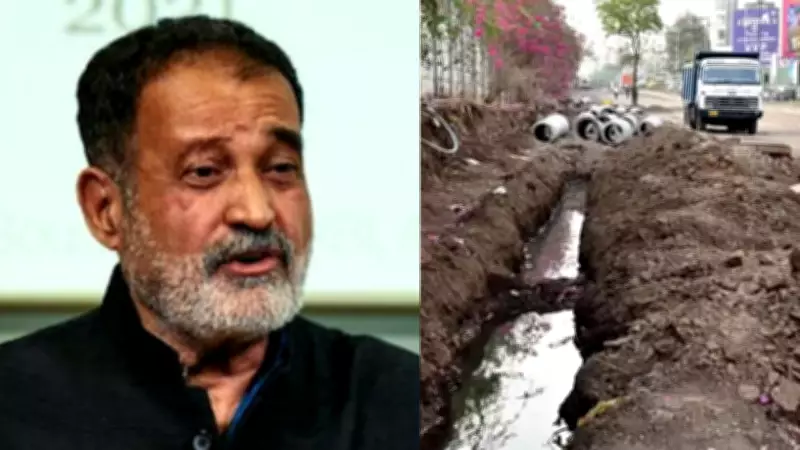
Mohandas Pai took to the platform X on Tuesday to voice his dismay, stating he was "totally shocked" by the poor quality of roads in Andheri. He highlighted issues such as huge debris obstructing pathways, slow-paced construction work, and the substandard quality of newly laid concrete roads. Pai's post painted a grim picture of never-ending civic projects that fail to meet basic standards.
World-Class Buildings vs. Third-Class Infrastructure
In his critique, Pai pointed out a stark contradiction prevalent in many Indian cities: the coexistence of world-class buildings alongside what he termed "third-class roads and footpaths." He attributed this disparity to "deep corruption" within public systems, labeling the situation a "public disaster driven by deep corruption." This commentary underscores growing concerns about the quality of urban governance and infrastructure management.

Context of Mumbai's Infrastructure Upgrades
Pai's criticism emerges at a time when Mumbai is undergoing significant infrastructure transformations. The city is currently witnessing large-scale projects including metro rail construction, extensive road concretization initiatives, and drainage improvement programs. While these upgrades aim to enhance urban livability, they have also led to widespread traffic congestion and commuter inconvenience, fueling public frustration.
Echoes of Similar Criticism in Bengaluru
This incident mirrors a previous controversy from last year involving Biocon chairperson Kiran Mazumdar-Shaw. In October, Shaw shared feedback from an overseas business visitor who criticized Bengaluru's infrastructure, questioning why roads were in poor condition and garbage was prevalent despite favorable economic conditions. The visitor's comparison to China sparked responses from multiple Karnataka ministers who defended the city's ongoing development efforts.
Shaw's post on X quoted the visitor as saying, "Why are the roads so bad and why is there so much garbage around? Doesn't the Govt want to support investment? I have just come from China and can't understand why India can't get its act together especially when the winds are favourable?" This highlights a recurring theme of business leaders voicing concerns over infrastructure gaps that could potentially deter investment.
Broader Implications for Urban Development
The critiques from high-profile figures like Mohandas Pai and Kiran Mazumdar-Shaw bring to light pressing issues in India's urban planning and execution. They emphasize the need for greater accountability, transparency, and efficiency in public works to match the pace of private sector development. As cities like Mumbai and Bengaluru continue to grow, addressing these infrastructure challenges becomes crucial for sustainable economic growth and quality of life.
Public discourse around such incidents often sparks calls for improved governance and reduced bureaucratic hurdles. The ongoing debates serve as a reminder that while India makes strides in areas like technology and real estate, foundational urban amenities require urgent attention to support overall progress and global competitiveness.