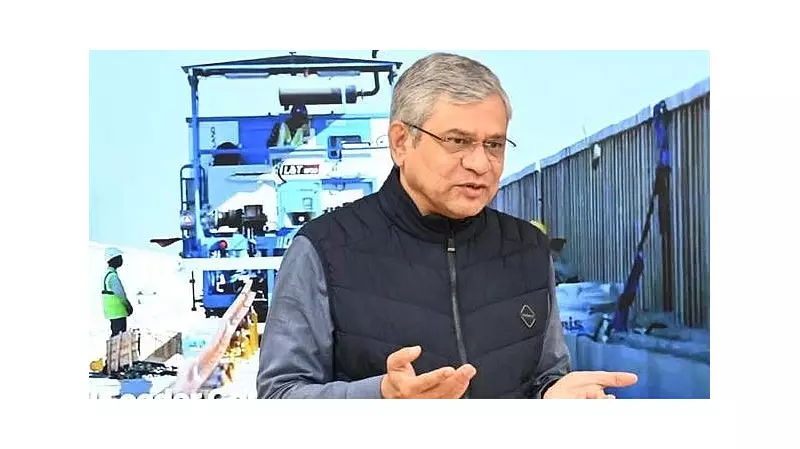
In a significant stride for India's ambitious high-speed rail corridor, Railway Minister Ashwini Vaishnaw personally witnessed a crucial engineering feat. The final breakthrough of a major tunnel for the bullet train project was successfully completed at the Delhi Rail Bhawan.
A Landmark Achievement in Infrastructure
The completion of this tunnel marks a pivotal moment in the construction of the National High-Speed Rail Corridor. Minister Ashwini Vaishnaw was present at the site to oversee the final phase of the excavation process, underscoring the project's national importance. This milestone is a testament to the advanced engineering capabilities being deployed in one of India's most prestigious infrastructure initiatives.
Advanced Engineering and Swift Execution
The tunnel was excavated using a sophisticated methodology known as the drill and blast method. This technique, employing cutting-edge technology, allowed for precise and efficient rock removal. Notably, the work was carried out from both ends of the tunnel simultaneously, a strategy that significantly accelerates construction.

Despite the complexities involved, the entire excavation was wrapped up within an impressive timeframe of 18 months. This rapid progress highlights the project's efficient planning and execution. The breakthrough event, which took place on January 2, 2026, was a moment of celebration for the engineers and workers involved.
Implications for the Future of Travel
The successful tunnel breakthrough is more than just a construction update; it represents tangible progress toward revolutionizing inter-city travel in India. The bullet train project aims to drastically reduce travel time between major cities, boosting economic connectivity and setting a new standard for public transportation.
With this critical underground segment now complete, focus can intensify on the remaining phases of the corridor. The project, under the close supervision of the Ministry of Railways, continues to be a flagship model for deploying modern technology in nation-building. It paves the way for a future where high-speed rail becomes an integral part of India's transport landscape.