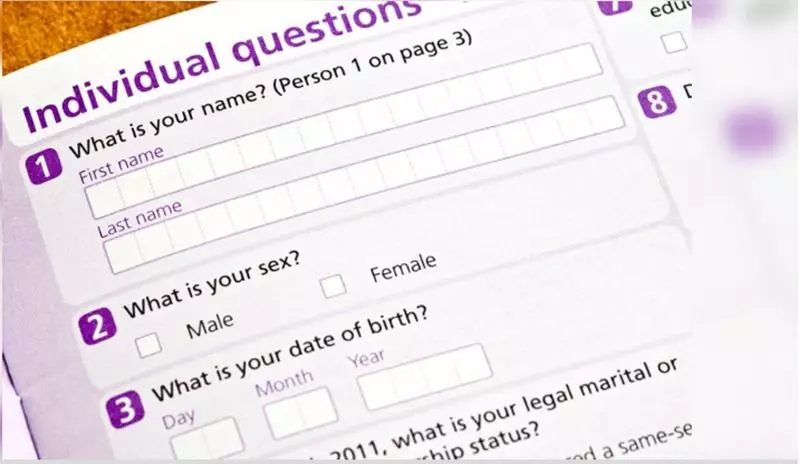
The Government of India has officially outlined the initial timeline for the massive national headcount, with the first phase of Census 2027 now scheduled to take place between April and September of that year. This crucial decadal exercise, which provides the most comprehensive data on the country's population, demography, and living conditions, will be conducted under the administrative control of the Ministry of Home Affairs (MHA).
Timeline and Structure of the Upcoming Census
The mammoth operation will be executed in two distinct phases. The first phase, known as the House-listing and Housing Census, is planned for the period between April 1 and September 30, 2027. During this stage, enumerators will visit every household across the nation to list all houses and collect preliminary data on housing conditions, household amenities, and assets.
This will be followed by the second phase, the Population Enumeration phase, where detailed information on each individual's demographic, social, and economic status will be recorded. The specific dates for this second leg are yet to be formally announced but typically follow a few months after the house-listing exercise.
Integration with the National Population Register (NPR)
A significant aspect of the upcoming census is its link to the National Population Register (NPR). The government has confirmed that the process of updating the NPR will be conducted simultaneously with the first phase of the census. The NPR is a register of the usual residents of the country, containing details collected at the local, sub-district, district, state, and national levels.
The decision to update the NPR alongside the census is aimed at creating a comprehensive and updated identity database of every usual resident. It is important to note that the NPR is distinct from the National Register of Citizens (NRC), though it can serve as a base for such a register if needed.
Preparations and Historical Context
The announcement sets the stage for extensive preparatory work by the Office of the Registrar General and Census Commissioner, India. This includes finalizing and testing the questionnaire, training a vast army of enumerators and supervisors, and ensuring logistical coordination with state governments.
The last census was conducted in 2011, which recorded India's population at over 1.21 billion. The 2021 census was postponed indefinitely due to the disruptions caused by the COVID-19 pandemic. Consequently, Census 2027 will be the first national headcount in 16 years, making its data exceptionally critical for policy formulation, resource allocation, and planning across all sectors of governance and the economy.
The data derived from the census is foundational for:
- Determining the allocation of parliamentary and assembly constituencies.
- Guiding the distribution of central funds to states.
- Planning infrastructure, healthcare, education, and social welfare schemes.
- Providing insights into urbanization, migration, literacy, and employment trends.
With the formal timeline now in place, the mammoth administrative machinery will begin gearing up for what is often described as the largest administrative and statistical exercise in the world, involving the enumeration of over 1.4 billion people.