Gadchiroli's Dramatic Shift from Punishment to Prize Posting for Bureaucrats
For decades, a transfer to Gadchiroli district in Maharashtra was widely perceived within the bureaucratic circles as a punitive assignment. Characterized by its remote location, underdeveloped infrastructure, and the shadow of prolonged Maoist insurgency, it was a posting most officers sought to avoid. However, that longstanding perception has undergone a decisive transformation, as articulated by Maharashtra Chief Secretary Rajesh Aggarwal during his recent two-day visit to the district.
A New Era of Administrative Opportunity
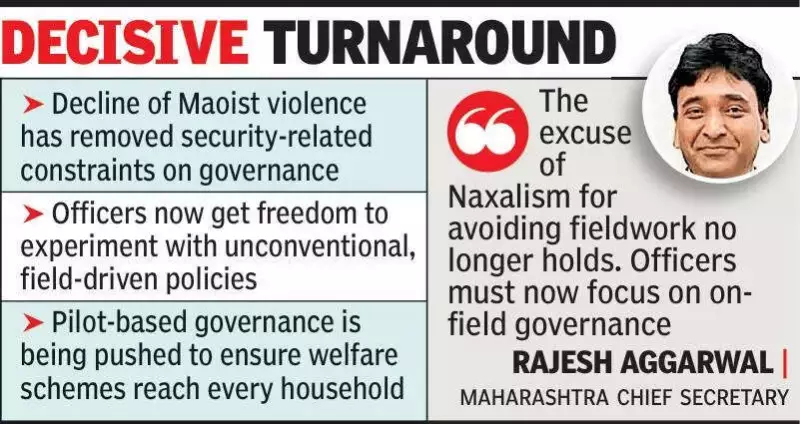
"Earlier, officers looked at Gadchiroli as a punishment posting. Today, it is a prize posting," Aggarwal asserted emphatically. He directly linked this remarkable change to the near-elimination of Maoist influence in the region. With security constraints significantly eased, the district now offers a unique and fertile ground for governance innovation.
The chief secretary highlighted that Gadchiroli presents bureaucrats with a rare and valuable opportunity to work at a substantial scale, experiment with unconventional public policy ideas, and deliver tangible, measurable outcomes on the ground. Nowhere else in the state do officers receive comparable autonomy to test and implement innovative, field-driven solutions, he stressed while reviewing rural development, tribal welfare, and district administration initiatives.

Pioneering Pilot-Based Governance and Fieldwork
Aggarwal outlined a visionary approach to governance, calling for a pilot-based model. He pointed to the presence of over 400 central and state welfare schemes and instructed officials to select specific villages for intensive focus. In these pilot villages, every household would be thoroughly surveyed to ensure direct benefits from at least a few schemes reach them effectively.
To bridge the implementation gap, he issued clear directives:
- Officials must stay overnight in remote villages to understand ground realities intimately.
- Complete application processes on the spot to reduce delays and bureaucratic hurdles.
- Utilize digital dashboards, phone calls, and video verification mechanisms to ensure benefits actually reach the intended beneficiaries, enhancing transparency and accountability.
"The excuse of Naxalism for avoiding fieldwork no longer holds. Officers must now focus on on-field governance," Aggarwal stated, marking a clear shift in administrative priorities for the district.
Economic Reshaping and Infrastructure Focus
Looking to the future, the chief secretary underscored the district's economic potential, particularly driven by its high-quality iron ore reserves, which are expected to attract significant industrial investment. This anticipated economic reshaping necessitates parallel development in human capital.
Aggarwal emphasized the critical need for:
- Robust skill development programs tailored to industry requirements.
- Enhancement of higher education facilities within the district.
- Alignment of training programs with emerging industrial needs to ensure local youth can directly benefit from new economic opportunities.
He also pushed for administrative reforms to support this growth, including faster forest clearances, a transition to paperless administration, and time-bound decision-making to prevent projects from being stalled or diverted to other states.
Comprehensive Review and Community Engagement
During his visit, Aggarwal's engagements were multifaceted, reflecting a holistic approach to the district's development. His itinerary included:

- Inspections of key infrastructure, health, drinking water, and road connectivity projects.
- A review of the Chief Minister's assistance fund cell.
- An inspection of a skill development centre at Gondwana University.
- Meaningful interactions with youths from families formerly affected by Maoism, who have recently been inducted into government service, symbolizing a new chapter of integration and opportunity.
The transformation of Gadchiroli from a feared posting to a coveted one stands as a testament to improved security and a renewed focus on proactive, innovative governance. It marks a significant milestone in the district's journey towards stability and development, offering a model for other regions emerging from conflict.