Ghaziabad and Noida Kickstart Digital Census 2027 Preparations
As the special intensive revision (SIR) of the electoral roll approaches completion, the twin cities of Ghaziabad and Noida have officially commenced groundwork for the upcoming Census 2027. This monumental national exercise, conducted after a 16-year hiatus since the last census in 2011, marks a significant shift toward complete digitalization.
Digital Transformation and Phased Timeline
For the first time in India's census history, the entire process will be executed in digital mode, featuring a self-enumeration option to enhance accessibility and efficiency. The initial phase, focusing on house listing and housing enumeration, is scheduled from May 22 to June 20, 2024.
The second phase, which encompasses population enumeration and caste enumeration, is slated for February 9 to 28, 2025. A subsequent revision round will follow from March 1 to 5, 2025, ensuring accuracy and completeness of the collected data.

Administrative Mobilization and Training
In Ghaziabad, the district has been segmented into 7,914 enumerator blocks to facilitate systematic data collection. Additional District Magistrate (Finance/Revenue) Saurabh Bhatt revealed that approximately 8,593 enumerators and 1,432 supervisors are projected to be deployed across the district.
"Training for four master trainers has already been concluded, and 134 field trainers are scheduled to undergo comprehensive training in March," stated Bhatt. The Census Directorate conducted its inaugural training program for district officials recently, underscoring the emphasis on capacity building.
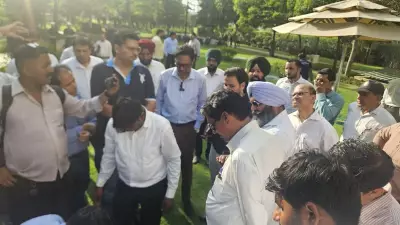
During a meeting of the District Census Coordination Committee, Bhatt instructed charge officers to meticulously review all circulars issued by the Census Directorate, finalize enumerator blocks within their jurisdictions, and establish census cells at the charge level. Officials were also directed to identify suitable training venues and spearhead widespread public awareness campaigns about the forthcoming census.
Noida's Parallel Preparations
In Noida, Additional District Magistrate (Finance/Revenue) Atul Kumar reported that 12 charge officers have been appointed—one for each of the three tehsils, six nagar panchayats, and three development authorities. "Each charge officer is currently engaged in mapping their respective areas into enumeration blocks," Kumar explained, noting that these officers received training from census officials last week.
The block-mapping exercise in Noida is still ongoing, reflecting the meticulous planning required for such a large-scale operation.
Electoral Roll Revision and Demographic Context
Concurrently, the SIR exercise for voter rolls is nearing its culmination, with a March 6 deadline for new voter registrations (Form 6) and corrections or updates to voter details (Form 8). The draft electoral rolls published on January 6 revealed a substantial reduction in voter numbers across both districts.
In Noida, the electorate plummeted from 18.7 lakh to 14.3 lakh, representing a decline of nearly 4.4 lakh names. Ghaziabad experienced an even more pronounced drop, with the draft roll listing 20.1 lakh voters, down from a previous 28.4 lakh, indicating a provisional reduction of 8.3 lakh names.
Approximately three lakh voters in the two districts remain classified as "unmapped"—individuals whose names appear in the draft rolls but whose details could not be verified against the 2003 electoral rolls. Election officials are issuing notices to these voters and conducting hearings to authenticate documents before determining their inclusion in the final rolls.
According to the State Election Commission, hearings for all unmapped voters, along with the processing of new applications and corrections, will be finalized by March 27. The definitive electoral rolls are set to be published on April 10.

Historical Population Data and Significance
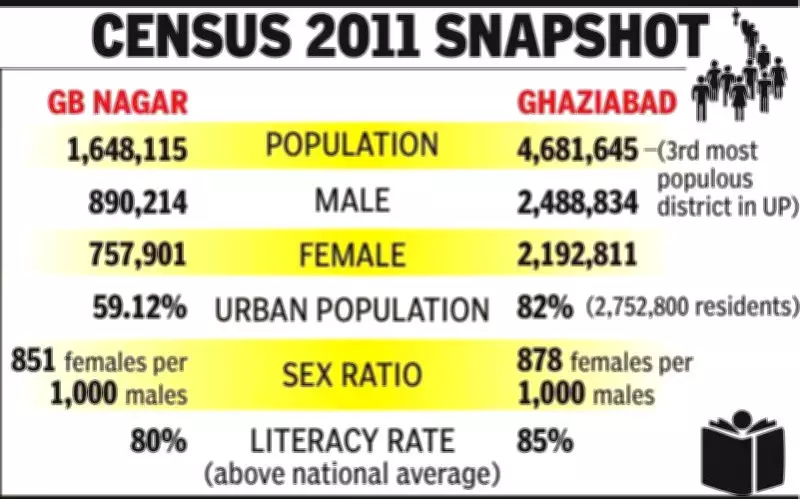
The Census 2011 data provides crucial baseline figures for the upcoming enumeration. Gautam Buddha Nagar recorded a population of 1,648,115, comprising 890,214 males and 757,901 females. Ghaziabad, with a population of 4,681,645, ranked as the third most populous district in Uttar Pradesh at that time.
The integration of digital methodologies in Census 2027 is anticipated to streamline data collection, improve accuracy, and offer greater convenience for citizens through self-enumeration. This initiative aligns with broader governmental efforts to leverage technology for governance and public service enhancement.
As preparations intensify, the coordinated efforts between census authorities and electoral officials highlight the administrative rigor required to execute these critical democratic and demographic exercises simultaneously.