

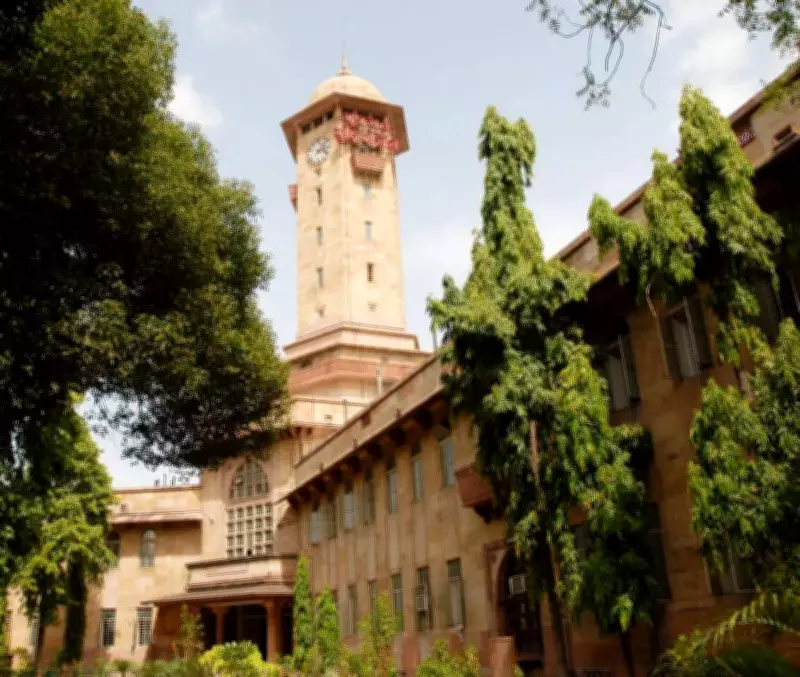
Ahmedabad: With Gujarat University vice-chancellor Neerja Gupta’s tenure ending on June 30, delays in forming the mandatory search committee have triggered intense speculation over who will head the state’s largest university next. The state government has yet to appoint the crucial third member of the panel, making an interim arrangement almost inevitable.
Under university norms, the three-member search committee must be constituted three to six months before a VC’s term ends. While two members have been finalised, the government’s delay in naming the third has stalled the entire process of inviting nationwide applications, scrutiny, and shortlisting candidates. This procedure takes at least six weeks.
With barely a month left, it is practically impossible to appoint a full-time successor before June 30. Consequently, the university may either hand over temporary charge to a senior dean or allow the incumbent VC to continue through an official extension or additional charge until a permanent appointment is made.

Under the Gujarat Universities Act, the search committee comprises three members: one nominated by the state government, one by the university’s executive council, and one by the chancellor. The government has already nominated its representative, and the executive council has selected its member. However, the chancellor’s nominee is yet to be appointed. This delay has raised questions about the government’s intentions and the future leadership of the university.
Gujarat University, established in 1949, is the largest university in the state with over 300 affiliated colleges and more than 200,000 students. The VC’s role is crucial for academic and administrative decisions. The uncertainty has caused concern among faculty and students, who fear disruptions in ongoing projects and examinations.
Neerja Gupta, appointed in 2020, has overseen several initiatives including digitalisation of academic records and introduction of new courses. Her tenure has been marked by efforts to improve research output and industry collaborations. However, the transition period now appears fraught with challenges.
The state education department has not commented on the delay, but sources indicate that the government is considering multiple names for the third member. Political considerations are also believed to be influencing the decision, as the VC position is seen as a key appointment in Gujarat’s higher education landscape.
Meanwhile, the university administration is preparing for an interim arrangement. Senior deans, including those from the faculties of arts, science, and commerce, are potential candidates for temporary charge. An official extension for Gupta is also possible, though it would require approval from the chancellor.
The delay has also sparked debate about the need for reforms in the appointment process. Critics argue that the current system is too slow and prone to political interference. They suggest that a more streamlined and transparent process could prevent such last-minute crises.
As the June 30 deadline approaches, all eyes are on the state government’s next move. The appointment of the third member will determine whether a full-time VC can be appointed soon or whether an interim arrangement will be necessary. Either way, the uncertainty is likely to persist for several more weeks.






