

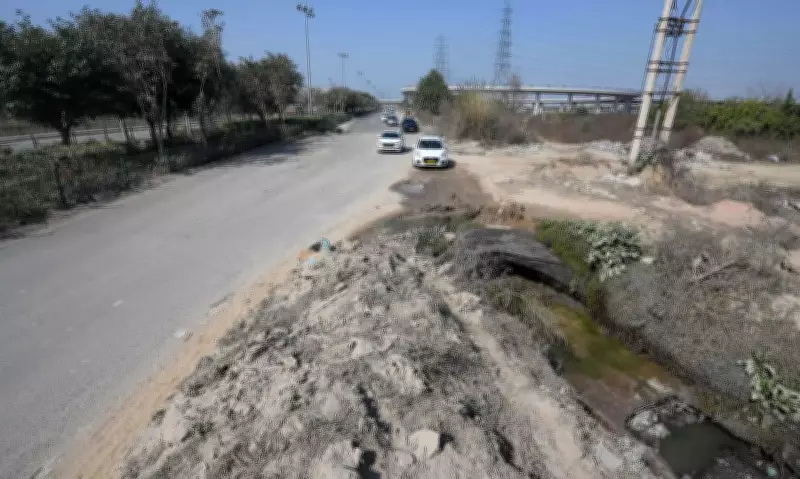
Gurgaon's Greenbelt Development Faces Major Delays and Deficiencies
In Gurgaon, while land for greenbelts has been designated across the city's new sectors, only approximately one-third has been properly developed. The remaining areas are either incomplete or still awaiting development, according to recent RTI data. This situation highlights significant gaps in urban greening efforts, impacting the city's environmental health and residents' quality of life.
RTI Data Exposes Alarming Development Shortfalls
Information accessed through the Right to Information Act for sectors 81 to 115 shows that a total of 7,12,364 square meters has been earmarked for greenbelts along highways, sector-dividing roads, and peripheral corridors. However, only 2,28,106 square meters—around 32%—has been fully developed, with plantations completed across the entire stretch. The remaining areas exhibit fragmented development, raising concerns about the effectiveness of these green spaces.
About 3,88,495 square meters, or more than 50% of the total area, has been only partially developed. In these sections, greenery exists in patches or is limited to certain portions such as central verges. Another 95,763 square meters, representing over 13% of the designated land, remains largely undeveloped, with little to no plantation despite being officially marked as greenbelt zones.

Key Stretches Remain Incomplete and Underutilized
The development gaps are particularly visible along some of the largest planned stretches. For instance, a master road network spanning sectors 84/36A and 83/36A, covering nearly 2.7 lakh square meters, is still only partially developed. Similarly, a key dividing road between sectors 92 and 95, spread across over 76,000 square meters, remains incomplete. In many locations, plantation efforts have been confined to the central verges, which are often recorded as "developed" in official records, while side green belts—intended to act as buffers for residential areas—are either missing or sparsely planted.
This has resulted in long dusty corridors, especially in sectors along the Dwarka Expressway and outer areas between Sectors 99 and 115. The lack of proper greenery exacerbates air quality issues and reduces the intended benefits of these greenbelts in controlling pollution and mitigating heat and noise along major roads.
Reliance on CSR Initiatives Leads to Uneven Execution
The data also underscores the Gurugram Metropolitan Development Authority's reliance on corporate social responsibility initiatives for greening projects. Many stretches have been developed either fully or partly through CSR funding, leading to uneven execution and maintenance across different locations. Plantation efforts have lacked consistency, with a total of 24,474 trees planted over the past five years. The highest plantation activity occurred in 2024, with a little over 13,000 trees planted, indicating sporadic efforts rather than a sustained strategy.
Residents Voice Concerns Over Encroachments and Neglect
Residents have raised significant concerns not only about the slow pace of development but also about the ground realities. Encroachments, including temporary vegetable markets, scrap dealers, and construction waste dumping, have taken over several designated green belt areas, rendering them unusable. Praveen Malik, RWA president of Rising Homes, who filed the RTI, stated, "Most of the green belt under GMDA remains either undeveloped or unattended, while illegal encroachments by vendors and scrap dealers continue in areas meant to act as green lungs. Even sites marked as 'partially developed' are largely barren or lack functional landscaping."
Malik further highlighted the declining green cover, noting that it has reduced from 11% in 2014 to just 3% in 2026. He emphasized, "At a time when Gurgaon faces poor air quality through much of the year, authorities need to prioritise development and maintenance of these green belts." Residents are calling for a re-evaluation of green belt plans, removal of encroachments, and immediate plantation in pending areas. They have also demanded levelling and fencing of green belt land to prevent further misuse and ensure proper development.

GMDA's Response and Future Plans
In response to these issues, GMDA has stated that it is initiating steps to improve green cover in these sectors. An official told TOI, "GMDA is actively working towards the development and enhancement of green areas across sectors 81 to 115. Two tenders have already been floated, while three estimates for additional works are currently under approval. A detailed survey has also been conducted along Dwarka Expressway, and estimates for green belt development in this stretch are under preparation."
The authority added that it is leveraging CSR partnerships to scale up plantation efforts. "MoUs have been signed under CSR initiatives, through which plantation drives and horticulture works are being actively undertaken to augment green cover in this part of the city," the official explained. However, residents like Sunil Sareen, deputy convenor of Dwarka Expressway Gurugram Development Association, point out that while agreements are being made, there is little monitoring or enforcement on the ground, undermining the critical role of greenbelts in environmental management.





