

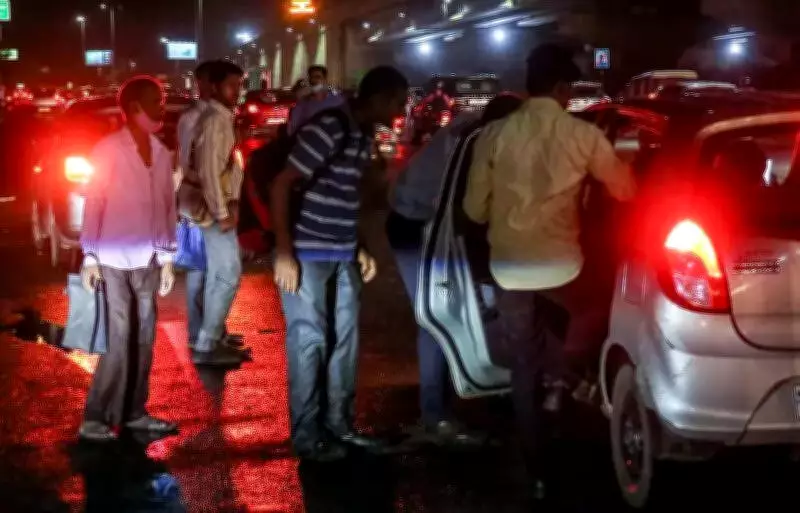
Gurgaon's Infrastructure Crumbles Under Mild Rainfall, Commuters Face Chaos
In a city already grappling with severe public transport deficiencies, a brief period of rainfall on Wednesday evening plunged Gurgaon into chaos, sending cab fares skyrocketing and exposing deep-rooted infrastructure failures that left residents stranded and frustrated.
Exorbitant Cab Fares and Commuter Struggles
Within minutes of the rain beginning, ride-hailing apps displayed massive fare surges, transforming routine commutes into expensive ordeals. A typical 7-kilometer journey from Golf Course Road to Sector 15, which normally costs around Rs 150, suddenly jumped to Rs 500. Commuters without private vehicles found themselves particularly vulnerable to this predatory pricing.
"It's insane how even light rain brings the entire city to a complete standstill. This isn't an emergency situation—it's just routine weather," said Gaurav, a local resident. Many reported being unable to book cabs at all, with apps showing limited availability or flashing "no service" messages across multiple areas.

Priya Pratap, who travels daily from Sector 72 to Udyog Vihar for work, expressed her frustration: "The rain wasn't even heavy, but fares shot up instantly. You're left with no alternatives except paying exorbitant amounts or walking through unsafe conditions."
Widespread Infrastructure Breakdowns
The rainfall, which averaged about 6.6 mm across the district between Wednesday morning and Thursday morning, triggered multiple system failures beyond just transportation. Several areas experienced electricity cuts lasting up to three hours, while poorly maintained roads combined with inadequate drainage created hazardous conditions.
Sanjay Gupta, a commuter, highlighted serious safety concerns: "It was genuinely unsettling—rain, no electricity, and flooded roads everywhere. In many places, you couldn't see what you were stepping into. It's not safe to walk, let alone attempt to drive."
In Sector 90, a long stretch of road remained poorly illuminated, with only passing vehicle headlights reflecting off wet asphalt. Pools of water lined road edges, while dark patches made it impossible to gauge road depth and surface conditions, creating perfect conditions for accidents.
Chronic Public Transport Deficiencies Exposed
The crisis revealed how Gurgaon's transportation network remains heavily skewed toward road-based options despite metro infrastructure. Key commuter corridors like Golf Course Road and Golf Course Extension Road receive only partial service from the Rapid Metro, with many residential sectors located far from stations.
Udyog Vihar, a major office hub employing thousands, lacks direct metro access and has limited office shuttles from Cyber City or IFFCO Chowk. Even along NH 48 and MG Road, where metro lines run parallel, short-distance and last-mile travel still depends overwhelmingly on private vehicles, cabs, and autos.
Resident Anger and Official Promises
Frustration against civic agencies reached palpable levels as residents questioned why basic preparedness continues to elude a city of over 30 lakh people year after year. Shubham Singh from Sector 57 voiced a common sentiment: "Every monsoon season, authorities make the same promises about fixes, but when it actually rains, nothing works—drainage systems fail, power supplies cut out, streetlights don't function. Yet citizens are expected to deal with surge pricing and navigate unsafe streets."
Narender Joshi, a working professional, pointed to accountability gaps: "There's always talk of projects and reviews, but when rain falls, reality is pure chaos. Who actually checks drains or secures electrical infrastructure before the monsoon season begins?"
This frustration is sharpened by traumatic memories from last September's heavy rainfall, which brought the city to a near-standstill with waterlogging across NH-48, Hero Honda Chowk, Rajiv Chowk, and Narsinghpur. Traffic snarls stretched up to 20 kilometers in some areas, leaving commuters stranded for three to six hours.

Joshi added ominously: "People died last year during rain-related incidents, yet we're again walking through dark, flooded roads with live cables around. Are we waiting for another fatality before taking meaningful action?"
Official Response and Future Concerns
Before this week's rainfall, the Gurugram Metropolitan Development Authority (GMDA) held meetings with officials to discuss strengthening city infrastructure. GMDA CEO PC Meena emphasized during these discussions that the authority is focusing on a comprehensive, time-bound approach to improve roads and drainage systems.
Meena stated: "From ensuring dust-free roads and clearing construction debris to improving green belts and expediting drain works, our priority is enhancing urban mobility, preventing waterlogging, and delivering visible improvements for Gurgaon residents."
However, residents remain skeptical as they witness the cascading disruptions triggered by limited rainfall, pointing to a recurring pattern of infrastructure stress even during short weather spells. The persistent gaps in drainage management, power reliability, and commuter safety loom larger as the monsoon season approaches, raising urgent questions about whether promises will translate into tangible improvements before the next downpour tests the city's resilience once more.





