GVMC Establishes Smart Vending Zones in Visakhapatnam
The Greater Visakhapatnam Municipal Corporation (GVMC) is taking decisive steps to transform street vending in the city by establishing three state-of-the-art smart vending zones. The civic body has already floated tenders for this ambitious project, marking a significant shift toward organized urban commerce.
Three Strategic Locations Identified
The smart vending markets will be strategically implemented at three key locations across Visakhapatnam. At Madhurawada, 70 business units will be established, while another 70 units will operate under the Duvvada flyover at Kurmannapalem. The largest concentration will be at Central Park, which will feature 110 business units, creating substantial vending infrastructure in high-traffic areas.
Modern Amenities and Facilities
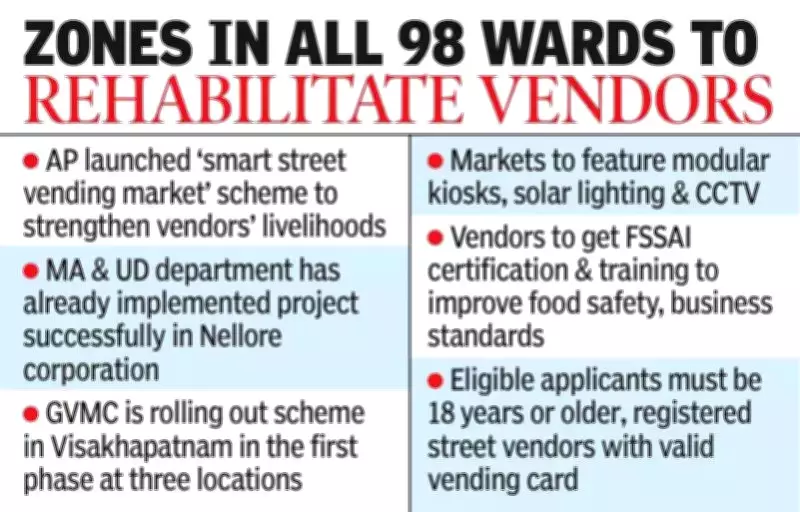
These markets will revolutionize the street vending experience with comprehensive modern amenities. The design includes uniformly crafted modular kiosks that ensure aesthetic consistency across locations. Solar-powered lighting will provide sustainable illumination, while digital payment facilities will bring transactions into the digital age.

The infrastructure will feature centralized waste management systems to maintain cleanliness, comfortable seating arrangements for customers, and comprehensive CCTV surveillance for enhanced security. Perhaps most importantly, the initiative includes skill development programmes with FSSAI certification to elevate food safety standards and business practices among vendors.
Background: Operation Lungs 2.0
This initiative comes in response to GVMC's extensive Operation Lungs 2.0, which has removed nearly 3,000 public encroachments over recent months. The drive targeted roadside shops and eateries occupying roads, footpaths, and junctions to ensure smoother traffic movement, enhance pedestrian safety, beautify the city, and promote overall urban development.
As part of this same initiative, GVMC removed 160 unauthorised food court shops along Old Jail Road. Officials noted these removals followed citizen complaints received through the grievance redressal system, citing obstructions and illegal collections. The corporation emphasized that these shops were unauthorised and generated no revenue for the civic body.
Addressing Livelihood Concerns
While many citizens welcomed the encroachment removal for improving urban order, concerns emerged about potential job losses, as thousands of families depend on roadside vending for their livelihood. GVMC has responded to these concerns by establishing smart street vending markets as a rehabilitation measure.
The civic body is currently identifying vacant land across various zones, with the ambitious objective of ensuring that each of Visakhapatnam's 98 wards eventually has at least one designated vending zone. This represents a comprehensive approach to balancing urban development with livelihood protection.
Vendor Rehabilitation and Support
GVMC has assured affected vendors that their applications will be considered in accordance with the GVMC Act, the Street Vendors Act, and relevant council rules. Officials emphasized that the corporation is making continuous efforts to quickly develop these modern vending zones with all basic amenities.
"The aim is to improve the livelihoods and welfare of street vendors in Visakhapatnam city," officials stated, highlighting the project's core mission of supporting the vendor community while enhancing urban infrastructure.
Broader Context and Implementation
This initiative aligns with Andhra Pradesh's broader 'smart street vending market' scheme designed to strengthen vendors' livelihoods. The Municipal Administration and Urban Development department has already implemented similar projects successfully in Nellore corporation, and GVMC is now rolling out the scheme in Visakhapatnam during this first phase at three strategic locations.
Eligibility criteria for vendors include being 18 years or older, registered as street vendors with valid vending cards. The project represents a thoughtful approach to urban planning that addresses multiple objectives simultaneously: organized vending, enhanced public convenience, improved urban aesthetics, and sustainable livelihood support for the city's street vendor community.