

Hubballi-Dharwad Municipal Corporation Faces Uphill Battle in Waste Segregation
The Hubballi-Dharwad Municipal Corporation (HDMC) is encountering significant obstacles in its quest to achieve complete waste segregation at the household level across the twin cities. Despite implementing a comprehensive solid waste management system over five years ago and conducting extensive awareness campaigns, progress has plateaued at approximately 80% compliance.
Challenges in Slum and Residential Areas
Officials have identified that the initiative has received a notably poor response in slum areas, where residents frequently provide mixed waste. This issue is not confined to slums alone; many residential neighborhoods also fail to properly separate their waste. Santosh Yarangalli, executive engineer of HDMC's solid waste management department, acknowledged these difficulties, stating that various challenges have hindered the goal of 100% source segregation.
Deployment of Community Mobilisers
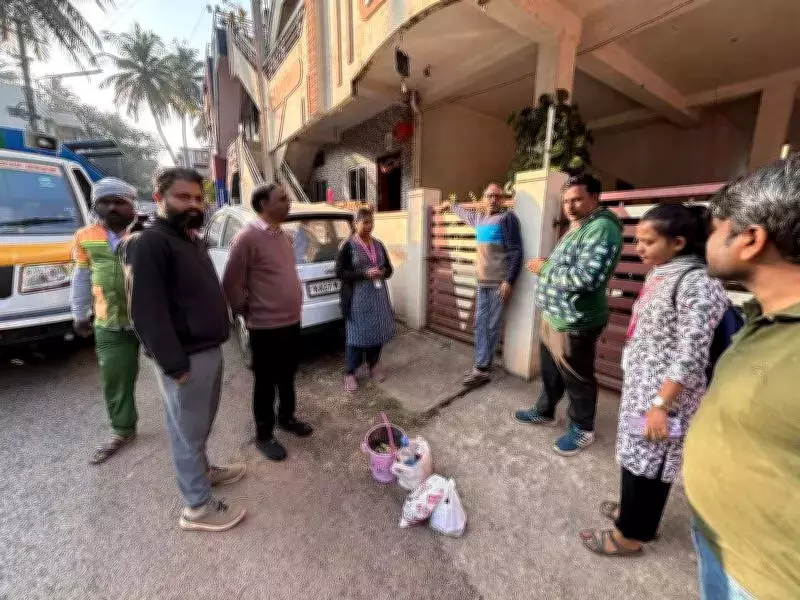
To address the compliance gap, HDMC has appointed 63 community mobilisers (CMs) who are tasked with visiting homes, educating residents on proper waste segregation techniques, and documenting the waste provided by households through photographs. Rudresh Ghali, commissioner of HDMC, revealed that approximately 80 community mobilisers are actively working in the twin cities, conducting information, education, and communication (IEC) activities to bolster awareness.

Each zone within the municipal area is monitored by 4 to 6 community mobilisers, who play a crucial role in overseeing waste management practices. Akshata M, one of the HDMC community mobilisers, reported that mixed waste remains prevalent in several areas, including slum regions and commercial establishments like Nehru Nagar and Gouli Galli. In such cases, residents are warned, and health inspectors are notified for further action.
Infrastructure and Regulatory Framework
The solid waste management project, operational for more than five years, relies on a fleet of over 300 auto tippers that collect waste door-to-door. However, adherence to the Solid Waste Management (SWM) Rules 2016, which mandate that all waste generators—households, institutions, and commercial establishments—segregate waste at source, has been inconsistent. Although the rules authorize spot fines for non-compliance, HDMC has been hesitant to enforce them strictly.
Official Statements and Citizen Perspectives
Ramesh Noolvi, Zone-01 zonal commissioner, emphasized that segregation at source is vital for maintaining cleanliness, enhancing waste processing efficiency, and protecting the environment. He urged citizens to cooperate with sanitation workers and support HDMC's cleanliness initiatives, noting that fines have been imposed in cases of non-segregation.
Commissioner Rudresh Ghali assured that action would be taken to achieve the 100% waste segregation target, reinforcing the corporation's commitment to this goal. A survey conducted by community mobilisers confirmed the 80% achievement rate, highlighting both progress and areas needing improvement.
From the citizen side, Kiran Matti, a resident of Judge Colony in Hubballi, commented that waste segregation at source needs to be increased. He noted that HDMC should focus on creating awareness at the source itself and impose fines for non-segregation to drive better compliance.
The HDMC's ongoing efforts underscore the complexities of urban waste management, where behavioral change and infrastructure must align to meet environmental standards and public health objectives.






