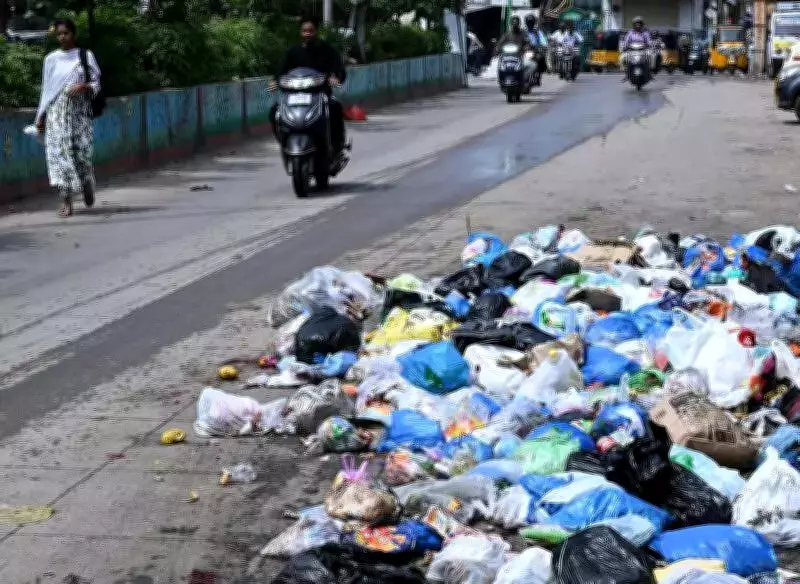
Hyderabad Civic Body Imposes Heavy Fines for Illegal Waste Dumping
Hyderabad residents face severe financial penalties for discarding garbage on roadsides or in public spaces, as the Greater Hyderabad Municipal Corporation (GHMC) has significantly ramped up enforcement against littering and improper waste disposal throughout the city.
Substantial Daily Fines and Enforcement Data
According to official statistics, the municipal authority collects fines ranging from approximately Rs 75,000 to Rs 1 lakh every single day from violators. Between April and December of last year, authorities issued more than 10,000 challans, with total penalties amounting to around Rs 2.34 crore for littering and illegal waste dumping across Hyderabad.
Digital Enforcement Through Mobile Application
This rigorous enforcement campaign utilizes the Comprehensive Challan Management System (CCMS) mobile application, enabling officials to issue fines for eleven distinct categories of violations. These include:

- General littering in public areas
- Commercial establishments failing to maintain proper waste bins
- Improper disposal of construction and demolition waste materials
Expansion to Other Municipal Corporations
Following GHMC's successful implementation, two additional civic bodies—the Cyberabad Municipal Corporation (CMC) and the Malkajgiri Municipal Corporation (MMC)—have adopted the same system to strengthen monitoring and enforcement capabilities.
A senior official from MMC's sanitation wing stated, "Similar to GHMC, MMC has begun imposing daily penalties on sanitation rule violators, with the primary objective of maintaining neighborhood cleanliness and preventing roadside waste dumping."
Surveillance and Monitoring Mechanisms
While sanitation officers and assistant medical officers of health can track challans and pending payments through detailed reports, citizens receive text messages containing payment instructions. Monitoring waste disposal frequently relies on:
- Information provided by residents and eyewitnesses
- Observation of individuals habitually discarding household waste in vulnerable areas
To address persistent dumping issues, special surveillance teams have been deployed to locations identified as garbage dumping hotspots. These teams monitor activities to apprehend offenders. Additionally, CCTV cameras have been installed to help identify and take action against those involved in illegal dumping practices.
Collaborative Sanitation Improvement Program
Meanwhile, GHMC, CMC, and MMC are collaborating to enhance sanitation as part of an ongoing 99-day cleanliness program. This initiative aims to improve urban cleanliness by maintaining:
- Main roads and internal streets
- Public parks and lakes
- Government office premises
The program seeks to ensure a cleaner, healthier urban environment for all residents.
Commissioner's Directives on Garbage Vulnerable Points
GHMC Commissioner RV Karnan has directed officials to prioritize the elimination of garbage vulnerable points (GVPs) and ensure prompt removal of construction and demolition waste, preventing accumulation in public spaces.
During a surprise field inspection in Tukkuguda on Sunday, Commissioner Karnan reviewed progress on ongoing cleanliness and waste management projects. He interacted with field officials and sanitation staff to assess grassroots implementation of sanitation measures.