

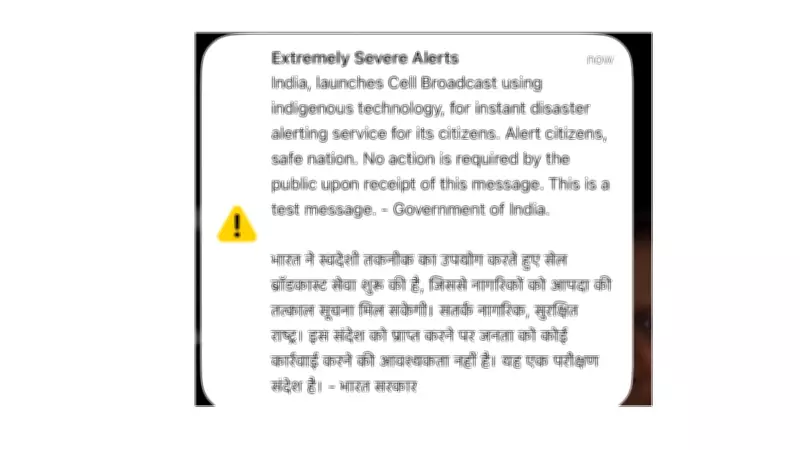
The Indian government has successfully tested a cell broadcasting system designed to send emergency alerts directly to citizens' mobile phones. This system, which was trialed on May 2, 2026, aims to enhance public safety during natural disasters and other emergencies.
How Cell Broadcasting Works
Cell broadcasting is a technology that allows authorities to send messages to all mobile devices within a specific geographic area. Unlike SMS, which can cause network congestion, cell broadcasting uses a dedicated channel that works even during network overload. This ensures that critical alerts reach people instantly.
Key Features of the System
- Geotargeted Alerts: Messages are sent only to phones in the affected area, reducing unnecessary panic.
- No Registration Required: Every mobile phone in the coverage area receives the alert automatically.
- Multilingual Support: Alerts can be sent in local languages for better comprehension.
- Compatibility: Works on both smartphones and basic phones.
Test Details
The test was conducted by the National Disaster Management Authority (NDMA) in collaboration with telecom operators. Participants received a test alert with a distinct sound and vibration, along with a message stating it was a drill. The system performed well, with alerts reaching millions of phones within seconds.

Public Response
Many citizens were initially startled by the loud alert, but the government had issued prior notifications through media and social platforms to inform the public about the test. Overall, the response has been positive, with people appreciating the government's proactive approach to disaster preparedness.
Future Implementation
Following the successful test, the government plans to roll out the system nationwide. It will be used for warnings about cyclones, floods, earthquakes, tsunamis, and other emergencies. The system is expected to be fully operational by the end of 2026.
This initiative aligns with global best practices, as similar systems are already in place in countries like Japan, the United States, and Australia. India's adoption of cell broadcasting marks a significant step forward in leveraging technology for public safety.






